Corrosion Inhibitor Application Technology for High-Salinity Oilfields – Vanconol® Inhibitor Solutions
Corrosion Inhibitor Application Technology for High-Salinity Oilfields – Vanconol® Inhibitor Solutions
Abstract
In the development of high-salinity oilfields, corrosion has become a core bottleneck restricting production efficiency and economic returns. Chloride ion attack, accelerated electrochemical corrosion caused by high-salinity electrolytes, compounded by the effects of hydrogen sulfide (H₂S) and sulfate-reducing bacteria (SRB), impose severe corrosion risks on well tubing and gathering systems. This white paper analyzes the corrosion mechanisms in high-salinity oilfields, outlines the principles for selecting corrosion inhibitors, and introduces the customized protection solutions offered by Vanconol® inhibitors for high-salinity reservoirs.
The Vanconol® ET series of oil and gas wellbore inhibitors is built on a proprietary imidazoline technology platform, utilizing multi-component synergistic compounding optimized specifically for high-chloride conditions. Among these, ET-103 produced water inhibitor is designed for high-salinity media. Under harsh conditions with salinities ranging from 12,000 to 140,000 mg/L, it can keep corrosion rates below 0.076 mm/a, achieving corrosion inhibition efficiency exceeding 85%, thereby significantly extending equipment service life and pump inspection cycles.
Keywords: high-salinity oilfield; corrosion inhibitor; chloride ion corrosion; imidazoline; Vanconol
1. Corrosion Challenges in High-Salinity Oilfields
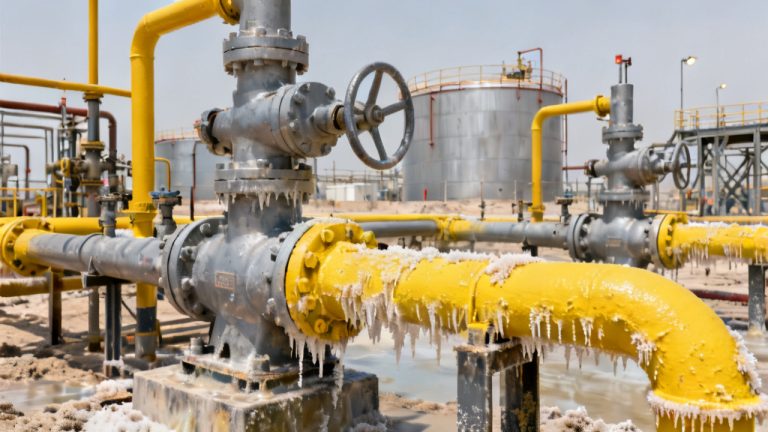
Most domestic oilfields have entered the middle to late stages of development. Rising water cut in crude oil and reinjection of produced water have led to continuously increasing formation water salinity. Under high-salinity conditions, well casings, production tubing, and water injection systems commonly face risks of pitting corrosion, crevice corrosion, and stress corrosion cracking. According to industry statistics, in high-salinity blocks, the average pump inspection cycle is shortened by 20% to 40%, the annual number of pump inspections increases by 2 to 4 times, and single-well maintenance costs rise significantly. In extreme cases, corrosion perforation can directly lead to well abandonment.
The primary causes of corrosion in high-salinity oilfields include:
1. High concentration of chloride ions: Small-radius chloride ions penetrate and destroy the metal oxide film, inducing pitting corrosion;
2. High-salinity water quality: Soluble salts increase electrolyte conductivity, accelerating electrochemical corrosion;
3. Hydrogen sulfide and bacteria: H₂S causes sulfide stress corrosion cracking, and SRB metabolism accelerates anodic dissolution, with FeS products leading to under-deposit corrosion;
4. Dissolved oxygen and carbon dioxide: Dissolved oxygen accelerates oxygen absorption corrosion, while CO₂ forms carbonic acid, lowering pH and exacerbating acidic corrosion.
Due to its low cost, simple operation, and rapid effectiveness, corrosion inhibitor protection has become the most mainstream anti-corrosion method for high-salinity oilfields. Vanconol®, leveraging its proprietary imidazoline technology platform, has developed specialized inhibitors for high-salinity conditions that have been applied on a large scale in multiple high-salinity oilfields both domestically and internationally. This white paper provides technical reference and selection guidance for the industry.
2. Corrosion Mechanisms in High-Salinity Oilfields
(I) Typical Corrosion Characteristics
Compared with conventional oilfields, high-salinity oilfields exhibit four major corrosion characteristics: First, high corrosion rates, generally in the range of 0.05–0.25 mm/a, and exceeding 0.3 mm/a in blocks with high Cl⁻ and high H₂S, far above the industry control standard of 0.076 mm/a. Second, pronounced pitting and crevice corrosion, where chloride ions accumulate at metal defects and under-deposit occluded cell effects further intensify corrosion. Third, synergistic bacterial corrosion: SRB proliferate in high-salinity environments, and combined with electrochemical corrosion, can increase corrosion rates by several times. Fourth, high concealment of under-deposit corrosion: scaling ions deposit to form oxygen concentration cells, which are difficult to monitor and can result in sudden pipeline perforation.
(II) Main Types of Corrosion
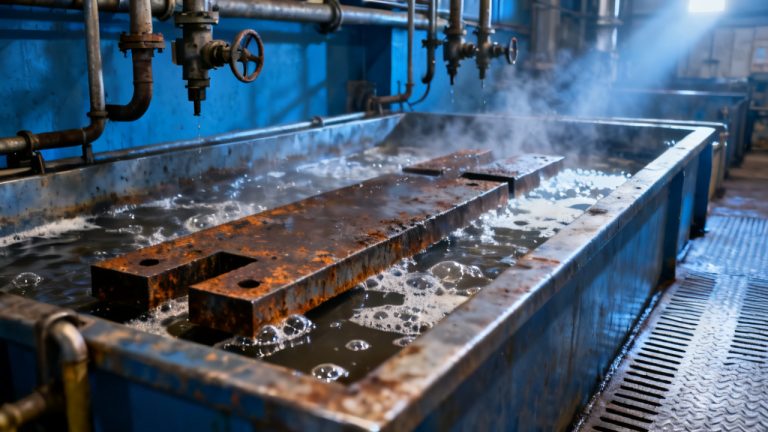
In high-salinity environments, metal corrosion is mainly divided into five categories: electrochemical corrosion (the most common, with high-salinity water acting as electrolyte to accelerate anodic and cathodic reactions), chloride ion pitting (destruction of the passivation film to form stable pits), sulfide stress corrosion cracking (H₂S promoting hydrogen permeation and causing hydrogen embrittlement), under-deposit corrosion (scale layers create oxygen concentration cells, making the anode preferentially dissolve), and bacterial corrosion (SRB metabolites alter local pH and accelerate corrosion).
3. Key Technical Points of Corrosion Inhibitor Protection
(I) Corrosion Inhibition Mechanism
Corrosion inhibitors provide protection through three core actions: first, adsorption film formation – polar groups form coordination bonds with the metal surface for chemical adsorption, and non-polar long chains form a hydrophobic protective layer blocking corrosive media; second, electrochemical inhibition – altering the nature of the metal double layer to inhibit anodic dissolution or cathodic depolarization reactions; third, synergistic enhancement – multi-component compounding occupies different adsorption sites, forming a denser protective film and improving inhibition efficiency.
(II) Selection Principles
For high-salinity oilfields, the selection of corrosion inhibitors should focus on six dimensions: ① Resistance to chloride ions: ability to form a dense, stable protective film that blocks Cl⁻ penetration; ② Temperature resistance: matching formation temperature, with deep wells requiring high-temperature-resistant products; ③ Adsorption stability: ensuring long-term protection; ④ Compatibility: no mutual interference with oilfield chemicals such as demulsifiers and scale inhibitors; ⑤ Environmental friendliness: meeting regulatory requirements for low toxicity and heavy metal-free composition; ⑥ Cost-effectiveness: achieving high inhibition efficiency at low dosages to reduce operating costs.
4. Vanconol® Corrosion Inhibitor Product Portfolio
Vanconol® is a professional corrosion inhibitor brand under Tianjin Hi-Perferal Advanced Materials Co., Ltd. Leveraging over a decade of accumulated imidazoline technology, it has built a product matrix covering the entire oil and gas production and refining process. The ET series is specifically designed for harsh conditions with high salinity and high H₂S/CO₂. Key advantages include:
1. Molecular tailoring technology: Based on its proprietary imidazoline platform, products are adapted at the molecular structure level to different working conditions, forming multiple product lines including oil-soluble, water-soluble, and modified types;
2. Synergistic compounding enhancement: Multiple active components work together to improve film density, comprehensively inhibiting the corrosion process;
3. Long-lasting and low consumption: A single dosage can maintain corrosion inhibition effects for over 30 days, with effective concentration reduced by 50% compared with traditional products;
4. Green and environmentally friendly: Heavy metal-free, meeting domestic and international environmental standards.
For high-salinity oilfields, the core products are as follows:
Product Model
Application Scenario
Key Features
ET-101
Oil well tubing protection
Long-term protection, suitable for high H₂S/CO₂ environments
ET-102
Oil & gas gathering pipeline protection
Low dosage, stable film formation
ET-103
Produced water system protection
Chloride-resistant, designed for high-salinity media
ET-105
Acidizing operations in oil & gas wells
Acid- and high-temperature resistant
ET-103 produced water inhibitor uses modified imidazoline derivatives as the main agent, combined with proprietary synergists, optimized for high-chloride environments: quaternary ammonium cations provide additional physical adsorption layers through electrostatic interactions, enhancing the density of the protective film; hydrophobic long chains form arched hydrophobic films that cover more Cl⁻ adsorption sites, significantly improving resistance to penetration.
5. Field Application Performance Verification
Practice data from multiple domestic high-salinity oilfields show that the Vanconol® ET series of inhibitors achieve excellent protection performance across different salinity ranges:
1. High-salinity produced water systems: In water samples with salinities of 10,000–150,000 mg/L, adding 50–150 mg/L of ET-103 achieves corrosion inhibition rates above 85%, with corrosion rates consistently controlled below 0.05 mm/a;
2. Wellbore protection: ET-101 using intermittent dosing maintains effects for 30 days per single dose, reducing corrosion rates from 0.15–0.25 mm/a to below 0.05 mm/a under high H₂S/CO₂ conditions;
3. Gathering pipeline protection: ET-102 requires only 10–30 mg/L dosage to form a stable film, keeping corrosion rates within the industry standard of 0.076 mm/a.
For ultra-high-salinity environments, a compounding strategy can further enhance performance: blending imidazoline with quaternary ammonium salts improves adsorption density; corrosion inhibitors, scale inhibitors, and biocides are injected in intervals to simultaneously control corrosion, scaling, and microbiological risks.
6. Selection and Dosing Solutions
(I) Selection Guide
Recommended selection based on salinity conditions:
• 5,000–30,000 mg/L: ET-101/ET-102, standard formulations meet protection requirements;
• 30,000–80,000 mg/L: ET-103, enhanced chloride resistance;
• >80,000 mg/L: Increased dosage of ET-103, recommended to use together with scale inhibitor for synergistic protection;
• High H₂S/CO₂ environments: ET-101, customized for acidic atmospheres;
• Acidizing operations: ET-105, high-temperature and strong acid resistant.
(II) Dosing Plan Design
1. Initial prefilming: For new wells or after workover, use 3–5 times the normal dosage concentration for 48–72 hours to form a uniform initial protective film;
2. Routine maintenance dosage: Salinity 80,000 mg/L: 100–200 mg/L;
3. Dosing frequency: Continuous dosing during high-risk periods; intermittent dosing (every 3–7 days) under stable conditions. Vanconol products can maintain effects for over 30 days, allowing flexible adjustment of intervals.
(III) Effect Monitoring
It is recommended to use online corrosion probes and weight-loss coupons to track corrosion rates, regularly test inhibitor concentration and water quality indicators, and combine with internal equipment inspection results to continuously optimize the dosing plan and ensure protection effectiveness.
7. Conclusions and Recommendations
1. Corrosion in high-salinity oilfields results from the synergistic effects of chloride ions, high salinity, hydrogen sulfide, and bacteria, with corrosion rates far exceeding industry control standards. Proper selection of corrosion inhibitors can effectively manage corrosion risks;
2. Imidazoline-based corrosion inhibitors are currently the most suitable product type for high-salinity oilfields, and synergistic compounding technology can raise inhibition efficiency above 85%;
3. The Vanconol® ET series is specifically optimized for high-salinity, high-chloride conditions. Field applications consistently control corrosion rates below 0.076 mm/a, significantly extending pump inspection cycles and reducing operating and maintenance costs;
4. Corrosion inhibitor protection is a systematic project. It is recommended that oilfields first conduct corrosion mechanism studies, screen suitable products through laboratory evaluation, establish online monitoring systems to dynamically adjust plans, and combine with material upgrades, internal coatings, and other measures to form a comprehensive anti-corrosion system. Selecting a service provider with proprietary technology ensures long-term performance.