
What Are Corrosion Inhibitor Intermediates? FPI and FPAM Application Guide
Corrosion inhibitor intermediates are the active base semi-finished products used by oilfield chemical manufacturers to formulate commercial corrosion inhibitors. This article explains the difference between intermediates and finished corrosion inhibitors, the significance of the cyclization rate indicator, and compares Vanconol®…
How to Select Corrosion Inhibitors for Magnesium Alloys? Prevention and Control of White Spots in AZ31 Machining
White spots on AZ31 magnesium alloy after machining result from corrosion product buildup on the base metal; prevention relies on a three-layer approach—low-chloride alkaline machining fluid management, magnesium-specific corrosion inhibitors (Vanconol® MGR-82/83, ALI-910), and inter-process cleaning/drying—with inhibitor selection matched to…
Corrosion Inhibitor Selection for Aluminum-Magnesium Alloy Cutting Fluids: Key Criteria and Formulation Blending Guidelines
For aluminum-magnesium alloy cutting fluids, the core principle is metal-specific selection: aluminum alloys call for polyether phosphate esters (Vanconol® ALI-910, withstands 200 g/L NaOH, optimum pH 8.0–9.5), while magnesium alloys call for chromium-free composite types (Vanconol® MGR-82, up to 91%…
How to Select Oil and Gas Field Corrosion Inhibitors: Downhole Tubing vs. Surface Gathering Conditions
Selecting oil and gas field corrosion inhibitors starts with distinguishing two operating conditions: downhole tubing (CO₂/Cl⁻/dissolved oxygen, H₂S-free) pairs with Vanconol® ET-101 (alkyl imidazoline adsorption film type, measured inhibition efficiency 82.53% at 60°C/30 ppm, freezing point ≤-20°C); surface gathering (H₂S/CO₂…

What is an Emulsifier? What is the Role of a Wetting Agent?
Both are surfactants in different functional roles: emulsifiers reduce oil-water interfacial tension and form an interfacial film to stabilize emulsions (depends on HLB value); wetting agents reduce solid-liquid interfacial tension, promoting liquid spreading and penetration (depends on contact angle and…

Are Dispersants Toxic? Safety Considerations & Usage Notes
The toxicity of a dispersant depends on its chemical structure and carrier medium: waterborne polymer dispersants are generally low-toxicity, while solvent-borne dispersants pose flammability and irritation risks due to organic solvents. This article clarifies how to assess dispersant toxicity, differences…
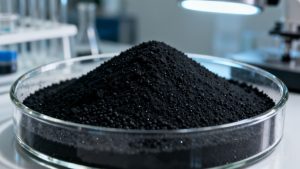
Dispersants: What They Are, How They Work, Composition, and Classification
Dispersants are additives that keep solid particles (pigments, fillers) stably suspended in liquids, preventing settling and agglomeration via electrostatic repulsion or steric hindrance. This article explains their main chemical types (polyacrylates, polyurethanes, polyethers/polyesters), classification, stabilization mechanisms, selection guidelines, along with…
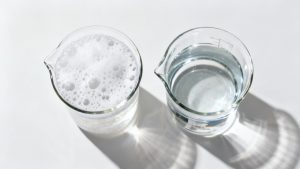
Nonionic vs. Anionic Surfactants: What’s the Difference and How to Choose
Nonionic and anionic surfactants differ in whether the hydrophilic group carries a charge: anionic surfactants (LAS, AES, SDS) are negatively charged, offering strong detergency and high foaming, while nonionic surfactants (AEO, Tween, acetylenic diols) are uncharged, providing excellent tolerance to…

Are Surfactants Toxic? Toxicity Classification and Safe Use
Are surfactants toxic? Direct answer: Most industrial surfactants fall into low-toxicity to slightly toxic categories, but "non-toxic" is incorrect. This article explains acute toxicity classification (LD50/GHS), common surfactant toxicity comparisons, hidden risks such as APEO and 1,4-dioxane, and safe use…
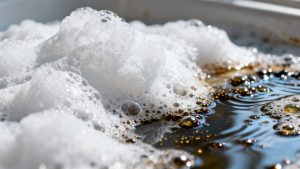
What Are Surfactants? – Composition, Classification, and Common Types
Surfactants, composed of hydrophilic heads and hydrophobic tails, reduce surface tension. This article explains their composition, classification (ionic vs. nonionic), common types (SDS, AES, LAS, AEO, Tween, acetylenic diols), and selection guide, including alternative options for import substitution.
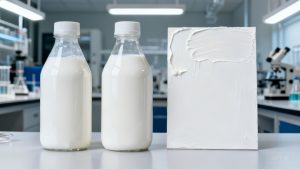
Addition Methods and Timing for Acetylenic Diol Additives in Emulsion Polymerization
Practical guidance on pre-, post-, and staged addition of acetylenic diol wetting agents and defoamers in emulsion polymerization, balancing foam control with polymerization stability and providing recommended dosages.
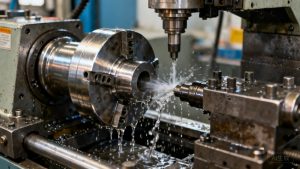
How to Resolve Blackening/Corrosion in Metalworking Fluids?
Blackening, odor, and workpiece corrosion in metalworking fluids (cutting/grinding fluids) are common persistent issues, rooted in bacterial growth, chloride ion enrichment, and corrosion inhibitor failure. This article analyzes the mechanism of blackening & corrosion and key fluid management points, providing…
Want to understand a principle?
Tell us the application scenarios or technical questions you care about, and we will compile them into articles.