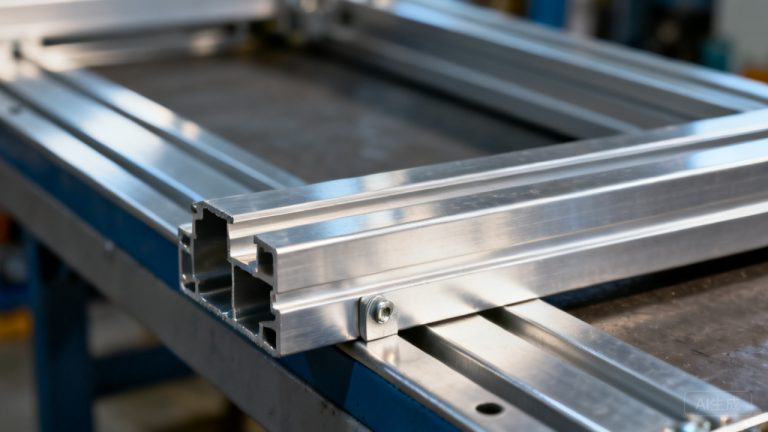
Keep Aluminum Alloys Corrosion-Free
Keep Aluminum Alloys Corrosion-Free
Vanconol® Aluminum Alloy Corrosion Inhibitor Technical Guide
Tianjin Hi-Perferal Advanced Materials Co., Ltd. | Metal Corrosion Inhibition Division
Tianjin Hi-Perferal Advanced Materials Co., Ltd.
Understanding the “Natural Enemy” of Aluminum Alloys: Corrosion
Aluminum alloys are among the most widely used lightweight materials today — from EV battery packs to aerospace structural components, from building curtain walls to consumer electronics housings. However, aluminum alloys are not “indestructible.” Their “natural enemy” is corrosion — a familiar yet complex phenomenon.
In every stage of metalworking, alkaline cleaning, pickling processes, and even routine storage, moisture, oxygen, acidic/alkaline media, and airborne chloride ions can penetrate the natural oxide protective film (Al2O3) on the aluminum surface, causing a range of troublesome issues: surface dullness and graying (loss of luster), uniform gray or even black discoloration (blackening), white corrosion deposits (white rust), and more destructive localized pitting and intergranular corrosion.
More severe challenges come from the new energy vehicle era. The liquid-cooled plates of power batteries use 3003 aluminum alloy, which is immersed long-term in ethylene glycol-based coolants; integrated die-cast aluminum alloy parts face high-temperature water vapor attack during solution heat treatment and quenching; micro-channel structures of aluminum heat exchangers, once corrosion products deposit, can easily cause channel blockage or perforation leakage.
Facing these challenges, corrosion inhibitors — hailed as the “most convenient, economical, and efficient” means of metal corrosion protection — are playing an increasingly critical role in the field of aluminum alloys.
1. How Corrosion Inhibitors Protect Aluminum Alloys
1.1 Working Principle of Corrosion Inhibitors
A corrosion inhibitor is a chemical substance that, when present at an appropriate concentration in a corrosive medium, can significantly reduce the corrosion rate of the metal by adsorbing onto the metal surface. The core principle can be summarized in three points:
Physical or chemical adsorption: Polar groups (-OH, -COOH, -NH2, etc.) of the inhibitor molecules directionally adsorb onto active sites of the oxide film on the aluminum alloy surface, like putting on a “molecular protective suit” for the metal;
Phase film protection: Inhibitor molecules form a dense protective film between the metal surface and the corrosive medium, physically blocking direct contact of water, oxygen, and corrosive ions with the metal substrate;
Electrochemical inhibition: Inhibitor molecules raise the overpotential of anodic or cathodic reactions, suppressing electrochemical corrosion and thereby reducing the overall corrosion rate.
1.2 Vanconol’s Core Corrosion Inhibition Technologies
The Vanconol® aluminum alloy corrosion inhibitor series covers three core technology routes, each tailored for specific application scenarios:
First, Schiff base technology (Vanconol SA-90): Schiff bases are organic compounds containing imine (C=N) unsaturated bonds. Their molecular structure contains heteroatoms such as nitrogen (N) and oxygen (O) along with C=N unsaturated bonds, enabling chemical adsorption to form a dense and stable protective film on the aluminum alloy surface. In 5% acid media, SA-90 achieves a corrosion inhibition efficiency that consistently exceeds 90%, while offering thermal stability and a wide temperature range (20°C to 60°C). Importantly, its formulation is completely free of phosphorus and APEO (alkylphenol ethoxylates), making it a suitable option to replace traditional toxic corrosion inhibitors.
Second, phosphate ester technology (Vanconol ALI-910 / ALI-1214): Phosphate ester corrosion inhibitors are a mainstream technology in the current aluminum processing fluid market. Their molecular structure combines the strong adsorption/chelating ability of the phosphate group (-PO3H2) with the excellent water solubility and permeability of polyether chains. Phosphate groups rapidly chelate with the aluminum alloy surface, forming a hydrophobic dense monolayer protective film; the polyether long chains impart outstanding permeability and coverage over complex workpiece geometries. ALI-910 is based on C9-10 polyether, while ALI-1214 uses natural fatty alcohol polyether raw materials. Both exhibit strong alkali resistance (NaOH ≤ 200 g/L), high temperature resistance (≤ 90°C), and hard water tolerance, maintaining stability over a wide pH range of 6–12.
Third, amino acid/carboxylic acid blend technology (Vanconol ALI-1120): This represents Vanconol’s frontier development in environmentally friendly aluminum alloy corrosion inhibitors. ALI-1120 is a carefully blended formulation of amino acid and carboxylic acid compounds, completely free of restricted substances such as phosphorus, chromium, boron, and nitrites. The selected components exhibit a significant synergistic corrosion inhibition effect — organic molecules directionally adsorb onto active sites of the oxide film via functional groups to form a hydrophobic barrier film, while certain components react with magnesium ions to form a dense passivation layer, enhancing substrate protection. This dual “adsorption + passivation” mechanism provides superior overall corrosion inhibition compared to individual components, offering excellent protection for aluminum and various alloy series (1xxx, 2xxx, 5xxx, 6xxx, etc.).
2. Vanconol Aluminum Alloy Corrosion Inhibitor Product Line
The Vanconol® aluminum alloy corrosion inhibitor series now forms a complete product matrix covering four major application scenarios: pickling, processing fluids, cleaning agents, and in-process rust prevention. The following table compares key parameters of each product:
|
Product
|
Core Chemical Type
|
Recommended Dosage
|
Primary Application
|
|
Vanconol SA-90
|
Schiff base derivative
|
0.1%–0.3%
|
Aluminum alloy pickling, chemical polishing
|
|
Vanconol ALI-910
|
C9-10 polyether phosphate ester
|
1%–5%
|
Aluminum alloy processing fluids, cleaning agents
|
|
Vanconol ALI-1120
|
Amino acid & carboxylic acid blend
|
2%–10%
|
Alkaline cleaners, in-process rust prevention
|
|
Vanconol ALI-1214
|
Natural fatty alcohol polyether phosphate ester
|
0.2%–3%
|
Forming lubrication, rust-proof chemicals
|
Detailed technical specifications for each product are provided below:
2.1 Vanconol SA-90: Specialty Corrosion Inhibitor for Aluminum Alloy Pickling
Vanconol SA-90 is specifically designed for corrosion protection of aluminum alloys in acidic environments. Its key selling point is a stable corrosion inhibition efficiency exceeding 90% in common pickling solutions such as 5% sulfuric acid, hydrochloric acid, and nitric acid, effectively suppressing over-etching, pitting, and hydrogen embrittlement.
Technical Specifications: Appearance: amber to light yellow clear liquid; pH (neat): 6.0–8.0; Density (20°C): 1.05 ± 0.05 g/cm³; Active matter content: ≥ 30%; Readily soluble in water and acidic media.
Application Scenarios: Pre-painting/electrophoresis pickling of aluminum alloy profiles (building profiles, window/door frames); surface cleaning of automotive aluminum alloy wheels, radiators and other components; pickling treatment of electronic product aluminum alloy housings and heat sink modules; maintenance and cleaning of aircraft aluminum alloy parts.
Usage: Recommended addition level: 0.1%–0.3% (i.e., 1–3 kg of product per 1000 L of pickling solution). It is recommended to first add the product into the pickling tank, circulate to homogenize, then add the acid solution; can also be continuously dosed into the working pickling solution.
2.2 Vanconol ALI-910: C9-10 Polyether Phosphate Ester Corrosion Inhibitor
ALI-910 is a flagship product in the Vanconol® aluminum alloy corrosion inhibitor series, designed specifically for high-performance aluminum processing fluids and widely recognized in the industry.
Technical Specifications: Appearance: colorless to pale yellow transparent viscous liquid; Solid content ≥ 95%; pH (2% aqueous solution) ≤ 3.0; Ionic type: anionic; Acid value: 280–320 mgKOH/g; Phosphorus content: 6%–8%; Resistant to strong alkali (NaOH ≤ 200 g/L), high temperature tolerance, hard water resistant, and not prone to hydrolysis.
Applications: Aluminum alloy processing fluids (corrosion inhibitor/rust preventive in cutting, grinding, and lapping fluids); Metal cleaning agents and pretreatment (corrosion inhibiting component in degreasers and cleaners); Forming processes and specialty lubrication (corrosion inhibitor/extreme pressure agent in cold rolling emulsions, stamping fluids, wire drawing oils, and lubricant formulations).
Recommended Addition Level: 1%–5% in aluminum alloy processing fluid formulations. The specific dosage should be determined through testing based on water hardness, processing intensity, and rust prevention requirements.
Reference Blending Example: ALI-910 phosphate ester (3%–5%) + Triethanolamine (2%–4%, for pH adjustment and synergistic corrosion inhibition) + Borate ester corrosion inhibitor (3%–5%, for enhanced rust prevention) + Coupling agent (e.g., isopropanol, 2%) + Deionized water (balance). Recommended use in mildly alkaline conditions (pH 8.0–9.5) for optimum corrosion inhibition. Long-term operating temperature is recommended not to exceed 80°C.
2.3 Vanconol ALI-1120: Amino Acid / Carboxylic Acid Blend Corrosion Inhibitor
ALI-1120 is Vanconol’s next-generation environmentally friendly aluminum alloy corrosion inhibitor developed in response to global trends toward green chemicals. It features a “phosphorus-free, chromium-free, boron-free” green formulation designed to meet the most stringent environmental regulations.
Technical Specifications: Appearance: colorless to light yellow clear liquid; Active matter content: 40 ± 2%; Density (20°C): 1.10–1.15 g/cm³; pH (1% aqueous solution): 7.0–10.5; Completely water soluble.
Application Scenarios and Recommended Dosage: Metalworking fluids (aluminum and aluminum alloy cutting, grinding), recommended addition 3%–8%; Alkaline cleaners (degreasing and cleaning of aluminum parts), recommended addition 2%–5%; In-process rust prevention (can be used as an in-process rust prevention water), recommended use concentration 5%–10% aqueous solution.
Usage: It is recommended to first add the product to water while mixing, then add other components. Deionized water is recommended for optimum results. Optimum pH range: 8.5–10.0; effective over a wide range of approximately pH 7–11.
2.4 Vanconol ALI-1214: Natural Fatty Alcohol Polyether Phosphate Ester Corrosion Inhibitor
ALI-1214 is produced by phosphorylation of natural fatty alcohol polyether, combining the excellent performance of ALI-910 with enhanced environmental compatibility and multifunctional synergy.
Technical Specifications: Appearance: colorless to slightly yellow paste; Solid content ≥ 95%; pH (2% aqueous solution) ≤ 3.5; Acid value: 120–140 mgKOH/g; Phosphorus content: 3%–5%; Readily soluble in water, ethanol, ethylene glycol; Ionic type: anionic, compatible with nonionic and amphoteric surfactants.
Key Characteristics: Wide environmental adaptability — resistant to acids, alkalis (pH 6–12), and hard water; remains active up to ≤ 90°C and in high inorganic salt environments; Multifunctional synergy — also acts as lubricant, emulsifier, dispersant, and antistatic agent, potentially reducing the need for other additives in processing fluid formulations and lowering overall formulation cost.
Recommended Addition Level: 0.2%–3% in aluminum alloy processing fluid formulations. Reference blend: ALI-1214 phosphate ester (3%) + Triethanolamine borate (1%) + Lubricant (3%) + Deionized water (balance). Optimum pH range: 6.0–9.5. Long-term operating temperature ≤ 80°C.
3. Core Competitive Advantages of Vanconol Aluminum Alloy Corrosion Inhibitors
In an increasingly competitive market for aluminum alloy corrosion inhibitors, what makes the Vanconol series stand out? The following six key dimensions provide an overview:
|
Dimension
|
Vanconol ALI Series Advantage
|
Industry Background & Need
|
|
Environmental Compliance
|
Free of phosphorus, chromium, and APEO; compliant with RoHS/REACH
|
EU CBAM is driving full life-cycle carbon reduction for aluminum; phosphorus-containing inhibitors face regulatory phase-out
|
|
Wide pH Tolerance
|
ALI-910 resists strong alkali (NaOH ≤ 200 g/L); ALI-1120 effective at pH 7–11
|
New national standard for NEV coolant requires pH 7.0–10.0; alkaline cleaning processes are increasingly adopted
|
|
Temperature Tolerance
|
Stable up to ≤ 90°C (ALI-910/ALI-1214)
|
High-temperature processes such as integrated die-casting are becoming more common, demanding higher thermal stability from corrosion inhibitors
|
|
Hard Water Compatibility
|
Resistant to hard water, not prone to saponification (ALI-910/ALI-1214)
|
Water quality varies greatly at metalworking sites; hard water adaptability is a key reliability indicator
|
|
Blending Synergy
|
Compatible with alkanolamines, borate esters, sulfonates and other additives
|
Diverse end-user needs drive customization as a core differentiator through tailored blended formulations
|
Notably, leveraging the historic opportunity from new energy vehicle lightweighting, the Vanconol corrosion inhibitors resonate synergistically with Tianjin Hi-Perferal’s decade-long technical expertise in oilfield corrosion inhibition. The ET series’ experience with organic amine/imidazoline corrosion inhibitor formulations in Cl⁻-containing, high-salinity water media overlaps significantly with the corrosive factors encountered in EV battery liquid-cooled plates and motor cooling systems, enabling low-cost technology transfer and high R&D efficiency.
4. Application Scenarios and Selection Guide
4.1 Scenario 1: Aluminum Alloy Pickling and Chemical Polishing
Recommended Product: Vanconol SA-90. For pickling treatment of aluminum alloy profiles (building profiles, window/door frames) prior to painting/electrophoresis; surface cleaning of automotive aluminum alloy wheels, radiators, etc.—SA-90, with its high corrosion inhibition efficiency (>90%) in acidic environments and thermal stability of Schiff base technology, is the preferred protection solution for pickling processes.
4.2 Scenario 2: Aluminum Alloy Processing Fluids (Cutting/Grinding/Lapping)
Recommended Products: ALI-910 or ALI-1214 are both suitable; ALI-1120 serves as an environmentally upgraded option. Cutting, grinding, and lapping fluids represent the most critical application scenario. During CNC machining of aluminum alloy workpieces, water in the cutting fluid can destroy the passive oxide film on the aluminum surface, causing gray spots, dark streaks, or even perforation. ALI-910 and ALI-1214, with their dense adsorption protective film formed by phosphate ester groups, effectively suppress this “electrochemical corrosion under the liquid film,” preserving workpiece surface integrity during processing while also providing lubricity to reduce tool wear. For customers with strict environmental requirements, ALI-1120 offers a completely phosphorus-, chromium-, and boron-free green solution.
4.3 Scenario 3: Aluminum Alloy Alkaline Cleaning and Degreasing
Recommended Products: Mainly ALI-1120, supplemented by ALI-910/ALI-1214. During degreasing, alkali washing, and other surface treatment steps for aluminum workpieces, the pH of alkaline cleaning solutions is typically above 11, posing strong corrosion to aluminum. ALI-1120 is effective over a wide pH range of 7–11, with an optimum pH range of 8.5–10.0, making it a suitable option for preventing corrosion in alkaline cleaning systems. For highly alkaline environments (NaOH > 100 g/L), ALI-910 is recommended due to its resistance up to NaOH ≤ 200 g/L.
4.4 Scenario 4: Corrosion Protection for New Energy Vehicle Thermal Management Systems
Recommended Product Direction: The Vanconol® aluminum alloy corrosion inhibitor series shows promising potential for expansion into the field of protecting EV battery liquid-cooled plates. The new national standard GB 29743.2-2025 imposes strict requirements for electric vehicle coolants: boron ≤ 10 mg/kg, Cl⁻ ≤ 10 mg/kg, pH 7.0–10.0, driving formulations toward high-performance, boron-free, low-Cl⁻, low-conductivity (≤ 100 µS/cm) solutions. The technical experience accumulated by the Vanconol ET series in oilfield produced water (containing Cl⁻, SO₄²⁻, high salinity) corrosion and scale inhibition provides a solid foundation for extending into the NEV coolant field.
4.5 Scenario 5: In-Process Rust Prevention and Storage
Recommended Product: ALI-1120 (recommended use concentration: 5%–10% aqueous solution). Aluminum alloy workpieces may suffer corrosion discoloration due to ambient humidity and moisture attack during inter-process handling, temporary storage, or short-term warehousing. ALI-1120, with its wide pH adaptability and multi-component synergistic effect, forms a stable protective layer during in-process stages, making it a suitable option for preventing rust on aluminum parts during factory handling.
5. Green Chemistry and Sustainable Development
The Vanconol® aluminum alloy corrosion inhibitor series consistently prioritizes green chemistry as a core R&D direction. Against the backdrop of increasingly stringent global environmental regulations — EU RoHS/REACH restrictions on hazardous substances, CBAM carbon tariffs tracking supply chain carbon footprints, and China’s “dual carbon” goals driving green transformation in manufacturing — environmental compliance has shifted from a “bonus” to a mandatory threshold.
Vanconol SA-90: Completely free of phosphorus and APEO, serving as an alternative to traditional toxic corrosion inhibitors.
Vanconol ALI-910/ALI-1214: Free of heavy metals and other restricted substances, readily biodegradable; APEO-free.
Vanconol ALI-1120: Greenest formulation — free of all restricted substances including phosphorus, chromium, boron, and nitrites. It is the product with the highest environmental standard in the Vanconol series.
6. Conclusion
From EV battery packs to building aluminum profiles, from aerospace critical components to lightweight consumer electronics housings, the application boundaries of aluminum alloys continue to expand, and the corrosion challenges they face continue to escalate. The Vanconol® aluminum alloy corrosion inhibitor series — encompassing the Schiff base pickling inhibitor (SA-90), C9-10 polyether phosphate ester (ALI-910), amino acid/carboxylic acid blend green inhibitor (ALI-1120), and natural fatty alcohol polyether phosphate ester (ALI-1214) — builds a comprehensive corrosion protection portfolio covering the entire aluminum alloy processing value chain.
Vanconol® (Vanconol) remains committed to driving green development through technological innovation. Leveraging over a decade of R&D expertise in fine chemicals at Tianjin Hi-Perferal, we continuously deliver efficient, environmentally friendly, and reliable corrosion protection solutions for the aluminum processing industry. Choosing Vanconol means choosing a professional guardian that keeps aluminum alloys “true to their nature.”
For detailed product technical data, sample requests, or customized blend solutions, please contact the Metal Corrosion Inhibition Division of Tianjin Hi-Perferal Advanced Materials Co., Ltd.
Website: www.hipfer.com Service Hotline: Please contact your local sales representative
Tianjin Hi-Perferal Advanced Materials Co., Ltd.