Innovative Applications and Performance Optimization of Vanconol® Imidazoline Corrosion Inhibitors in Industrial Anti-Corrosion
Innovative Applications and Performance Optimization of Vanconol® Imidazoline Corrosion Inhibitors in Industrial Anti-Corrosion
Abstract
The Vanconol® (Hi-Perferal) fatty acid polyamine imidazoline corrosion inhibitors (FPI-S100 series) have achieved significantly enhanced corrosion inhibition performance under harsh conditions such as high temperature, high salinity, and high CO₂ concentration through molecular structure innovation and formulation technology. This article comprehensively reviews literature research and industrial practice to analyze the application efficacy of these corrosion inhibitors in oilfield, refinery, and water treatment applications. Particular attention is given to the technical advantages of FPI-S100W (water-soluble), FPI-S100MT (Mannich-modified), and FPI-S100EO (polyether-type) grades in metal protection and water injection corrosion control applications, aiming to provide efficient and environmentally friendly solutions for industrial anti-corrosion. The article also analyzes the technical challenges faced by these corrosion inhibitors and provides an outlook on future development directions.
I. Introduction
In industrial production, metal corrosion is a pervasive and serious problem that not only leads to equipment damage and reduced production efficiency, but may also cause safety accidents and enormous economic losses. Therefore, the development of efficient and environmentally friendly corrosion inhibitors is of critical importance for industrial anti-corrosion. Imidazoline corrosion inhibitors have been widely applied in industrial anti-corrosion due to their unique molecular structure and excellent corrosion inhibition performance. The Vanconol® (Hi-Perferal) fatty acid polyamine imidazoline corrosion inhibitors (FPI-S100 series), as a representative of imidazoline corrosion inhibitors, have demonstrated tremendous application potential in industrial anti-corrosion through continuous innovation and improvement.
II. Technical Fundamentals
(I) Structure and Corrosion Inhibition Mechanism
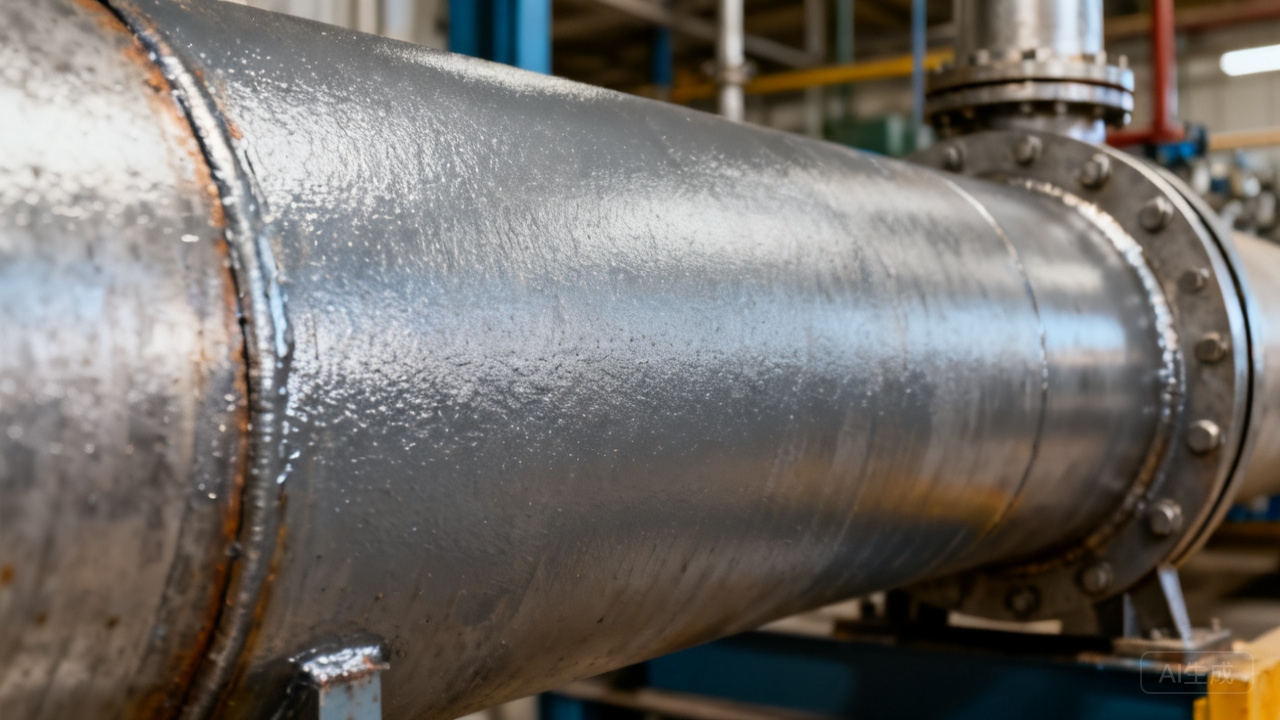
The core of imidazoline corrosion inhibitors lies in their unique five-membered heterocyclic structure (containing an electron-rich amide motif -N=C – N-), which enables the formation of a dense protective film on metal surfaces through both physical and chemical adsorption. This protective film prevents corrosive media from contacting the metal surface, thereby mitigating metal corrosion.
Vanconol series performance is optimized through three innovative approaches:
High ring-closure yield process:The FPI – S100 series employs closed-loop catalytic technology, effectively enhancing the conversion rate of imidazoline and improving molecular stability. A higher ring-closure yield means that more imidazoline molecules can form stable structures, thereby enhancing the adsorption capacity of the corrosion inhibitor on metal surfaces and the integrity of the protective film.
Anchoring reinforcement design: The imidazoline ring and imino groups form multiple coordination bonds (e.g., with iron), significantly enhancing the firmness of the film layer. Multi-point coordination allows inhibitor molecules to adsorb more tightly onto the metal surface, making them less susceptible to being washed away by corrosive media, thereby reinforcing the stability and durability of the protective film.
Hydrophobic chain modulation: Appropriately increasing the carbon chain length (e.g.,C18) enhances the hydrophobic barrier effect,improving the corrosion inhibition efficiency by12% – 15%. The presence of hydrophobic chains prevents water molecules and other polar corrosive media from approaching the metal surface, further enhancing the corrosion inhibition performance.
(II) Comparative Advantages over Other Corrosion Inhibitors
Compared with traditional corrosion inhibitors,Vanconol imidazoline corrosion inhibitors offer the following advantages:
[[/CONTENT]]
High Efficiency: Under the same service conditions, Vanconol® corrosion inhibitors achieve superior corrosion inhibition at lower dosages. Their unique molecular structure and innovative manufacturing process enable more effective adsorption onto metal surfaces, forming a denser and more stable protective film.
Environmental Friendliness: This corrosion inhibitor is synthesized from tall oil fatty acids and diethylenetriamine, with no heavy metals added, making it environmentally benign. This aligns with the environmental requirements of modern industry and reduces environmental pollution.
Strong Adaptability: It maintains excellent corrosion inhibition performance under harsh conditions such as high temperature, high salinity, and high CO₂ concentration, making it suitable for a wide range of industrial applications and complex operating environments.
III. Product Application Scenarios and Model Selection
(I) Oil and Gas Production
Water Injection Corrosion Inhibitor: The water-soluble grade FPI-S100W (20–50 mg/L) achieves a corrosion inhibition efficiency of up to 96.5% on X80 pipeline steel under dynamic conditions, making it highly suitable for CO₂ flooding production and gathering systems. In oil and gas production, water injection is a common enhanced oil recovery method, but the injected water often contains various corrosive species that can severely attack pipelines and equipment. FPI-S100W rapidly forms a protective film on metal surfaces, effectively preventing corrosive media from attacking, thereby ensuring normal oil and gas production operations.
Acidizing Corrosion Protection: FPI-S100MT, a Mannich base type, exhibits excellent acid resistance. Its adsorption in acidic media is further enhanced by thiourea modification, making it suitable for environments with pH 5–9. In acidizing operations, acidic solutions are used to dissolve rock formations and improve well permeability. However, these acidic solutions can cause severe corrosion to metal equipment. FPI-S100MT remains stable in acidic environments and provides effective corrosion inhibition, safeguarding the safe operation of equipment.
(II) Refining and Petrochemical Sector
[[/CONTENT]]
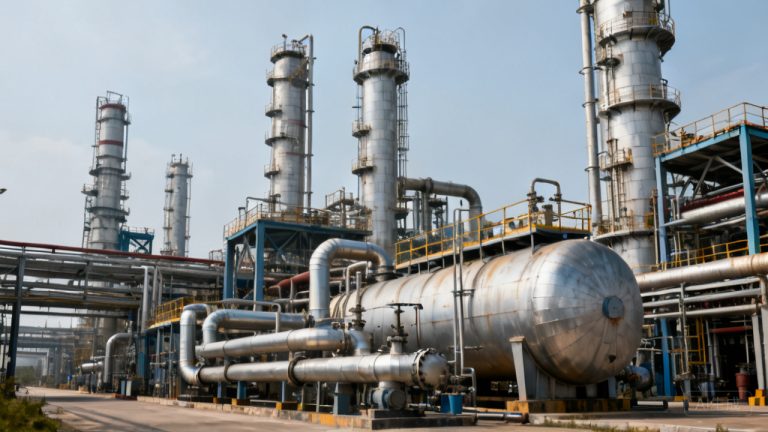
High-temperature corrosion inhibitor: FPI-S100EO, a polyether-type inhibitor, maintains stable film-forming performance at elevated temperatures up to 180°C, making it suitable for the protection of atmospheric and vacuum distillation units as well as high-temperature pipelines. In petroleum refining and petrochemical production, numerous equipment and pipelines operate under high-temperature conditions, where conventional corrosion inhibitors tend to decompose or lose their activity. The polyether structure of FPI-S100EO imparts excellent thermal stability, enabling it to form a stable protective film at elevated temperatures and effectively prevent high-temperature corrosion of metals.
Synergistic blending formulation: A ternary blend (e.g., FPI-S100MT:polyethylene glycol:thiourea = 1:1:1) achieves a corrosion inhibition efficiency exceeding 90%, while reducing single-agent costs by 30%. Blending different types of corrosion inhibitors leverages their synergistic effects to enhance corrosion inhibition performance while lowering costs. This formulation strategy holds significant application value in the petroleum refining and petrochemical sectors.
(III) Water Treatment and Circulating Systems
[[CONTENT]]
Circulating Water Corrosion Inhibitor: FPI-S100W, after pre-filming treatment (at a concentration of 3–5 times), rapidly forms a protective film that effectively blocks corrosion by Cl⁻ and O₂ (DOC2). In industrial circulating water systems, Cl⁻ and O₂ in the water are the primary corrosive factors. FPI-S100W rapidly forms a protective film on metal surfaces, preventing Cl⁻ and O₂ from coming into contact with the metal, thereby reducing the corrosion rate of the metal and extending the service life of the equipment.
Boiler Water Treatment: The polyether structure of FPI-S100EO inhibits hard scale deposition, extending equipment service life (DOC5). During boiler operation, calcium and magnesium ions in the water tend to form hard scale that adheres to the boiler inner wall, reducing thermal efficiency and potentially posing safety hazards. FPI-S100EO binds with calcium and magnesium ions in the water through its polyether structure, preventing hard scale formation and ensuring normal boiler operation.
IV. Environmental Friendliness and Economic Benefits
(I) Environmental Friendliness
Vanconol® imidazoline corrosion inhibitors are manufactured via a green synthesis process, using tall oil fatty acid and diethylenetriamine as raw materials, with no heavy metals added. This not only reduces environmental pollution but also meets the environmental requirements of modern industry. Compared with traditional oil-soluble corrosion inhibitors, Vanconol® inhibitors are safer and more environmentally friendly to use, supporting sustainable development.
(II) Economic Benefits
High Efficiency at Low Dosage: The working concentration is only 15–20 ppm, a 40% reduction in dosage compared with traditional oil-soluble corrosion inhibitors. The lower dosage reduces procurement costs for the corrosion inhibitor while also lessening the environmental burden.
[[CONTENT]]
Cost Reduction via Blending: Blending with acetylenic alcohols and molybdates produces a synergistic effect, reducing corrosion inhibition costs by 25%. By formulating different types of corrosion inhibitors, costs can be lowered while maintaining corrosion inhibition performance, thereby improving economic efficiency.
V. Technical Challenges and Future Directions
(I) Technical Challenges
Adaptability to Complex Operating Conditions: Under turbulent flow conditions, the durability of the protective film requires further enhancement. Turbulence can erode and disrupt the protective film formed by the corrosion inhibitor, compromising its integrity and stability, thereby reducing corrosion inhibition effectiveness.
Environmentally Friendly Upgrades: Bio-based raw materials (e.g., renewable fatty acids) need to be developed to reduce the ecological footprint. Although Vanconol corrosion inhibitors already possess a certain degree of environmental friendliness, the use of bio-based raw materials can further minimize environmental impact, aligning with the trend toward sustainable development.
Smart Release Technology: Combining solid sustained-release formulations enables long-lasting protection. Current corrosion inhibitors may exhibit a gradual decline in effectiveness during service. Smart release technology can automatically regulate the release rate of the inhibitor based on environmental conditions and corrosion status, achieving long-term protection.
(II) Future Directions
Molecular Dynamics Simulation Optimization: Future research can integrate molecular dynamics simulations to optimize functional group design, advancing imidazoline from a multi-purpose pickling inhibitor toward a multifunctional integrated protective material. Molecular dynamics simulations provide insights into the interaction mechanisms between inhibitor molecules and metal surfaces, enabling targeted design and optimization of inhibitor structures to enhance performance.
Expanding Application Fields: As industry advances, higher demands are placed on the performance and scope of application of corrosion inhibitors. Future efforts can further explore the use of Vanconor imidazoline corrosion inhibitors in other sectors, such as marine engineering and aerospace, providing efficient anti-corrosion solutions to a broader range of industrial fields.
Integration with Other Technologies: Vanconor corrosion inhibitors can be combined with coating technologies, cathodic protection, and other methods to form a comprehensive anti-corrosion system, enhancing protection effectiveness and reliability.
VI. Conclusions
[[CONTENT]]
Vanconol® imidazoline-type corrosion inhibitors (FPI-S100 series) demonstrate significant advantages in the field of industrial corrosion protection through molecular structure innovation and formulation technology. Their unique structure and innovative manufacturing process endow these inhibitors with high efficiency, environmental friendliness, and strong adaptability, making them suitable for multiple sectors including oil and gas extraction, petroleum refining and petrochemicals, and water treatment. Although certain technical challenges remain, continuous research and innovation are expected to further enhance their performance and expand their application scope, providing more efficient and environmentally friendly solutions for industrial corrosion protection. Meanwhile, with increasingly stringent environmental requirements and ongoing industrial technological advancement, Vanconol® corrosion inhibitors will continue to be upgraded and improved, evolving toward greener, smarter, and more multifunctional directions.
For further information, please refer to other content on the website of Tianjin Hi-Perferal Advanced Materials Co., Ltd..
[[CONTENT]]