Recommended Corrosion Inhibitors for Refining Units (Vanconol® Technical Edition)
Recommended Corrosion Inhibitors for Refining Units (Vanconol® Technical Edition)
Introduction
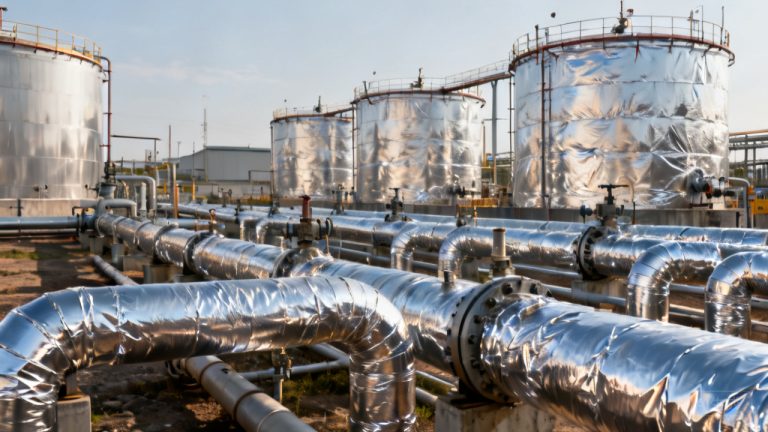
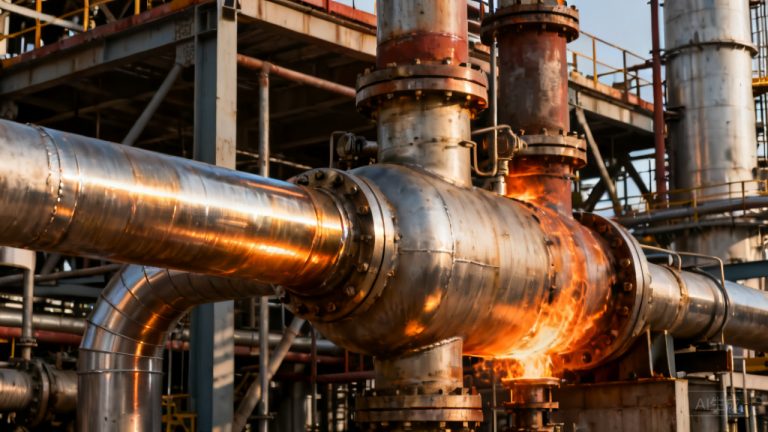
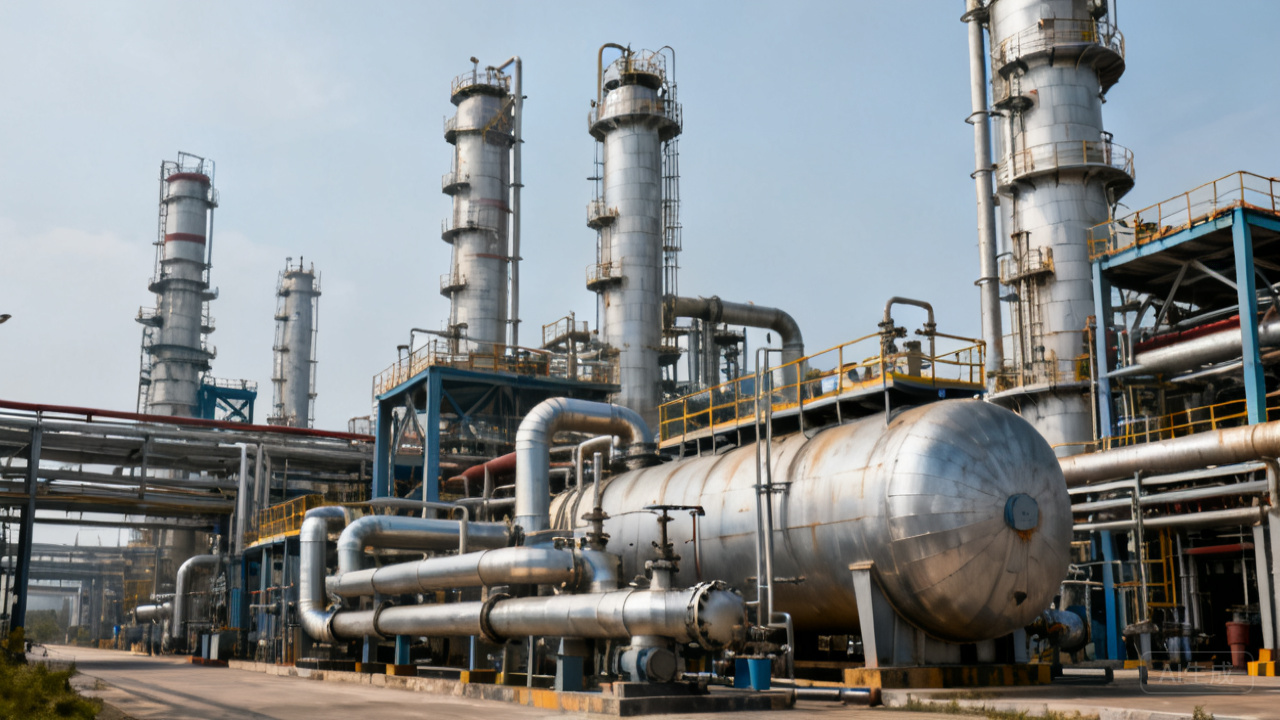
As core equipment in the petrochemical industry, refining units operate under prolonged exposure to high temperature, high pressure, and highly corrosive media. Corrosion has become a critical factor affecting safe unit operation, reducing production efficiency, and increasing maintenance costs. As a cost-effective corrosion protection approach, the scientific selection of corrosion inhibitors is of great significance for extending equipment service life and ensuring production continuity. Based on chemical engineering and corrosion protection theories, combined with actual operating conditions in oilfield and refining industries, this article systematically recommends suitable corrosion inhibitor types and selection principles for refining units, with emphasis on high-efficiency and environmentally friendly products under the Vanconol® brand—including fatty acid polyamine imidazoline, oleic acid hydroxyethyl imidazoline, and water-soluble imidazoline—providing technical references for refining enterprises.
I. Analysis of Corrosion Environments and Inhibitor Requirements in Refining Units
The corrosion environments of refining units exhibit the following notable characteristics:
Medium complexity: Sulfur-containing compounds (e.g., H₂S, mercaptans), organic acids, and chlorides in crude oil and its fractions readily induce chemical corrosion and electrochemical corrosion;
Extreme temperature and pressure: Operating temperatures in atmospheric/vacuum distillation, hydrocracking, and catalytic reforming units reach 300–500°C with pressures exceeding 10 MPa, accelerating corrosion rates;
Process diversity: From crude oil pretreatment to product finishing, multiple stages such as acid cleaning, water injection, and gathering/transportation are involved, with corrosion types covering uniform corrosion, pitting corrosion, and stress corrosion cracking (SCC).
In response to the above environments, corrosion inhibitors must satisfy the following core requirements:
High efficiency: Form a dense protective film at low concentrations to inhibit metal substrate dissolution;
Thermal stability: Withstand high-temperature conditions, with film stability exceeding 150°C;
Compatibility: No adverse reactions with process media or other additives;
Environmental friendliness: Comply with low-toxicity and biodegradable standards, minimizing secondary environmental pollution.
II. Recommended Corrosion Inhibitor Types for Oilfield and Refining Scenarios (Vanconol® Series)
1. Vanconol® Fatty Acid Polyamine Imidazoline Corrosion Inhibitors (FPI–S100 Series)
Technical positioning: Represented by the Vanconol® FPI-S100 series developed by Tianjin Hi-Perferal Advanced Materials Co., Ltd., this type of inhibitor forms a hydrophobic adsorption film on metal surfaces through the synergistic effect of polyamine groups and imidazoline rings, blocking contact with corrosive media.
Key advantages:
Green and environmentally friendly: Water-based formulation with VOC emissions lower than traditional nitrite-based inhibitors;
Broad-spectrum adaptability: Suitable for circulating cooling water, acid-cleaned pipelines, and high-temperature sections of refining units;
Long-lasting performance: Corrosion inhibition efficiency remains above 90% at 120°C.
Application scenarios:
Refining atmospheric/vacuum distillation units: Inhibits carbon steel corrosion in heat exchangers from the pre-flash tower to the vacuum tower sections;
Oilfield gathering and transportation systems: Addresses internal corrosion in sour crude oil transmission pipelines.
2. Vanconol® Oleic Acid Hydroxyethyl Imidazoline Corrosion Inhibitor
Technical Positioning: Prepared via condensation reaction of oleic acid with hydroxyethylamine. The long-chain alkyl group in the molecular structure provides a hydrophobic barrier, while the hydroxyl groups enhance chelation capability with metal oxides.
Core Advantages:
High-Temperature Resistance: Achieves a corrosion inhibition efficiency of 85% in a 200°C hydrocracking unit;
Sulfide Corrosion Resistance: Effectively inhibits sulfhydryl corrosion induced by H₂S;
Synergistic Effect: When compounded with molybdate, the film density increases by 30%.
Application Scenarios:
Hydroprocessing Reactors: Protects 316L stainless steel inner walls from high-temperature hydrogen embrittlement;
Coker Fractionating Towers: Controls chloride corrosion in the overhead condensing system.
3. Vanconol® Water-Soluble Imidazoline Corrosion Inhibitor (Tall Oil-Based Imidazoline)
Technical Positioning: Derived from tall oil (rosin acid) and modified via sulfonation to achieve water solubility, combining the adsorption activity of the imidazoline ring with the hydrophilicity of sulfonic acid groups.
Core Advantages:
Low-Temperature Applicability: In circulating water below 50°C, its corrosion inhibition efficiency surpasses that of traditional silicates;
Microbiologically Influenced Corrosion Resistance: Inhibits biofilm formation by sulfate-reducing bacteria (SRB);
Cost-Effectiveness: Unit concentration cost is 40% lower than that of organic phosphonates.
Application Scenarios:
Refinery Circulating Water Systems: Replaces chromates to meet environmental discharge requirements;
Oilfield Water Injection Wells: Controls casing corrosion caused by formation water.
4. Vanconol® Compound Corrosion Inhibitor (Molybdate-Imidazoline Synergistic System)
Technical Positioning: Combines the oxide film-forming capability of molybdate with the adsorption film characteristics of imidazoline to construct a dual-layer protective structure.
Core Advantages:
Synergistic Enhancement: Corrosion inhibition efficiency is improved by 2 to 3 times compared to individual components;
Erosion Resistance: Film retention rate exceeds 95% under high-velocity fluid flow (flow velocity > 3 m/s);
Multi-Metal Compatibility: Simultaneously protects carbon steel, low-alloy steel, and copper alloys.
Application Scenarios:
Refinery FCC Units: Protects high-temperature erosion-prone components such as regenerators and cyclone separators;
[[CONTENT]]
Oilfield acidizing pipelines: Mitigating the etching effect of mud acid (HCl-HF) on tubing materials.
III. Methodology for Corrosion Inhibitor Selection in Refining and Chemical Units
1. Operating Condition Parameter Matching Method
Temperature Grading: Below 100°C, select Vanconol® water-soluble imidazoline; at 100–200°C, prioritize Vanconol® oleic acid hydroxyethyl imidazoline; above 200°C, customized high-temperature acidizing corrosion inhibitors are required.
Medium Classification: For H₂S-containing conditions, choose Vanconol® sulfide-resistant imidazoline; for chloride-rich environments, employ the Vanconol® molybdate composite system.
2. Targeted Strategy for Corrosion Types
Uniform Corrosion: Primarily utilize Vanconol® fatty acid polyamine imidazoline, with concentration controlled at 50–100 ppm;
Pitting/Crevice Corrosion: Select Vanconol® tall oil-based imidazoline compounded with gluconate to reduce Cl⁻ adsorption;
Stress Corrosion: Add Vanconol® tannic acid-molybdate corrosion inhibitor to inhibit hydrogen atom permeation.
3. Balancing Environmental Friendliness and Economic Viability
Toxicity Control: Avoid carcinogenic substances such as chromates and nitrites; prioritize low-toxicity products like the Vanconol® FPI-S100 series;
Lifecycle Cost: Calculate the product of inhibitor unit price and dosage, and evaluate comprehensively in conjunction with equipment maintenance cycles.
IV. Typical Case Analysis
Case 1: Corrosion Treatment in the Atmospheric and Vacuum Distillation Unit of a Refinery
Problem: Pitting corrosion occurred on the carbon steel tube bundle of the overhead cooler in the primary distillation column, with an annual corrosion rate reaching 0.8 mm/year.
Solution:
Selected the Vanconol® FPI-S100 series corrosion inhibitor at a concentration of 80 ppm;
Combined with Vanconol® quaternary ammonium salt-molybdate composite agent to strengthen the film layer;
After 3 months of implementation, the corrosion rate decreased to 0.1 mm/year.
Case 2: Internal Corrosion Control in an Oilfield Gathering and Transportation Pipeline
Problem: Uniform wall thinning was observed on the internal surface of a pipeline transporting sour crude oil, with an average thickness loss of 15%.
Solution:
Injected Vanconol® oleic acid aminoethyl imidazoline corrosion inhibitor at a concentration of 120 ppm;
Added Vanconol® microbial inhibitor (tannic acid composite agent) monthly;
After 6 months, the remaining pipe wall thickness stabilized above 90%.
V. Future Development Trends
Nanomodification Technology: Enhancing the density of the Vanconol® corrosion inhibitor film layer through graphene and titanium dioxide nanoparticles;
Intelligent Responsive Corrosion Inhibitors: Developing pH/temperature-sensitive polymers for adaptive protection in corrosive environments;
Bio-based Raw Material Substitution: Preparing Vanconol® green corrosion inhibitors from renewable resources such as vegetable oleic acid and cardanol.
Conclusion
[[/CONTENT]]
The selection of corrosion inhibitors for refining and petrochemical units must take into account corrosion mechanisms, process conditions, and environmental requirements. Under the Vanconol® brand, products such as fatty acid polyamine imidazoline, oleic acid hydroxyethyl imidazoline, and water-soluble imidazoline, through molecular structure design and formulation optimization, can meet the protection requirements of extreme environments involving high temperature, high pressure, and sulfur-containing media. It is recommended that refining enterprises establish a dynamic monitoring system for corrosion inhibitors, and integrate analytical techniques such as electrochemical impedance spectroscopy (EIS) and scanning electron microscopy (SEM) to continuously optimize the selection scheme, thereby achieving the dual objectives of economic benefits and environmental protection.
[[CONTENT]]