
What Are Corrosion Inhibitor Intermediates? FPI and FPAM Application Guide
Corrosion inhibitor intermediates are the active base semi-finished products used by oilfield chemical manufacturers to formulate commercial corrosion inhibitors. This article explains the difference between intermediates and finished corrosion inhibitors, the significance of the cyclization rate indicator, and compares Vanconol®…
Corrosion Inhibitor Selection for Aluminum-Magnesium Alloy Cutting Fluids: Key Criteria and Formulation Blending Guidelines
For aluminum-magnesium alloy cutting fluids, the core principle is metal-specific selection: aluminum alloys call for polyether phosphate esters (Vanconol® ALI-910, withstands 200 g/L NaOH, optimum pH 8.0–9.5), while magnesium alloys call for chromium-free composite types (Vanconol® MGR-82, up to 91%…

What is Imidazoline Corrosion Inhibitor? A Complete Guide for Oilfield Anticorrosion Applications
Imidazoline corrosion inhibitors are the most widely used adsorption-film type inhibitors in oilfields, relying on the imidazoline ring to adsorb onto metal surfaces and a hydrophobic long chain to form a protective barrier against CO₂/H₂S/Cl⁻ corrosion. This article explains the…
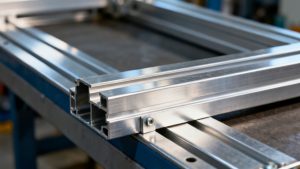
Protecting Aluminum Alloys from Corrosion
This technical guide from Hi-Perferal introduces the Vanconol® series of aluminum alloy corrosion inhibitors, covering their working principles, product lines, and application-specific solutions.

Why Acetylenic Diol Surfactants Achieve Low Foam — Dynamic Surface Tension and Defoaming Mechanism
Acetylenic diol surfactants achieve low foam through their unique gemini molecular structure, which lowers static surface tension while exhibiting low-foam properties. This article explains the defoaming mechanism from the perspective of dynamic surface tension.
Want to understand a principle?
Tell us the application scenarios or technical questions you care about, and we will compile them into articles.