

What is an Emulsifier? What is the Role of a Wetting Agent?
Both are surfactants in different functional roles: emulsifiers reduce oil-water interfacial tension and form an interfacial film to stabilize emulsions (depends on HLB value); wetting agents reduce solid-liquid interfacial tension, promoting liquid spreading and penetration (depends on contact angle and…

Are Dispersants Toxic? Safety Considerations & Usage Notes
The toxicity of a dispersant depends on its chemical structure and carrier medium: waterborne polymer dispersants are generally low-toxicity, while solvent-borne dispersants pose flammability and irritation risks due to organic solvents. This article clarifies how to assess dispersant toxicity, differences…

Dispersants: What They Are, How They Work, Composition, and Classification
Dispersants are additives that keep solid particles (pigments, fillers) stably suspended in liquids, preventing settling and agglomeration via electrostatic repulsion or steric hindrance. This article explains their main chemical types (polyacrylates, polyurethanes, polyethers/polyesters), classification, stabilization mechanisms, selection guidelines, along with…

Nonionic vs. Anionic Surfactants: What’s the Difference and How to Choose
Nonionic and anionic surfactants differ in whether the hydrophilic group carries a charge: anionic surfactants (LAS, AES, SDS) are negatively charged, offering strong detergency and high foaming, while nonionic surfactants (AEO, Tween, acetylenic diols) are uncharged, providing excellent tolerance to…

Are Surfactants Toxic? Toxicity Classification and Safe Use
Are surfactants toxic? Direct answer: Most industrial surfactants fall into low-toxicity to slightly toxic categories, but "non-toxic" is incorrect. This article explains acute toxicity classification (LD50/GHS), common surfactant toxicity comparisons, hidden risks such as APEO and 1,4-dioxane, and safe use…

What Are Surfactants? – Composition, Classification, and Common Types
Surfactants, composed of hydrophilic heads and hydrophobic tails, reduce surface tension. This article explains their composition, classification (ionic vs. nonionic), common types (SDS, AES, LAS, AEO, Tween, acetylenic diols), and selection guide, including alternative options for import substitution.

Acetylenic Diol Surfactants: Principles and Selection Criteria for Waterborne Coatings
Acetylenic diol surfactants offer a unique combination of low foam and strong wetting/dispersion, typically used at 0.1%–1% to address slow wetting, uneven dispersion, and process foam in waterborne formulations. Key selection criteria include dynamic surface tension, foam height, and system…

Analysis of Oilfield Corrosion Inhibitor Technology Trends and Market Opportunities
This article analyzes the technology trends, market opportunities, and industry challenges of oilfield corrosion inhibitors, providing strategic references for related enterprises.
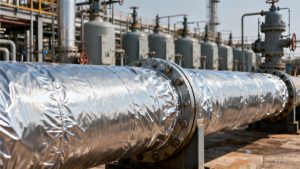
Corrosion Inhibitors for Oilfield and Refining Applications: Performance Requirements, Types, and Domestic Brand Advantages
This article provides a multi-dimensional discussion of corrosion inhibitors for oilfield and refining applications, covering performance requirements, inhibitor types, structure–performance relationships of typical chemistries, and a comparison of leading domestic brands including Tianjin Hi-Perferal.

Dynamic Surface Tension and Spray Application: Why Wetting Agent Selection Determines Coating Quality
In spray application, spreading of atomized droplets on the substrate occurs within milliseconds, and static surface tension alone cannot describe the process. This article explains the significance of dynamic surface tension and its effect on coating defects.
Want to understand a principle?
Tell us the application scenarios or technical questions you care about, and we will compile them into articles.