Nonionic vs. Anionic Surfactants: What’s the Difference and How to Choose
Bottom line: The dividing line between nonionic and anionic surfactants is whether the hydrophilic group ionizes and carries a charge — anionic surfactants (LAS, AES, SDS, etc.) ionize to carry a negative charge, giving strong detergency and rich foam, but have limited hard water/alkali tolerance and cannot be combined with cationic surfactants; nonionic surfactants (AEO, Tween, APG, acetylenic diols, etc.) do not ionize and carry no charge, offering tolerance to acids, alkalis, and salts, compatibility with both anionic and cationic types, and adjustable hydrophilicity through EO chain length — they can be designed to be low-foam and are the most “versatile” class in formulations.
1. First Understand What “Ionic Type” Means
When a surfactant dissolves in water, its hydrophilic group may ionize (dissociate into ions). Based on this characteristic, surfactants are divided into two categories:
- Ionic surfactants: The hydrophilic group ionizes and carries a charge — a negative charge makes it anionic, a positive charge makes it cationic, and both positive and negative charges make it amphoteric;
- Nonionic surfactants: The hydrophilic group does not ionize and carries no charge; it gains hydrophilicity by forming hydrogen bonds with water molecules through polyoxyethylene ether chains (-CH₂CH₂O-) or polyol polar groups.
In a nutshell: Whether the surfactant carries a charge determines its “behavior” in water — charged types work via electrostatic repulsion, while uncharged types work via hydrogen bonding and steric effects.
2. Anionic Surfactants: Workhorses of Detergency, High-Foaming Champions
Characteristics: The hydrophilic group carries a negative charge; common groups are sulfonate (-SO₃⁻), sulfate ester (-OSO₃⁻), carboxylate (-COO⁻), and phosphate ester. The charge provides strong adsorption and high interfacial activity, making anionic surfactants excellent in detergency, emulsification, and dispersion.
| Common Type | Full Name / Common Name | Characteristics |
|---|---|---|
| LAS | Linear alkylbenzene sulfonate (sodium salt) | Workhorse in laundry powders, cost-effective, moderate hard water tolerance |
| AES / SLES | Sodium alcohol ether sulfate | Mainstream in liquid cleaners, rich foam, milder than LAS |
| SDS / K12 | Sodium dodecyl sulfate (sodium lauryl sulfate) | Classic in toothpaste, shampoo, and emulsion polymerization |
| AOS | Alpha-olefin sulfonate (sodium salt) | Mild, biodegradable, used in household and industrial cleaning |
| Phosphate esters | Alkyl/ether phosphate potassium (or sodium) salts | Used in metalworking, textile auxiliaries, also offer anti-rust properties |
Limitations: They precipitate and lose effectiveness when combined with cationic surfactants; some types (e.g., carboxylates) form insoluble compounds with calcium and magnesium ions in hard water; high concentrations may cause degreasing and skin irritation.
Bottom line: Anionic surfactants = “strong players” for detergency/foaming, but avoid cationic types and watch out for water hardness.
3. Nonionic Surfactants: Versatile Players — Can Be Salty or Sweet
Characteristics: They do not ionize; hydrophilicity comes from polar groups such as EO chains. Therefore, they are tolerant to acids, alkalis, salts, and hard water, are compatible with both anionic and cationic surfactants, and their foaming can be designed to be very low through structural control (frequent choice in low-foam/defoaming scenarios).
| Common Type | Full Name / Common Name | Characteristics |
|---|---|---|
| AEO-9 | Alcohol ethoxylate (EO=9) | General-purpose wetting/emulsifying/cleaning; hydrophilicity adjustable by EO number |
| TX-10 / NP-10 | Nonylphenol ethoxylate (APEO) | ⚠️ Restricted for export (REACH); substitution recommended |
| Tween 80 / Span 80 | Polysorbate / Sorbitan ester | Food and pharmaceutical grade emulsifiers; wide HLB range |
| APG | Alkyl polyglycoside | Mild, low irritation, readily biodegradable; trend in high-end household care |
| Acetylenic diols | e.g., TMDD (CAS 126-86-3), Toynol® FS-204 | Fast dynamic wetting with foam control; used in high-speed coating and ink applications |
Key concept — Cloud point: The solubility of nonionic surfactants (especially EO types) in water decreases as temperature rises; at a certain temperature the solution becomes cloudy (cloud point). The application temperature should be below the cloud point; otherwise, the surfactant may become ineffective and precipitate.
Bottom line: Nonionic surfactants = compatibility “universal oils” + designable low-foam; remember “application temperature should not exceed the cloud point.”
4. Comparison: At a Glance
| Aspect | Anionic | Nonionic |
|---|---|---|
| Hydrophilic group | Ionized, carries negative charge | Non-ionized, relies on EO chains/polyols for hydrophilicity |
| Detergency | Strong | Moderate to strong (depends on EO number and structure) |
| Foaming | High | Can be high or low (can be designed as low-foam) |
| Hard water/salt tolerance | Moderate (carboxylates poor) | Excellent |
| Acid/alkali tolerance | Moderate | Excellent |
| Compatibility with cationics | Conflict (precipitation) | Compatible |
| Temperature sensitivity | Low | Has cloud point; ineffective above it |
| Typical cost | Lower | Moderate to higher (APG, acetylenic diols on the higher side) |
| Representative types | LAS, AES, SDS, AOS | AEO, Tween/Span, APG, acetylenic diols |
Bottom line: For strong detergency and foaming, choose anionic; for compatibility, salt/alkali tolerance, and low-foam, choose nonionic — they are often used together (anionic for detergency, nonionic for salt tolerance and low-foam).
5. How to Choose Based on Application?
| Application | Recommended Direction | Rationale |
|---|---|---|
| Laundry powder / dishwashing liquid | Anionic (LAS/AES) + small amount of nonionic | Primarily detergency; nonionic aids salt tolerance and hard water resistance |
| Emulsion polymerization / emulsification | Anionic (SDS/AES) + nonionic combination | Dual stabilization: charge + steric hindrance |
| Wetting in waterborne coatings/inks | Nonionic acetylenic diols (FS-204, Superwet series) | Fast dynamic wetting, low-foam, APEO-free |
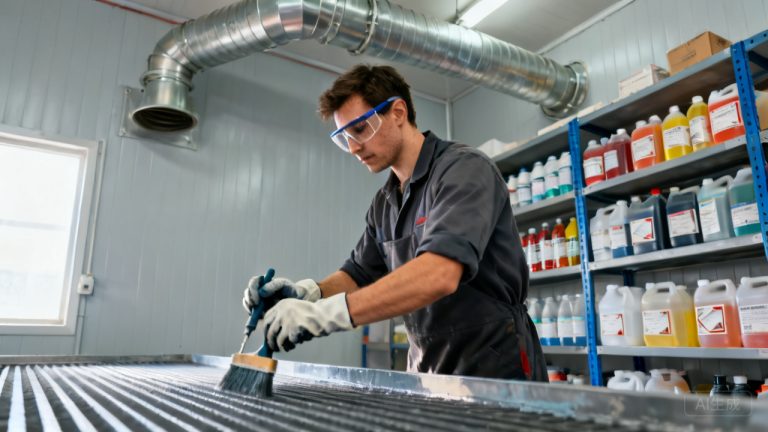
| Metal cleaning / pretreatment | Nonionic (alkali-tolerant type, e.g., Toynol® LFS series) | Strong alkali tolerant, low-foam, safe for compatibility |
| High temperature / high electrolyte systems | Nonionic (check cloud point) or salt-tolerant anionic | Anionics may salt out; nonionics require cloud point check |
Bottom line: First consider system pH, salinity, temperature, and foam requirements, then decide the ionic type — for low-foam, alkali tolerance, and complex compatibility systems, prioritize nonionic.
Frequently Asked Questions (FAQ)
Q1: What is the difference between nonionic and anionic surfactants?
A: The essential difference is whether the hydrophilic group ionizes: anionic carries a negative charge (strong detergency, high foam, incompatible with cationics), while nonionic carries no charge (tolerant to acids/alkalis/salts, good compatibility, foam can be designed as low-foam, has a cloud point).
Q2: What are some common anionic surfactants?
A: Common examples include LAS (sodium alkylbenzene sulfonate), AES (sodium alcohol ether sulfate), SDS/K12 (sodium dodecyl sulfate), AOS (sodium alpha-olefin sulfonate), and phosphate ester salts.
Q3: What are some common nonionic surfactants?
A: Common examples include AEO (alcohol ethoxylate), Tween/Span, APG (alkyl polyglycoside), acetylenic diols (e.g., Toynol® FS-204); TX-10/NP-10 belong to APEO, which are restricted for export.
Q4: Can these two types be used together?
A: Yes. Nonionic and anionic surfactants are generally compatible; combining them can balance detergency with salt tolerance and low-foam performance. However, anionic surfactants should not be used with cationics (will precipitate).
Q5: Why are nonionic surfactants often used in waterborne coatings?
A: Because they need to balance low-foam, electrolyte tolerance (pigment/filler systems contain many ions), and compatibility with various additives. Acetylenic diols also provide fast dynamic wetting, suitable for high-speed coating and printing.
Key Conclusions
- Dividing line: whether the hydrophilic group ionizes and carries a charge — anionic carries negative charge, nonionic carries none
- Anionic: strong detergency, high foam, low cost; avoid cationics, some fear hard water
- Nonionic: tolerant to acids/alkalis/salts, versatile compatibility, designable foam; watch cloud point, slightly higher cost
- Common combination: anionic for detergency + nonionic for salt tolerance and low-foam
- For low-foam, alkali tolerant, or complex compatibility systems, prioritize nonionic (AEO, acetylenic diols, etc.)
Data source: Classification and properties are general technical knowledge in the industry; product series (FS-204, Superwet, LFS, etc.) are referenced from Tianjin Hi-Perferal Advanced Materials Co., Ltd. website (www.surfychem.com); specific performance should be confirmed with corresponding TDS.
This article was written by the technical team of Tianjin Hi-Perferal Advanced Materials Co., Ltd. Toynol® is a registered trademark. For more technical information: www.surfychem.com / www.hipfer.com