What Are Surfactants? – Composition, Classification, and Common Types
One-sentence summary: Surfactants (commonly called “surfactants” in the industry) are substances that significantly reduce the surface tension of a liquid when added in small amounts. Their molecules consist of a hydrophilic head and a hydrophobic tail. Based on whether the hydrophilic group ionizes in water, they are classified into four major categories: anionic, cationic, amphoteric, and nonionic. Common types include SDS, AES, LAS, AEO-9, Tween 80, and acetylenic diols (e.g., Surfynol / Toynol® FS-204). Selection depends on ionic nature, HLB value, and system compatibility.
1. What Are Surfactants? – Start with a One-Sentence Definition
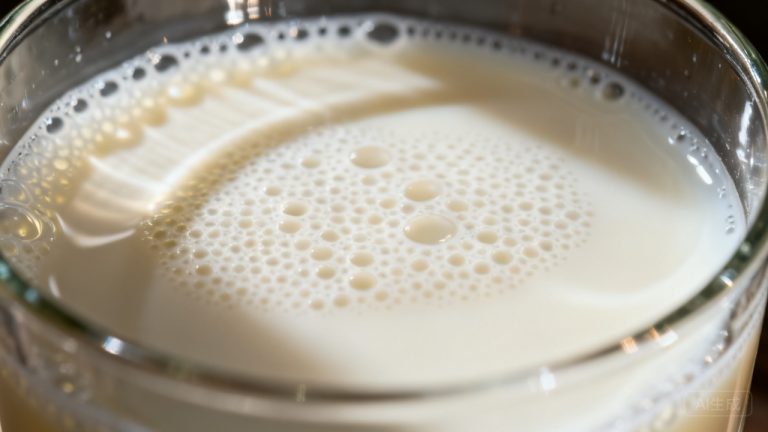
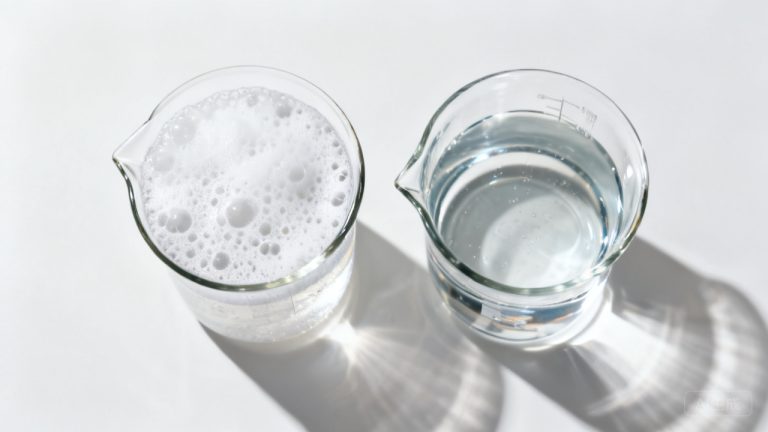
A surfactant (short for surface active agent) is a substance that, at very low concentrations, can significantly reduce the surface tension (or interfacial tension) of water or other liquids. The foaming and detergency of laundry powder, the spreading of coatings on plastics, and the emulsification of oil and water into a stable emulsion are all driven by surfactants.
Common names: In the industry, they are simply called “surfactants”; in specific applications, they are referred to as wetting agents, dispersants, emulsifiers, defoamers, foaming agents, penetrants, or leveling agents—most of these are “role names” of surfactants in different contexts.
In a word: Surfactants are “interfacial magicians”—they do not change the bulk properties of a liquid, only its interfacial behavior.
2. What Is the Composition of Surfactants?
The molecular structure of surfactants can be summarized in one phrase: one end hydrophilic, the other hydrophobic (amphiphilic structure).
| Structural Unit | Typical Groups | Examples |
|---|---|---|
| Hydrophilic head (head group) | Sulfonate, sulfate ester, carboxylate, phosphate ester, polyoxyethylene chain, quaternary ammonium cation, polyol/glycoside | -SO₃Na, -OSO₃Na, -COONa, -NH⁺(CH₃)₃ |
| Hydrophobic tail (tail group) | Hydrocarbon chains (C8–C20), alkylbenzene, alkylphenol, polyoxypropylene chain, fluorocarbon chain, siloxane chain | Dodecyl, nonylphenyl, polydimethylsiloxane |
Because of this “one end hydrophilic, one end hydrophobic” nature, surfactant molecules spontaneously accumulate at water-air, water-oil, and water-solid interfaces, with the hydrophobic tail oriented toward the air/oil/solid and the hydrophilic head remaining in the water, thereby reducing interfacial tension and altering wetting and dispersion behavior.
In a word: The “composition” of a surfactant is a specific combination of a hydrophilic group and a hydrophobic group; different combinations produce completely different performance.
3. How Are Surfactants Classified? – Four Major Categories Explained
The most common industrial classification is based on whether the hydrophilic group ionizes in aqueous solution and the charge it carries:
| Type | Characteristic of Hydrophilic Group | Common Designations / Trade Names | Typical Applications |
|---|---|---|---|
| Anionic | Negatively charged after ionization | LAS (linear alkylbenzene sulfonate), AES (alcohol ether sulfate), SDS/K12 (sodium dodecyl sulfate), AOS (alpha-olefin sulfonate) | Detergency, emulsification, dispersion; strong cleaning power |
| Cationic | Positively charged after ionization | 1227 (benzalkonium chloride), CTAB (cetyltrimethylammonium bromide), 1631 | Antimicrobial, softening, antistatic, bitumen emulsification |
| Amphoteric | Contains both positive and negative charge groups | Betaines (BS-12), lecithin, amino acid-type | Mild detergency, personal care, metalworking |
| Nonionic | Does not ionize; relies on polar groups for water solubility | AEO-9 (fatty alcohol ethoxylate), TX-10/NP-10, Tween 80, Span 80, APG (alkyl polyglycoside), acetylenic diols | Wetting, emulsification, dispersion, low-foam applications |
In a word: The essential difference between ionic (anionic/cationic/amphoteric) and nonionic surfactants lies in whether the hydrophilic group “carries a charge”—this determines salt tolerance, foaming tendency, and compatibility with other additives.
4. Common Types and Their Trade Names – What the Names Mean in Formulations
In formulation and procurement scenarios, surfactant types are often referred to by abbreviations. The following table provides a cross-reference:
| Abbreviation / Common Name | Full Name | Type | Common Applications |
|---|---|---|---|
| SDS / K12 / Sodium dodecyl sulfate | Sodium dodecyl sulfate (CAS 151-21-3) | Anionic | Toothpaste, shampoo, emulsion polymerization, laboratory |
| AES / SLES | Sodium alcohol ether sulfate | Anionic | Detergents, liquid cleaners |
| LAS / Linear alkylbenzene sulfonate | Sodium dodecylbenzene sulfonate (CAS 25155-30-0) | Anionic | Laundry powder, industrial cleaning |
| AEO-9 / Peregal | Fatty alcohol ethoxylate (EO = 9) | Nonionic | Penetration, emulsification, textile auxiliaries |
| TX-10 / NP-10 / OP-10 | Nonylphenol/octylphenol ethoxylate | Nonionic | Penetration, cleaning (⚠️ APEO – export restricted, see note below) |
| Tween 80 | Polysorbate 80 | Nonionic | Food, pharmaceuticals, emulsion polymerization |
| Span 80 | Sorbitan monooleate | Nonionic | Water-in-oil emulsification |
| Surfynol series / Toynol® FS-204 | Acetylenic diols (TMDD, CAS 126-86-3) | Nonionic | Wetting and foam control in waterborne coatings/inks |
⚠️ APEO Alert: TX-10 and OP-10 belong to alkylphenol ethoxylates (APEO). EU REACH has restricted nonylphenol ethoxylates and related substances (content ≥0.01% not allowed on the market as of 2021). Export-oriented formulations are advised to replace them with fatty alcohol ethoxylates (AEO) or acetylenic diols.
In a word: The “type designation” is a structural code; once you understand the ionic nature and hydrophilic group, you can predict about 70–80% of the product’s performance.
5. How to Select the Right Surfactant – A Three-Step Approach
- Consider the system: For waterborne systems, choose water-soluble surfactants; for oil/solvent-based systems, choose oil-soluble or dispersible types.
- Check ionic compatibility: Anionic surfactants should not be used together with cationic ones (they will precipitate). Nonionic surfactants are compatible with almost all types and are the most versatile “general-purpose” option.
- Match the functional focus: For applications that require both wetting and foam control (e.g., coatings, inks, high-speed cleaning), prioritize acetylenic diol nonionic surfactants. For example, Toynol® FS-204 exhibits a dynamic surface tension of approximately 33.3 dyn/cm and a static surface tension of approximately 32.8 dyn/cm (0.1% aqueous solution, refer to official TDS for exact data), is APEO-free, and provides wetting with inherent foam suppression in a single additive.
In a word: First determine the ionic type, then check HLB/surface tension data, and finally validate with small-scale system testing—selection tables are the starting point, drawdown tests are the end point.
Frequently Asked Questions (FAQ)
Q1: What is the composition of a surfactant?
A: It consists of a hydrophilic group (sulfonate, sulfate ester, carboxylate, polyoxyethylene chain, quaternary ammonium group, etc.) and a hydrophobic group (C8–C20 hydrocarbon chain, alkylbenzene, fluorocarbon/siloxane chain, etc.). The amphiphilic structure is the fundamental reason for its action.
Q2: What are the common names for surfactants?
A: In the industry, they are simply called “surfactants.” Depending on the application, they may be referred to as wetting agents, dispersants, emulsifiers, defoamers, penetrants, leveling agents, etc.—most of these are essentially surfactants serving different roles.
Q3: How are surfactants classified, and what are the common types?
A: Based on ionization in water, they are divided into anionic (SDS/K12, AES, LAS), cationic (1227, CTAB), amphoteric (betaines, lecithin), and nonionic (AEO-9, Tween 80, Span 80, APG, acetylenic diol FS-204) categories.
Q4: What does “EO” mean in surfactant designations?
A: “EO” stands for ethylene oxide units that form a polyoxyethylene chain. For example, AEO-9 indicates a fatty alcohol with 9 EO units. The higher the EO number, the stronger the hydrophilicity, the higher the cloud point, and the larger the HLB value.
Q5: Why can’t TX-10 or OP-10 be used in export formulations?
A: They are APEO (alkylphenol ethoxylates), which are restricted under EU REACH (content ≥0.01% not allowed on the market). It is recommended to replace them with AEO or acetylenic diol nonionic surfactants.
Key Conclusions
- A surfactant is an amphiphilic molecule with a hydrophilic head and a hydrophobic tail; a small amount significantly alters interfacial properties. Commonly referred to as “surfactant.”
- Four major categories based on ionization: anionic (strong detergency), cationic (antimicrobial/softening), amphoteric (mild), nonionic (broad compatibility, most versatile).
- The product designation is a structural code: understanding the ionic nature and hydrophilic group behind names like SDS, AES, LAS, AEO, Tween, and acetylenic diols helps predict performance.
- Selection in three steps: determine the system → check compatibility → validate with small-scale testing. For high-speed wetting and foam control applications, acetylenic diols (e.g., Toynol® FS-204) can be considered.
- Avoid APEO products (TX-10, OP-10) in export formulations; replace with AEO or acetylenic diols.
Data Statement: Surface tension and product data are sourced from Tianjin Hi-Perferal Advanced Materials Co., Ltd. official website (www.surfychem.com) and official TDS; GHS/REACH regulatory information is a public summary of regulations; specific product performance should be verified against the corresponding SDS/TDS.
This article was written by the technical team of Tianjin Hi-Perferal Advanced Materials Co., Ltd. Toynol® is a registered trademark. For more technical information: www.surfychem.com / www.hipfer.com