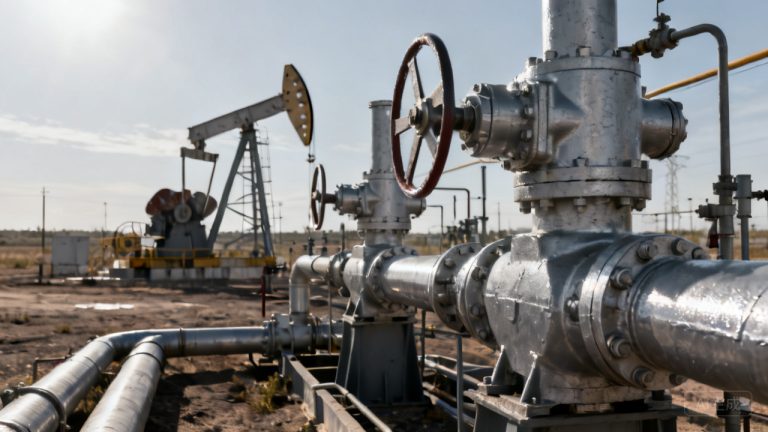
Oilfield Corrosion Inhibitor Technology Trends and Market Opportunity Analysis
Oilfield Corrosion Inhibitor Technology Trends and Market Opportunity Analysis
1. Introduction
As global energy demand continues to grow and oilfield development becomes increasingly challenging, corrosion in oil and gas production has emerged as a critical factor affecting safety, efficiency, and cost. Oilfield corrosion inhibitors, as a core corrosion control technology, play an indispensable role in protecting equipment, extending service life, and reducing maintenance costs. This article provides an in-depth analysis of technology development trends, market opportunities, and industry challenges, offering strategic reference for relevant enterprises.
2. Oilfield Corrosion Inhibitor Market Status and Growth Trends
The oilfield corrosion inhibitor market size is expanding steadily with increasing oil and gas extraction intensity. According to the latest market research, the global oilfield corrosion inhibitor market reached 18.2 billion RMB in 2025 and is expected to expand at a compound annual growth rate of 6.37%, reaching 28.0 billion RMB by 2032. This growth is driven by the following factors:
• Increasing oilfield development difficulty: Global oilfields are generally entering stages of high water cut, high sulfur content, high temperature and high pressure, creating increasingly harsh corrosive environments and demanding higher inhibitor performance.
• Stricter environmental regulations: Growing environmental requirements for oilfield chemicals are driving the development of greener, low-toxicity, biodegradable corrosion inhibitors.
• Technology upgrade needs: Unconventional oil and gas development (e.g., shale gas, tight oil) and deepwater operations impose higher demands on corrosion inhibitors.
Geographically, the Asia-Pacific region is the fastest-growing market for oilfield corrosion inhibitors, with China, India, Indonesia, Malaysia, and Australia showing particularly strong performance. Driven by national energy security strategy, the “dual carbon” goals, and the upgrading of mature oilfields, China has established a complete production and technology system. Domestic enterprises, leveraging cost and supply chain responsiveness, are accelerating the upgrade to high-end, environmentally friendly, and smart monitoring corrosion inhibitors.
3. Technology Development Trends
3.1 Product Technology Upgrade Directions
Oilfield corrosion inhibitors are evolving toward high efficiency, environmentally friendly, and multifunctional solutions. Key technology trends include:
• Green and eco-friendly: Development of non-toxic, heavy-metal-free, biodegradable corrosion inhibitors that comply with international regulations such as REACH.
• Multifunctional compounding: Development of composite inhibitors combining corrosion inhibition, scale inhibition, and biocidal functions to simplify chemical dosing procedures.
• High-temperature and high-pressure adaptability: Development of inhibitors with improved thermal and pressure stability for deep and ultra-deep wells, suitable for environments above 150°C.
• Smart responsive type: Development of intelligent inhibitors that can automatically adjust protective performance based on changes in corrosive environment, improving protection efficiency.
3.2 Key Areas of Technology Innovation
• Imidazoline-type inhibitors: Imidazoline-type inhibitors (e.g., Vanconol inhibitor S-101 series, produced by Hi-Perferal) contain a nitrogen-containing five-membered heterocyclic ring and long-chain alkyl groups, providing excellent film-forming ability and surface activity, making them the most widely used inhibitor category globally. Technology development directions include:
• Oil-soluble imidazoline series: covering different fatty acid chain lengths and modification degrees, suitable for formulating oil-based inhibitor products.
• Water-soluble imidazoline series: achieving self-emulsifying dispersion in aqueous media by introducing ethylene oxide segments.
• Modified imidazoline series: molecular structure optimization for specific operating conditions to further enhance temperature resistance and film strength.
• Mannich base inhibitors: Mannich base inhibitors (e.g., Vanconol inhibitor MNC-02, produced by Hi-Perferal) are suitable for high-temperature acidizing environments, providing critical protection for oilfield acidizing stimulation operations. They maintain stable corrosion inhibition performance under high-temperature acidizing conditions at 120–140°C (e.g., Vanconol inhibitor ET-105, produced by Hi-Perferal).
• Nanoparticle–based inhibitors: Utilizing the high specific surface area and unique physicochemical properties of nanomaterials to develop long-lasting nanocomposite corrosion inhibitors.
3.3 Smart Application Trends
With the development of Industry 4.0 and IoT technologies, oilfield corrosion inhibitors are increasingly integrated with smart monitoring solutions:
• Intelligent corrosion monitoring systems: Real-time corrosion monitoring via electrical resistance (ER) probes, combined with AI algorithms for dynamic optimization of inhibitor dosage.
• Digital twin technology: Building digital twin models for corrosion protection, enabling corrosion prediction, inhibitor effectiveness simulation, and optimization.
• Remote monitoring and control: Remote monitoring and automatic adjustment of inhibitor dosing units via 5G and satellite communication.
4. Market Opportunity Analysis
4.1 Growth Points in Segmented Markets
• High‑sulfur / high‑CO₂ oilfields: Increasing development of high‑sulfur gas fields drives demand for corrosion inhibitors resistant to sulfur and CO₂ corrosion.
• Deepwater oil and gas development: Deepwater environments require inhibitors with higher resistance to pressure, salt spray, and high chloride ion concentration.
• Mature oilfield refurbishment: Many mature oilfields worldwide face corrosion‑related aging, creating strong demand for inhibitor replacements and upgrades.
• CCUS-EGR projects: Complex corrosive environments in carbon capture, utilization, and storage projects generate demand for novel corrosion inhibitors.
4.2 Technology Innovation Opportunities
• Domestic substitution: In high‑end fields such as ultra‑high‑sulfur gas fields, domestic corrosion inhibitors are gradually replacing imports.
• Customized services: Providing tailored corrosion inhibitor solutions for different oilfield geological conditions to increase customer loyalty.
• Full life‑cycle services: Extending from product sales to corrosion monitoring, evaluation, and optimization as an integrated service.
4.3 Policy and Standard Drivers
• Upgraded environmental regulations: Stricter environmental performance requirements for oilfield chemicals create market space for green inhibitors.
• Higher safety standards: Improved oil and gas production safety standards promote wider application of inhibitors in corrosion control.
• Improved industry standards: Enhanced industry standards provide normative guidance for technology innovation and product quality improvement.
5. Challenges and Response Strategies
5.1 Major Challenges
• High technical barriers: Advanced inhibitor R&D requires deep chemical knowledge and extensive oilfield application experience.
• Cost pressure: Development of environmentally friendly, high‑performance inhibitors is costly, facing price competition.
• Complex application environments: Corrosive conditions vary widely among oilfields, posing challenges to inhibitor suitability.
• Talent shortage: Shortage of interdisciplinary corrosion control specialists impacting technology innovation and application.
5.2 Response Strategies
• Strengthen industry-academia-research cooperation: Collaborate with universities and research institutes to accelerate technology innovation and result commercialization.
• Build technological barriers: Protect core technologies through patent portfolio to establish competitive advantage.
• Expand application scenarios: Extend from traditional oilfields to emerging areas such as shale gas and geothermal energy.
• Cultivate professional talent: Establish a comprehensive talent development system to enhance team technical capabilities.
6. Conclusion and Outlook
Oilfield corrosion inhibitors, as critical chemicals for safe oil and gas production, are facing dual opportunities of technology upgrading and market expansion. Future development trends are expected to show the following characteristics:
• Greenization: Environmentally friendly corrosion inhibitors will become mainstream, meeting increasingly stringent environmental regulations.
• Intelligentization: Deep integration with smart monitoring and AI technologies will achieve precise and automated corrosion protection.
• Customization: Providing tailored solutions for different oilfield conditions to increase product added value.
• Globalization: As the global oil and gas exploration focus shifts, emerging markets will become important growth points.
For enterprises, the keys to seizing technology upgrade and market opportunities lie in: strengthening R&D investment to master core technologies; expanding application fields to develop emerging markets; enhancing service quality to provide full life-cycle solutions; and strengthening international cooperation to integrate into the global industrial chain. At the same time, staying close to environmental regulatory changes and technology trends, and making early preparations, will help maintain a leading position in the fiercely competitive market.