What is an Emulsifier? What is the Role of a Wetting Agent?
One-sentence conclusion: Emulsifiers and wetting agents are both surfactants, differing in their “target interface”: emulsifiers serve the oil-water interface by reducing interfacial tension and forming an interfacial film to stabilize emulsions (selection depends on HLB; common types include Tween, Span, and AEO); wetting agents serve the solid-liquid interface by reducing contact angle, enabling rapid spreading and penetration on low-surface-energy substrates (selection depends on contact angle and dynamic surface tension; acetylenic diols such as Toynol® FS-204/Superwet series are commonly used in waterborne systems).
1. What is an Emulsifier? – Making Oil and Water “Coexist”
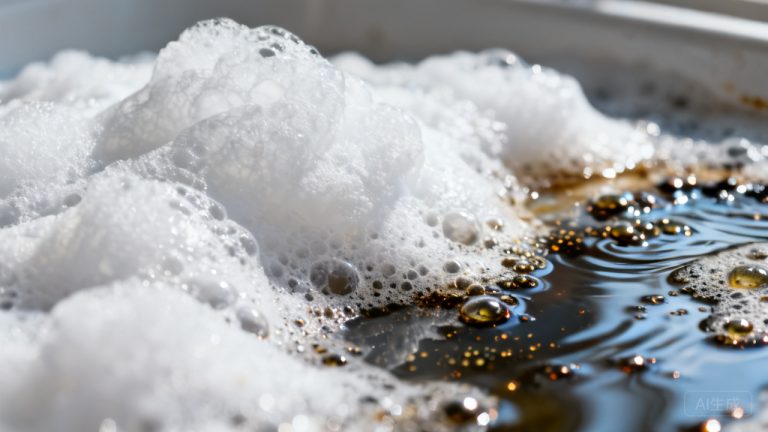
Oil and water are immiscible, but many products require them to be mixed – emulsion polymerization, pesticide emulsions in water, cosmetic emulsions, and emulsified cutting fluids all rely on emulsifiers.
How an emulsifier works involves two steps:
- Reduce interfacial tension: Emulsifier molecules gather at the oil-water interface, with the hydrophilic head in the water phase and the hydrophobic tail in the oil phase, turning the originally “repelling” oil-water interface into one that “prefers contact.” Mechanical agitation then disperses the mixture into fine oil droplets (or water droplets).
- Form an interfacial film: Emulsifiers create a dense adsorption film (charged or steric) on the droplet surface, preventing small droplets from coalescing – this keeps the emulsion stable against phase separation.
Key selection parameter – HLB value: HLB (Hydrophilic-Lipophilic Balance) indicates the surfactant’s affinity for water or oil. High HLB (>10) tends to form oil-in-water (O/W) emulsions; low HLB (<10) tends to form water-in-oil (W/O) emulsions.
| Common Emulsifier | HLB Reference Value | Emulsion Type | Typical Application |
|---|---|---|---|
| Tween 80 (Polysorbate 80) | ~15 | O/W | Food, pharmaceuticals, pesticide EW |
| Span 80 (Sorbitan oleate) | ~4.3 | W/O | Explosive emulsification, oil-based systems |
| AEO-9 | ~13 | O/W | Industrial emulsification, textile auxiliaries |
| SDS/K12 | ~40 | O/W | Classic emulsifier for emulsion polymerization |
| Lecithin | ~8–10 | Both | Natural emulsifier in food and cosmetics |
In a word: An emulsifier acts as a “peacemaker” and “protective wrap” for the oil-water interface – HLB determines whether it takes the oil side or the water side.
2. What is the Role of a Wetting Agent? – Making Liquids “Spread and Penetrate”
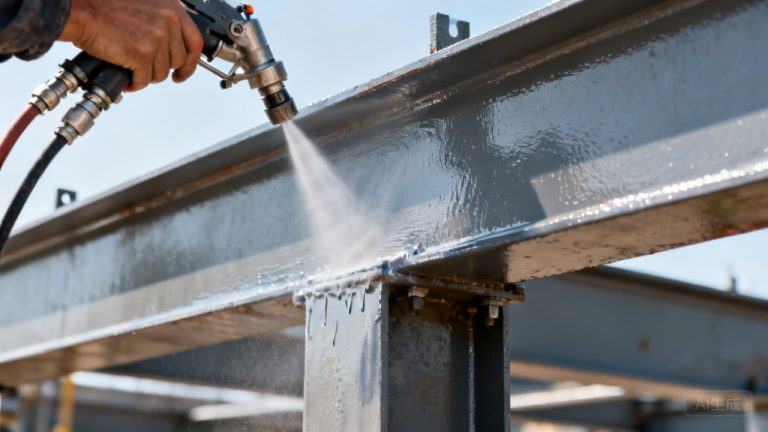
A wetting agent serves the solid-liquid interface. Its function is to reduce the interfacial tension between a liquid and a solid, allowing the liquid to spread rapidly over the solid surface – for example, paint spreading on plastic/metal, pesticide deposition on leaves, and textile penetration.
Two indicators to judge wetting performance:
- Contact angle: The angle of a liquid droplet on a solid surface – the smaller the contact angle, the better the spreading (water on a lotus leaf has a high contact angle → poor wetting; on clean glass, a low contact angle → good wetting).
- Dynamic surface tension: The surface tension of a liquid during “instantaneous spreading.” In high-speed coating, printing, and spraying, the time from liquid contact to full spreading is only fractions of a second. Surfactants with low static surface tension may not have enough time to spread – so a wetting agent with low dynamic surface tension is essential. Acetylenic diols (e.g., TMDD) are known for their rapid dynamic wetting.
Common applications of wetting agents: Wetting low-surface-energy substrates (plastic, metal, aged coatings) in waterborne paints, promoting deposition in pesticide adjuvants, textile penetration agents, and cleaning permeation. For example, the Toynol® FS-204 in a 0.1% aqueous solution has a dynamic surface tension of approximately 33.3 dyn/cm and a static value of approximately 32.8 dyn/cm (refer to the official TDS for exact data). The Superwet series is tailored for different substrate wetting scenarios.
In a word: A wetting agent is the “paver” for solid surfaces, turning droplets into films – dynamic wetting speed matters especially in high-speed applications.
3. Are Emulsifiers and Wetting Agents the Same Thing?
They are of the same family but play different roles. Both rely on the amphiphilic structure of surfactants, differing in the interface they serve and their target effect:
| Comparison | Emulsifier | Wetting Agent |
|---|---|---|
| Interface served | Oil-water interface | Solid-liquid interface |
| Core function | Reduce interfacial tension + form interfacial film | Reduce solid-liquid tension + rapid spreading/penetration |
| Key parameter | HLB value | Contact angle, dynamic/static surface tension |
| Failure symptoms | Emulsion separation, creaming, oil floatation | Craters, dewetting, fisheyes, poor spreading |
| Typical examples | Tween, Span, AEO, SDS | Acetylenic diols, polyether-modified types, silicones |
Many products are actually “multi-tasking”: acetylenic diols (e.g., FS-204) are both effective wetting agents and possess auxiliary emulsifying ability, plus foam control – which is why they are often “one additive with multiple functions” in paint and ink formulations.
In a word: Emulsifiers keep oil and water together; wetting agents make liquids spread – a single surfactant can do multiple jobs.
4. Application Scenarios and Quick Selection Guide
| Scenario | What to Use | Selection Points |
|---|---|---|
| Emulsion polymerization (waterborne acrylic/styrene-acrylic) | Anionic + nonionic emulsifier blend | Combine SDS/AES with Tween/AEO to provide both charge and steric stabilization |
| Pesticide EW/EC | High-HLB emulsifier | Blend according to oil phase type and required HLB; verify with stability tests |
| Wetting in waterborne paints/inks | Acetylenic diol wetting agents | Consider dynamic surface tension and low-foam performance; prioritize for high-speed application |
| Substrate wetting (plastic/metal/aged coatings) | Substrate-specific wetting agents | Choose targeted grades (e.g., Toynol® Superwet/BWA series) |
| Emulsified cutting fluids/cleaners | Alkali-resistant low-foam emulsifier + wetting agent | Balance emulsion stability and low foam; ensure hard water and alkali resistance |
In a word: First define the scenario (emulsification, wetting, or both), then consult HLB/surface tension data, and finally verify stability and spreading through small-scale tests.
Frequently Asked Questions (FAQ)
Q1: What is an emulsifier?
A: An emulsifier is a surfactant that stabilizes oil-water emulsions by reducing interfacial tension and forming an interfacial film to prevent droplet coalescence. Selection depends on HLB: high HLB for O/W, low HLB for W/O.
Q2: What is the role of a wetting agent?
A: A wetting agent reduces solid-liquid interfacial tension, allowing liquids to spread and penetrate rapidly on solid surfaces, helping reduce defects such as craters, dewetting, and poor spreading. In high-speed applications, dynamic surface tension is the critical parameter.
Q3: What is the difference between an emulsifier and a wetting agent?
A: An emulsifier serves the oil-water interface (key indicator: HLB), while a wetting agent serves the solid-liquid interface (key indicators: contact angle and surface tension). Both are surfactants and can be blended from the same chemical families.
Q4: How should I interpret HLB values?
A: HLB ranges from 0 to 20. Values >10 indicate hydrophilic tendency (suitable for O/W emulsions); values <10 indicate lipophilic tendency (suitable for W/O emulsions). The required emulsion type determines the HLB range, and actual performance should be confirmed through blending trials.
Q5: How to select a wetting agent for waterborne paints?
A: Consider dynamic surface tension (the lower the better for high-speed applications) and foam tendency. Acetylenic diols (e.g., Toynol® FS-204, Superwet series) offer fast dynamic wetting, low foam, and are APEO-free – a common starting point.
Key Conclusions
- Emulsifiers manage the oil-water interface: reduce interfacial tension + stabilize via interfacial film; select by HLB (high → O/W, low → W/O).
- Wetting agents manage the solid-liquid interface: reduce contact angle, promote fast spreading; in high-speed scenarios, prioritize dynamic surface tension.
- Common emulsifiers: Tween, Span, AEO, SDS; common wetting agents: acetylenic diols, polyether-modified types.
- Both belong to the surfactant family; a single surfactant can provide emulsifying, wetting, and foam-control functions.
- Selection path: define scenario → check parameters (HLB/surface tension) → validate through small-scale tests.
Data note: HLB reference values are general industry data; product series and surface tension data referenced from Tianjin Hi-Perferal Advanced Materials Co., Ltd. website (www.surfychem.com) and official TDS; recommended usage is based on general experience; final formulation should follow the TDS and system-specific testing.
This article is written by the technical team of Tianjin Hi-Perferal Advanced Materials Co., Ltd. Toynol® is a registered trademark. For more technical information: www.surfychem.com / www.hipfer.com