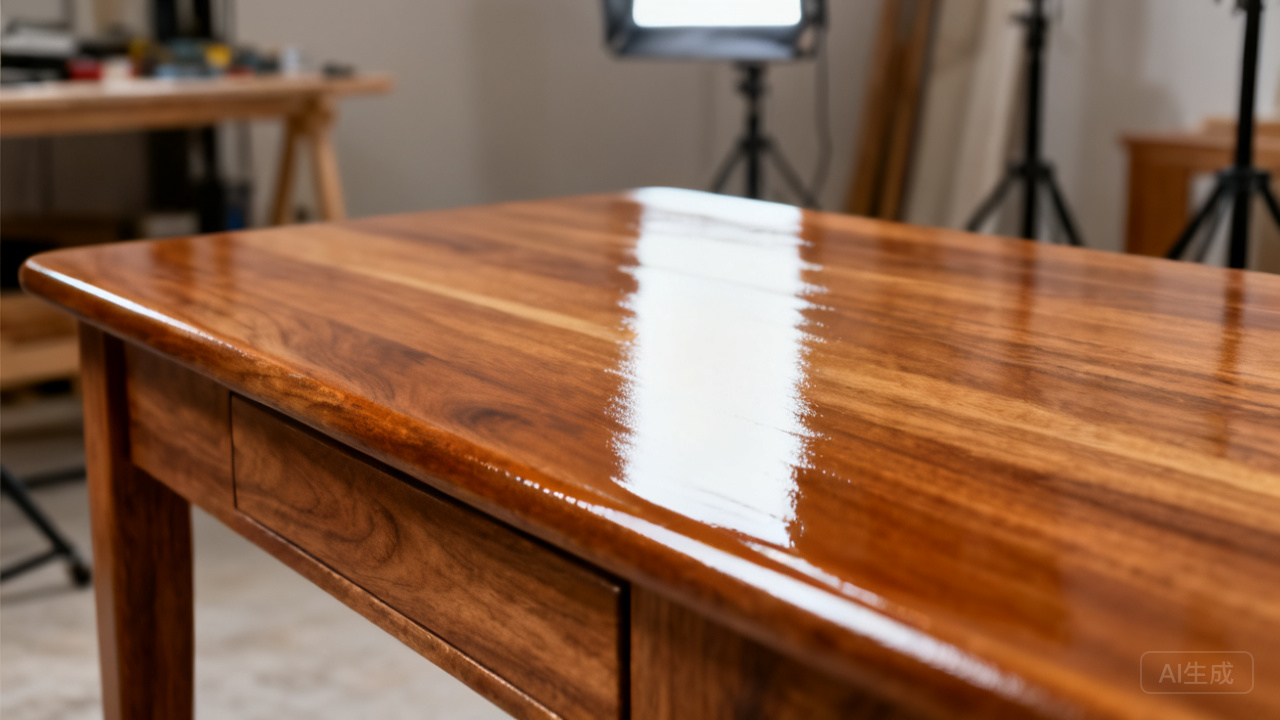
How to formulate additives for waterborne wood coatings? Wetting, dispersing, defoaming, leveling
One-sentence conclusion: The core of additive formulation for waterborne wood coatings is “locate the defect, then select by process” — poor wood wetting / craters → wetting agent (prefer low-foam acetylenediol type), color floating / flooding → dispersant, micro-foam / pinholes → defoamer, brush marks / orange peel → leveling agent; Toynol® offers a combination system of FS-204/Superwet for wetting, DS series for dispersing, DF/Foamic for defoaming, and SI for leveling. Specific grades and dosages are subject to the official TDS and lab-scale trials.
1. Why are waterborne wood coatings “picky” about additives?
Waterborne wood coatings use water as the dispersion medium. Compared with solvent-based wood coatings, surface defects are more easily exposed:
- High surface tension of water: Water has a surface tension of approximately 72 mN/m, much higher than solvents, making it difficult to spread on wood surfaces and prone to craters, edge creeping, and fisheyes.
- Complex wood substrates: Wood is porous and contains tannins and oils. Water absorption causes grain raising, tannin migration leads to yellowing, and oil-rich areas result in poor wetting — these are unique challenges for wood coatings.
- Emulsion systems prone to foaming: Acrylic/polyurethane emulsions inherently contain emulsifiers. Air introduced during mixing, stirring, or spraying creates micro-foam residues, forming pinholes and blisters.
- High appearance requirements: Wood coatings are an “aesthetics industry” — brush marks, orange peel, and uneven gloss are immediately visible, and customer tolerance is low.
The four typical problems in waterborne wood coatings — poor wetting, uneven dispersion, foam, and poor leveling — correspond to four types of additives: wetting agents, dispersants, defoamers, and leveling agents. The core of formulation is not “add everything,” but “treat the specific problem.”
2. What does each of the four additives control?
Wetting agents ensure “spreadability,” dispersants ensure “uniformity,” defoamers ensure “low foam,” and leveling agents ensure “smooth flow” — each plays its role, and together they cover the entire process from grinding to film formation.
3. Defect-driven formulation pathway
The recommended order: first add dispersant + foam-inhibiting defoamer during the pigment grinding stage → then add wetting agent during letdown to adjust substrate wetting → finally, before discharge, add foam-breaking defoamer and leveling agent. Perform a compatibility check (clarity, oiling, craters) after each addition, followed by a lab coating trial.
Additive formulation is a closed loop of “defect list → additive list → lab trial.” Diagnose first, then prescribe — this is more effective than blindly mixing ingredients.
4. Common pitfalls: More additives is not better
- Excessive defoamer → craters and fisheyes: Defoamers themselves are surface-active substances. Overdosing creates incompatible droplets, causing craters and gloss reduction. Start with a low dose and verify with a gradient study.
- Silicone leveling agents affect recoatability: Silicone leveling agents have extremely low surface tension. Overdosing causes migration to the film surface, leading to poor recoat adhesion and floating in topcoats. Evaluate recoat processes carefully.
- Excessive wetting agent reduces water resistance: Wetting agents remaining in the film increase hydrophilicity. Overdosing affects water and stain resistance — especially in kitchen/bathroom wood coating applications, control the total amount.
- Wetting and defoaming work against each other: Some wetting agents inherently generate high foam, creating a cycle of “add defoamer → more foam → add more defoamer.” Choosing a low-foam wetting agent (e.g., acetylenediol type) can reduce this conflict at the source.
- Yellowing from tannins is not an additive issue: Light-colored wood coatings yellowing on high-tannin woods like oak is caused by tannin migration. This requires a sealing primer, not something additives alone can solve.
Frequently Asked Questions (FAQ)
Q1: Are craters in waterborne wood coatings caused by the defoamer or the wetting agent?
A: Both are possible. If craters are “volcano-shaped” and appear after application, first check whether the defoamer is overdosed or incompatible. If craters concentrate on wood oil/stain or grain areas, the issue is insufficient wetting — test with a low-foam wetting agent.
Q2: Which wetting agent for waterborne wood coatings does not generate foam?
A: Prefer acetylenediol-based wetting agents (e.g., Toynol® FS-204 series), which offer both wetting and foam-suppressing characteristics. Traditional polyether wetting agents tend to generate more foam and require a defoamer.
Q3: Do clear varnishes need a dispersant?
A: Clear varnishes without pigments typically do not need a dispersant; focus on wetting and leveling. If containing matting agents (e.g., silica), a small amount of dispersant or wetting agent may be needed to prevent settling and reagglomeration.
Q4: How to solve floating/flooding in solid-color wood coatings?
A: Floating/flooding is often caused by pigment flocculation or poor dispersion. First check whether the dispersant matches the pigment type and whether the grinding fineness meets requirements. Then consider adding a suspension stabilizer to prevent settling and separation.
Q5: What is the typical dosage range for these additives?
A: Wetting agents: typically 0.1%–1%; defoamers: 0.1%–0.5%; leveling agents: 0.1%–1% (all based on total formulation weight; specific values should follow the TDS and actual system testing). A gradient study is recommended to determine the optimum dosage.
Key Conclusions
- The four additive types for waterborne wood coatings each serve a distinct function: wetting (ensures spreadability), dispersing (ensures uniformity), defoaming (reduces foam), and leveling (ensures smooth flow).
- Formulation approach: reverse-engineer from defects — craters → check wetting; floating → check dispersion; pinholes → check defoaming; brush marks → check leveling.
- Prefer low-foam acetylenediol-based wetting agents (FS-204/Superwet series) to minimize wetting-defoaming conflicts at the source.
- Overdosing additives is more risky than underdosing: excess defoamer causes craters, excess silicone leveling agents harm recoatability, and excess wetting agent reduces water resistance.
- Always verify compatibility and application performance through lab trials after each additive addition; data should be based on the official TDS.
Data note: The product series and model information in this article are sourced from the product pages of Tianjin Hi-Perferal Advanced Materials Co., Ltd. (www.surfychem.com). Dynamic surface tension data for FS-204 should be confirmed by the official TDS. Recommended dosage ranges are general guidelines; formal formulations should be adjusted according to the TDS and actual testing results.