How to Solve Craters and Edge Retraction in Coatings? Substrate Wetting and Leveling
1. What do craters and edge retraction look like? Distinguish the three defect types first
The “surface pitting” issues commonly seen after waterborne coating application actually fall into three distinct types, each with completely different causes and remedies:
| Defect | Appearance | Common locations |
|---|---|---|
| Craters | Volcano-shaped depressions, often with a foreign particle at the center | Randomly distributed, mostly around contamination points |
| Edge retraction | Wet film recedes and thins at edges, exposing the substrate | Edges, corners, and weld seams of the workpiece |
| Fisheyes | Small round pits with raised edges | Oil- or silicone-contaminated areas |
In short: Craters are about “spots,” edge retraction is about “edges,” and fisheyes are about “contamination” — first identify the defect pattern, then apply the right remedy, and avoid using a leveling agent where a wetting agent is needed.
2. Why do craters and edge retraction appear where they “shouldn’t”?
The core mechanism is the surface tension gradient. Water has a surface tension of approximately 72 mN/m, far higher than solvent-based coatings, making waterborne systems more sensitive to substrate cleanliness and surface energy:
- Low-surface-energy contamination spots: Oil, mold release agents, and silicone residues on the workpiece have lower surface energy than the coating, so the wet film cannot spread over these spots and recedes into craters/fisheyes;
- Surface tension imbalance at edges: The wet film evaporates faster at edges and corners, and solvent/water enrichment states differ, creating Marangoni flow. The wet film flows back from low-surface-tension areas to high-surface-tension areas, appearing as edge retraction and substrate exposure;
- Poor wetting of the substrate itself: On low-surface-energy substrates such as plastics, metals, and old coatings, the spreading force of the coating is insufficient, and craters appear densely;
- Overdosing of defoamer/leveling agent: These additives are inherently incompatible droplets or have extremely low surface tension; overdosing creates new sources of cratering.
In short: Craters and edge retraction are essentially “non-uniform wet film surface tension + insufficient substrate wetting.” Additives can improve the tension gradient, but cleaning the substrate and controlling additive dosage are prerequisites.
3. Solutions: substrate wetting + leveling in tandem
| Defect scenario | Priority check | Approach (Toynol® series) |
|---|---|---|
| Dense craters/fisheyes on metal/plastic parts | Oil contamination, mold release residue on substrate | Clean the substrate first; then select acetylenic diol wetting agent FS-204 (dynamic surface tension 33.3 dyn/cm, static 32.8 dyn/cm in 0.1% aqueous solution, per TDS) or Superwet series to improve spreading |
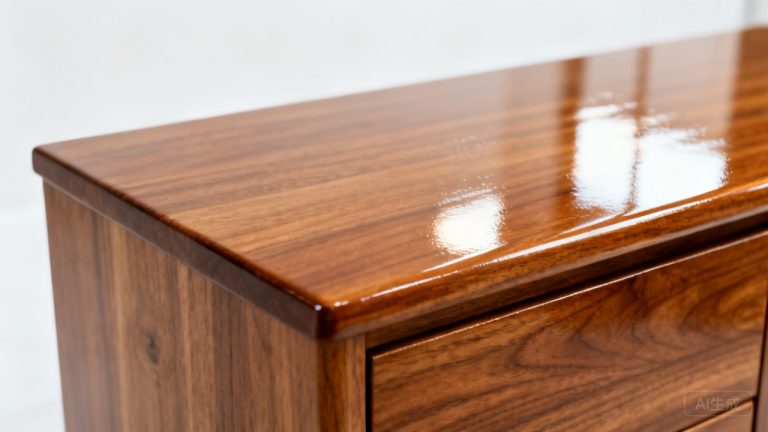
| Insufficient wetting on wood/porous substrates | Substrate absorption, tannin/oil-rich areas | Substrate wetting agents BWA-925/BWA-930 or FS-204 series to improve pore penetration and edge spreading |
| Orange peel, brush marks, uneven gloss in the film | Surface tension gradient, insufficient leveling | Leveling agent SI-800, or wetting-leveling agents ET-204/ET-205/ET-206, LFS-090/LFS-209 to balance film surface tension |
| Edge retraction concentrated at edges and corners | Fast evaporation at edges, tension imbalance | Increase wetting speed (acetylenic diols with good dynamic wetting) + moderate leveling agent to shorten open time |
Recommended working sequence: During letdown, first add the wetting agent and verify substrate wetting (observe wet film spreading and pore penetration), then gradually add leveling agent to adjust appearance. Perform a “drawdown check” after each addition — if craters disappear but new issues appear (e.g., foam stabilization), the direction is correct but the dosage or grade needs adjustment.
In short: The approach is a three-step process — “clean the substrate → establish wetting with a wetting agent → finish with a leveling agent.” Acetylenic diol wetting agents provide fast dynamic wetting and a certain degree of foam control, making them a recommended starting point for waterborne systems.
4. Common pitfalls: more additive is not necessarily better
- Adding only leveling agent without investigating contamination sources: When the substrate has oil contamination, a leveling agent cannot rescue craters. Clean the substrate first or change the pretreatment process;
- Overdosing wetting agent → foam stabilization/reduced water resistance: Wetting agents remaining in the film increase hydrophilicity; overdosing causes foam and water-resistance problems. Verify via a dosage gradient;
- Silicone leveling agents affect recoating: Silicone-based leveling agents have extremely low surface tension; overdosing causes migration to the film surface, leading to poor intercoat adhesion and mottling in the clearcoat. Recoating processes need to be evaluated;
- Defoamer and wetting agent working against each other: The combination of a high-foaming wetting agent and a defoamer easily creates a “add defoamer, foam returns, add more defoamer” cycle. Selecting a low-foaming acetylenic diol wetting agent reduces this conflict at the source;
- Checking additives only, not equipment: Silicone residue in spray lines or oil in compressed air can periodically introduce contamination. For intermittent “sometimes good, sometimes bad” cratering, check the equipment first.
Frequently Asked Questions (FAQ)
Q1: Are craters and edge retraction in coatings the same thing?
A: No. Craters are point-type depressions caused by local contamination spots; edge retraction is the recession of the wet film at edges exposing the substrate. The former calls for substrate wetting and cleaning, while the latter calls for balancing the surface tension gradient and leveling.
Q2: Which additives solve craters in waterborne coatings?
A: First clean the substrate to rule out contamination, then select acetylenic diol wetting agents (e.g., Toynol® FS-204, Superwet series) to improve spreading. If craters persist, combine with leveling agents (SI series) to balance film surface tension.
Q3: Can leveling agents solve craters?
A: Only as a supplement. The root cause of craters is insufficient wetting at low-surface-energy contamination spots; leveling agents mainly improve film leveling and orange peel. If the contamination is not removed, no amount of leveling agent will prevent craters from recurring at those spots.
Q4: What is the difference between FS-204 and conventional wetting agents?
A: FS-204 is an acetylenic diol nonionic wetting agent combining wetting and foam-control properties. It provides low dynamic surface tension (33.3 dyn/cm in 0.1% aqueous solution, per TDS) and suits high-speed application scenarios, without the significant foam burden typical of conventional polyether wetting agents.
Q5: How do leveling agents differ from wetting-leveling agents?
A: Leveling agents (e.g., SI-800) focus on eliminating film surface tension gradients and improving orange peel and brush marks. Wetting-leveling agents (e.g., ET series, LFS-090/LFS-209) combine wetting and leveling functions, suitable for systems where both substrate wetting and appearance are problematic. Select based on actual system testing.
Key Takeaways
- Craters are “spot” issues (contamination), edge retraction is an “edge” issue (tension gradient), and fisheyes are “contamination” issues — identify the defect pattern before applying a remedy
- Craters and edge retraction are essentially insufficient substrate wetting + non-uniform wet film surface tension; cleaning the substrate is the prerequisite
- Three-step approach: clean the substrate → establish wetting with acetylenic diol wetting agents (FS-204/Superwet/BWA series) → finish with leveling agents (SI/ET series)
- Overdosing is riskier than underdosing: excess wetting agent stabilizes foam and reduces water resistance; excess silicone leveling agent harms recoating
- Each additive should be verified with drawdown trials; formal formulation data per the TDS