How to Select Additives for Diamond Wire Cutting Fluid? Foam Control and Rapid Wetting Solutions
1. Why Does Diamond Wire Cutting Fluid Place Demanding Requirements on Additives?
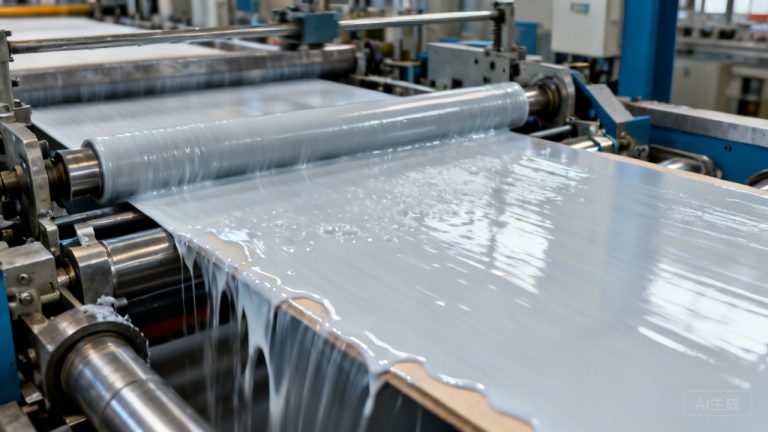
Diamond wire cutting is the mainstream wafer slicing process for photovoltaic silicon wafers—a steel wire plated with nickel-diamond particles moves at high speed in a reciprocating motion to slice silicon ingots into thin wafers. The cutting fluid (waterborne coolant) circulates at high speed throughout the system and performs three tasks: cooling (removing frictional heat), lubrication (reducing wire saw wear), and swarf removal (flushing silicon powder away from the cutting kerf).
These operating conditions present two major challenges for additives:
- High foaming tendency: During pumping, spraying, and high-speed return flow, the cutting fluid is repeatedly sheared and entrains air; the surfactants in the formulation also inherently stabilize foam. Foam can cause cavitation in the circulation pump, loss of cooling efficiency, and bubble residue on the silicon wafer surface.
- Fast wetting required: The diamond wire surface is nickel-plated metal, while the silicon wafer surface is hydrophilic but covered with silicon powder. The cutting fluid must spread rapidly to ensure continuous liquid film coverage, uniform heat dissipation, and timely removal of silicon powder.
In short: The essence of additive selection for cutting fluids is finding a balance within the conflict—”wetting requires surfactants, but surfactants tend to generate foam.” Low dynamic surface tension and low foam are both indispensable.
2. Wetting, Foam Control, and Spreading: Three Key Functions of Cutting Fluid Additives
2.1 Rapid Wetting: Dynamic Surface Tension Is the Key
Wetting of the cutting fluid occurs during high-speed contact at the millisecond scale, where the dynamic surface tension plays the decisive role rather than the static value. Water has a static surface tension of approximately 72 mN/m; after adding a wetting agent, it should drop significantly and rapidly.
Acetylenic diol surfactants (TMDD series) are designed precisely for this need: their molecular structure features a compact arrangement of “hydrophobic carbon chain + hydrophilic groups,” providing fast wetting and low foam tendency. Toynol® FS-204 is an acetylenic diol nonionic wetting and foam-control agent. The official website specifies active matter ≥98%, and a 0.1% aqueous solution shows static surface tension of 32.8 dyn/cm and dynamic surface tension of 33.3 dyn/cm (data subject to the official website/TDS)—the small difference between dynamic and static values indicates outstanding dynamic wetting capability, making it suitable for high-speed processes.
2.2 Foam Control: A Two-Level Approach Combining Low-Foam Wetting and Defoamers
Foam control does not rely solely on defoamers; a smarter approach is to “reduce foam at the source”:
- Level 1: Select low-foam wetting agents—Acetylenic diols are inherently low-foaming. For example, Toynol® Superwet-360 (acetylenic diol polyoxyethylene ether low-foam wetting agent, CAS 169117-72-0) is officially positioned as “low surface tension + low foam + penetration and spreading”; its application scope explicitly includes photovoltaic coolant fluids and metalworking fluids, making it suitable for high-speed circulation systems.
- Level 2: Add defoamers as a backup—If foaming still cannot be suppressed, supplement with defoamers: acetylenic alcohol types DF-57, DF-80D, DF-80PG, DF-110B, Foamic-021/024; polyether type Foamic-028, etc. Select according to system compatibility (general engineering recommendation: photovoltaic silicon wafer systems are sensitive to silicon contamination, so non-silicone/polyether defoamers are preferred; silicone-containing defoamers require evaluation of residue risk, subject to actual validation).
2.3 Penetration and Spreading: Helping the Liquid Enter Narrow Gaps
The diamond wire cutting kerf is narrow with silicon powder accumulation; the cutting fluid must penetrate into the cutting kerf to achieve effective cooling and swarf removal. Ethoxylated acetylenic diols (Superwet series) offer good water solubility and strong penetration/spreading, and are more convenient to handle than unmodified acetylenic diols (such as waxy solid FS-204). The two types can be combined to complement each other’s strengths.
In short: Wetting depends on dynamic surface tension; foam control follows the two-level route of “low-foam wetting agent + defoamer”; spreading relies on the penetrating power of acetylenic diol polyethers—all three functions can be achieved synergistically within one additive package.
3. Selection and Combination Solutions
| Application Scenario | Additive Direction | Available Toynol® Grades | Official Data Reference |
|---|---|---|---|
| Rapid wetting (diamond wire / silicon wafer) | Acetylenic diol wetting & foam-control agent | FS-204 (waxy solid, active matter ≥98%; 0.1% aqueous solution: static 32.8 / dynamic 33.3 dyn/cm); FS-204BC/DPM/E/H/PG (different solvent carriers for convenient liquid addition) | Official website product page, subject to TDS |
| Low-foam wetting (high-speed circulation) | Ethoxylated low-foam wetting agent | Superwet-360 (CAS 169117-72-0, low-foam + penetration/spreading; official scenarios include photovoltaic coolant/metalworking fluids); Superwet-320/340/604/607 series available as a graded range | Official product page; recommended dosage 0.1%–0.5% (determined by dosage screening) |
| Foam backup control | Defoamer | Acetylenic alcohol types DF-57/DF-80D/DF-80PG/DF-110B, Foamic-021/024; polyether type Foamic-028 | Subject to TDS |
| Alkaline / high-alkalinity cutting systems | Alkali-resistant low-foam surfactant | LFS-2501 (resistant to ≥300 g/L NaOH, dynamic surface tension 36.4 mN/m, suitable for metalworking fluids) | Official website, subject to TDS |
Recommended validation path: First add the wetting agent alone (starting at 0.1%) and observe liquid film spreading and silicon powder settling. Once wetting performance is confirmed, introduce the defoamer in incremental steps and test foam stability. Run a circulation foaming comparison after each adjustment to avoid uncertainty about which additive is taking effect when both are added together.
In short: The standard combination is “acetylenic diol wetting/foam-control agent as the base + defoamer as a backup.” For alkaline systems, switch to an alkali-resistant low-foam surfactant; all dosages should be determined through dosage screening.
4. Common Pitfalls and Considerations
- Looking only at static surface tension: A low static value does not mean fast wetting. For high-speed cutting, dynamic surface tension and wetting time must be evaluated—actual measurement is the benchmark.
- Excessive defoamer can impair wetting: Overdosed defoamer forms incompatible droplets in the system, which can cause poor wetting and crater-type defects. Use precise dosage screening—just enough to control the foam.
- Contamination risk of silicone-containing defoamers: Photovoltaic silicon wafers are sensitive to silicone-based contaminants. Silicone-containing defoamers require evaluation of residual effects; the non-silicone route (acetylenic alcohol/polyether) is more reliable (engineering recommendation, subject to on-site validation).
- Mutual interference between wetting agents and defoamers: A strongly foam-stabilizing wetting agent combined with a strong defoamer often leads to a seesaw effect of “add and suppress, suppress and add.” Selecting a low-foam acetylenic diol wetting agent can reduce this conflict at the source.
- Ignoring the foam-control design of the circulation system: Beyond additives, return-line piping, liquid level differentials, and spray angles all affect foaming. Equipment-side and formulation-side factors must be considered together.
FAQ
Q1: How do we resolve severe foaming in diamond wire cutting fluid?
A: Take a two-step approach: first switch to low-foam wetting agents (such as Toynol® FS-204, Superwet-360) to reduce foam at the source; if foam persists, add non-silicone defoamers (DF/Foamic series) as a backup. Determine the dosage through dosage screening.
Q2: Can wetting agents and defoamers be added together in cutting fluid?
A: Yes, but stepwise validation is recommended: first add the wetting agent and confirm that spreading is adequate, then add the defoamer incrementally and test foam—this avoids the situation where the two additives interfere with each other and the source of the problem cannot be identified.
Q3: What surfactants are used in diamond wire cutting fluid?
A: Acetylenic diol wetting/foam-control agents are preferred—they offer low dynamic surface tension, fast wetting, and low foam. Examples include Toynol® FS-204 (0.1% dynamic surface tension 33.3 dyn/cm) or ethoxylated Superwet-360. Specific data is subject to TDS.
Q4: Why is foam control necessary in cutting fluid?
A: Foam leads to cavitation in the circulation pump and reduced cooling efficiency. Bubbles attached to the silicon wafer surface can also cause cutting defects. Foam control is a prerequisite for ensuring cutting stability and yield.
Q5: What dosage of Toynol® additives should be used in cutting fluid?
A: The official recommended dosage is 0.1%–0.5%, determined through dosage screening based on the specific formulation system. Subject to TDS and actual sample testing.
Key Conclusions
- The core of diamond wire cutting fluid additives = rapid wetting (low dynamic surface tension) + foam control (low-foam wetting agent as the base, defoamer as a backup) + penetration and spreading
- Acetylenic diol wetting/foam-control agents are the preferred direction: Toynol® FS-204 (active matter ≥98%, 0.1% static 32.8 / dynamic 33.3 dyn/cm), Superwet-360 (CAS 169117-72-0, official scenarios include photovoltaic coolant fluids)
- For foam backup, choose non-silicone defoamers (DF/Foamic series); in photovoltaic systems, pay attention to the residue risk of silicone-containing additives
- For alkaline systems, the alkali-resistant low-foam surfactant LFS-2501 (resistant to ≥300 g/L NaOH) is an option
- All dosages should be determined through dosage screening; official reference 0.1%–0.5%, subject to TDS and actual testing