Selecting Dispersants for Waterborne Color Pastes: A Stable Dispersion Approach for Pigment Concentrates
1. Why Are Pigment Concentrates Difficult to Disperse?
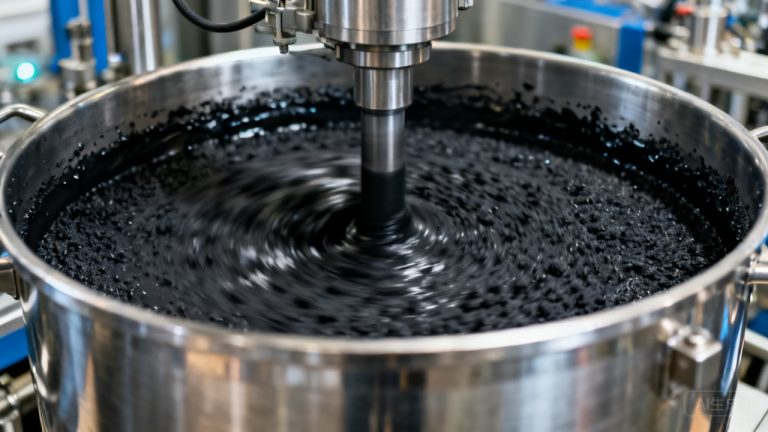
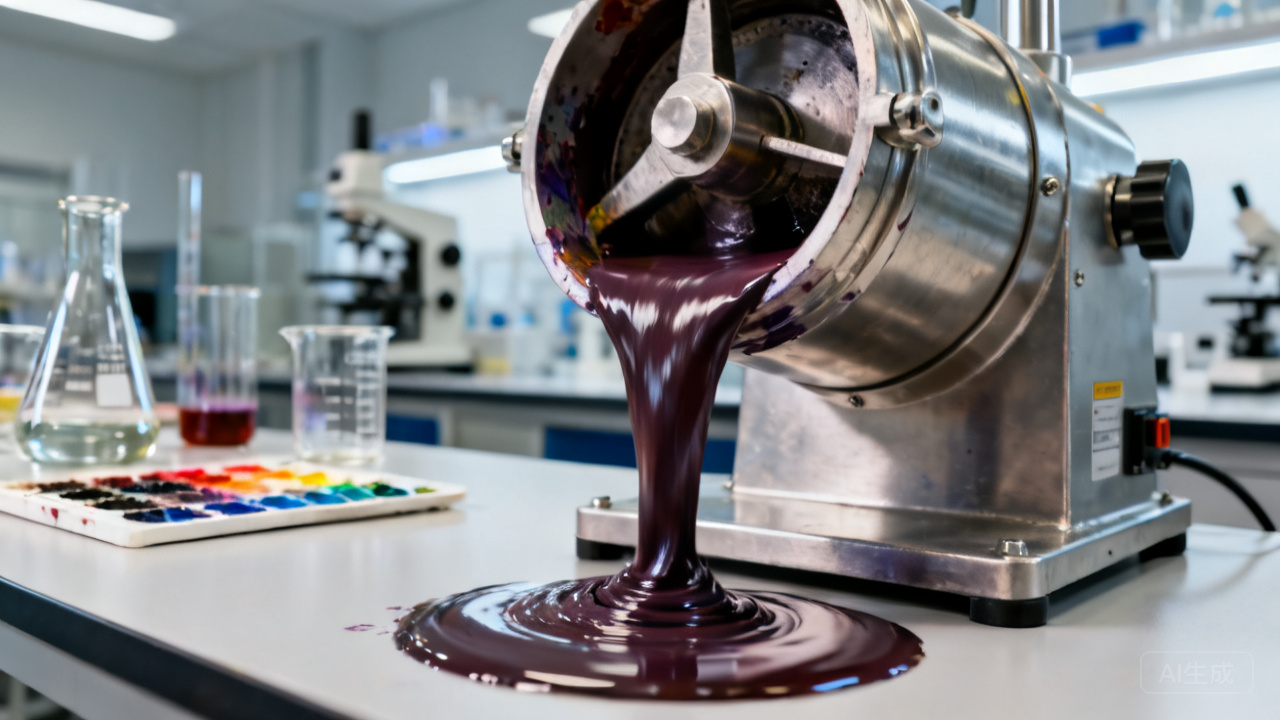
Pigment concentrates (color pastes) are high-solids pre-dispersions formulated with high pigment loading and low resin / low solids content, used as intermediate tinting products for coatings and inks. They are more difficult to produce than finished paints for three main reasons:
- High pigment loading: pigment content in concentrates can reach 40%–60%, leaving little space between particles and amplifying the tendency toward agglomeration and flocculation;
- Low resin / dispersing medium: without sufficient resin encapsulation, dispersion stability relies almost entirely on the dispersant, placing greater demands on anchoring strength and steric hindrance;
- Long storage periods: color pastes must withstand storage, transport, tinting and let-down stages; any re-agglomeration directly causes color drift, floating/flooding and loss of tinting strength.
Pigments also differ by nature: inorganic pigments (titanium dioxide, iron oxide red/yellow) have relatively larger particle sizes and tend to settle; organic pigments (phthalocyanine blue, carbon black, etc.) are finer, with high specific surface area and high surface energy, making them highly prone to self-agglomeration and the most challenging pigment category to disperse.
Bottom line: the “high pigment loading, low resin, long storage” characteristics of concentrates make the dispersant the critical component determining success in a color paste formulation.
2. How Do Dispersants Work? A Three-Step Wetting–Dispersing–Stabilizing Process
Dispersion is not achieved by the dispersant alone; it follows three steps — wetting, dispersing, and stabilizing:
| Step | Function | Responsible component |
|---|---|---|
| Wetting | Lowering solid–liquid interfacial tension so the medium penetrates pigment agglomerates and displaces entrapped air | Wetting agent (e.g., acetylenic diol-type) or the wetting groups of the dispersant itself |
| Dispersing | Breaking agglomerates into primary particles by mechanical force (sand milling / high-shear) | Grinding equipment + dispersant adsorption providing steric / electrostatic repulsion to prevent re-agglomeration |
| Stabilizing | Maintaining a long-term adsorption layer to prevent particles from approaching, flocculating, settling or re-agglomerating | Anchoring strength of the dispersant + compatibility with the resin system |
Dispersants fall into three mainstream types by chemical description:
| Type | Mechanism | Features | Typical applications |
|---|---|---|---|
| Polymeric copolymer-type | Anchoring groups adsorb onto pigment surfaces + long chains provide steric hindrance | Good resistance to re-agglomeration, broad compatibility, flocculation-resistant; the mainstream choice for color pastes / masterbatches | Organic pigments, carbon black, universal color pastes |
| Anionic-type | Stabilization via electrostatic repulsion | High dispersion efficiency, but sensitive to pH and electrolytes | Inorganic pigments, waterborne systems |
| Low-molecular-weight wetting/dispersing type | Combines wetting and dispersing functions | Significant viscosity reduction; weaker long-term stability than polymeric types | Auxiliary wetting, viscosity adjustment |
Bottom line: for concentrates, start with a polymeric copolymer-type dispersant as the base — steric stabilization offers better storage stability. Anionic types can serve as auxiliaries or be used for inorganic pigments; specific matching depends on pigment surface chemistry.
3. Dispersant Selection and Practical Approach for Color Pastes
3.1 Lock the Direction by Pigment Type First
| Pigment type | Dispersion challenge | Dispersant direction |
|---|---|---|
| Inorganic pigments (TiO₂ / iron oxides) | Easy settling; viscosity reduction needed | Anionic or polymeric type, combining electrostatic repulsion with steric hindrance |
| Organic pigments (phthalocyanine / azo) | Fine particle size; prone to self-agglomeration | Polymeric copolymer-type with strong anchoring + steric hindrance |
| Carbon black | High specific surface area; electrostatic aggregation | High-anchoring polymeric type (e.g., DS-194 direction, subject to TDS) |
| Mixed pigment systems | Wide differences in dispersibility among components | Universal polymeric dispersant + staged milling |
3.2 Toynol® Dispersant Line: From General-Purpose to Specialty Grades
The Toynol® dispersant line covers waterborne and solvent-borne systems (available at www.surfychem.com; specifications subject to TDS):
- DS Series: core waterborne dispersants — DS-172 for general pigment dispersion, DS-194 for carbon black / conductive paste, DS-192M/DS-192N/DS-195H/DS-195L etc. matched by system; color paste manufacturers can start with general-purpose grades and run gradient screening;
- ADS-20: waterborne dispersant (match by system per TDS);
- HD Series (HD-20/HD-23): dispersion-oriented grades; verify applicable systems per TDS;
- Wetting support: FS-204 (acetylenic diol nonionic wetting agent with foam control, active ≥98%, static surface tension 32.8 dyn/cm / dynamic 33.3 dyn/cm at 0.1% aqueous solution) for the grinding stage — fast dynamic wetting with low foam, avoiding the foam-stabilizing interference of conventional surfactants.
Operating path: dissolve wetting agent / dispersant in water first → add pigment in portions → high-shear pre-dispersion → sand mill to target fineness → discharge and evaluate storage stability. Dosage follows the TDS starting recommendation with a gradient screening (dispersant based on pigment weight typically starting at 0.5%–2%, subject to TDS). Avoid “more is safer” thinking — once adsorption is saturated, free dispersant in the system can actually cause flocculation and viscosity rebound.
3.3 Three Acceptance Criteria
| Indicator | Acceptance points |
|---|---|
| Fineness | Grindometer / particle size analyzer; target set by end-use (color pastes generally ≤15–25 μm; finer requirements subject to separate specification) |
| Viscosity | Compare after milling and after heat storage to prevent the “early drop, late rise” viscosity rebound |
| Storage stability | Room temperature + 50°C heat storage for at least one week; check re-agglomeration, separation, flocculation, settling |
Bottom line: lock the direction by “pigment type × system polarity,” determine grade and dosage through gradient screening, and validate by storage performance — achieving pass-level fineness at the mill but seeing re-agglomeration within two weeks means the work is wasted.
4. Common Pitfalls and Key Points
- Only measuring initial fineness, skipping storage evaluation: many dispersants pass right after milling but re-agglomerate after 2–4 weeks of storage; color pastes require heat storage observation;
- Excessive dispersant dosage: once adsorption is saturated, free dispersant remains in the system, causing flocculation, thickening, and affecting tinting repeatability;
- Ignoring milling process conditions: even with the right dispersant, insufficient sand milling time, bead charge or power will prevent the fineness from dropping;
- System compatibility failures: incompatibility between dispersant and resin / thickener leads to floating/flooding, flocculation, abnormal viscosity — run compatibility pretesting when changing systems;
- Using a wetting agent as a dispersant: wetting agents only improve wetting and provide no stabilization; they cannot replace dispersants.
FAQ
Q1: How much dispersant should be added to a color paste?
A: Follow the TDS starting dosage and run a gradient screening (typically starting at 0.5%–2% based on pigment weight, subject to TDS). Evaluate fineness, viscosity and storage performance simultaneously to find the balance of “fineness achieved + stable viscosity + no re-agglomeration” — more is not better.
Q2: How to solve re-agglomeration and settling in waterborne color pastes?
A: First determine whether the issue is insufficient dispersion or insufficient stabilization: if fineness never reaches target → switch to a polymeric dispersant with stronger anchoring (e.g., DS Series direction) and check the milling process; if fineness passes but re-agglomeration occurs during storage → strengthen steric hindrance or adjust the dosage gradient, and confirm with 50°C heat storage testing.
Q3: Which is better — polymeric or anionic dispersants?
A: Each has strengths: polymeric copolymer-types provide strong steric hindrance and better resistance to re-agglomeration, making them the mainstream for organic pigments, carbon black and universal color pastes; anionic types rely on electrostatic repulsion and offer high efficiency, suiting inorganic pigments but sensitive to pH and electrolytes. For color pastes, use a polymeric type as the base and fine-tune by pigment type.
Q4: What dispersant should be used for organic pigments and carbon black?
A: Both prefer high-anchoring polymeric types (Toynol® DS-194 for carbon black / conductive paste, DS-172 for general pigment dispersion, subject to TDS). Carbon black has high specific surface area and strong electrostatic aggregation, placing higher demands on anchoring — confirm with gradient screening in the actual formulation.
Q5: Is it necessary to add both a wetting agent and a dispersant in a color paste?
A: Usually yes. The wetting agent (e.g., FS-204) rapidly wets the pigment powder, improves grinding efficiency and is low-foam; the dispersant breaks up agglomerates and provides stabilization. A wetting agent cannot replace a dispersant; the two work together.
Core Conclusions
- The “high pigment loading, low resin, long storage” characteristics of pigment concentrates make the dispersant a critical component of color paste formulations
- Dispersion follows a three-step wetting–dispersing–stabilizing process; concentrates should prioritize polymeric copolymer-type dispersants (steric hindrance for storage stability)
- Selection path: pigment type (inorganic / organic / carbon black) × system polarity locks the direction → gradient screening locks grade and dosage → validated by three indicators (fineness / viscosity / storage stability)
- Reference grades: Toynol® DS Series (DS-172 general purpose, DS-194 carbon black / conductive, DS-192M/N etc. matched per TDS), ADS-20, HD-20/23; wetting support with FS-204 (active ≥98%, static 32.8 dyn/cm / dynamic 33.3 dyn/cm at 0.1%)
- Common pitfalls: skipping storage evaluation, over-dosing dispersant, mismatched milling process, compatibility failures — acceptance must include heat storage observation; all data subject to TDS