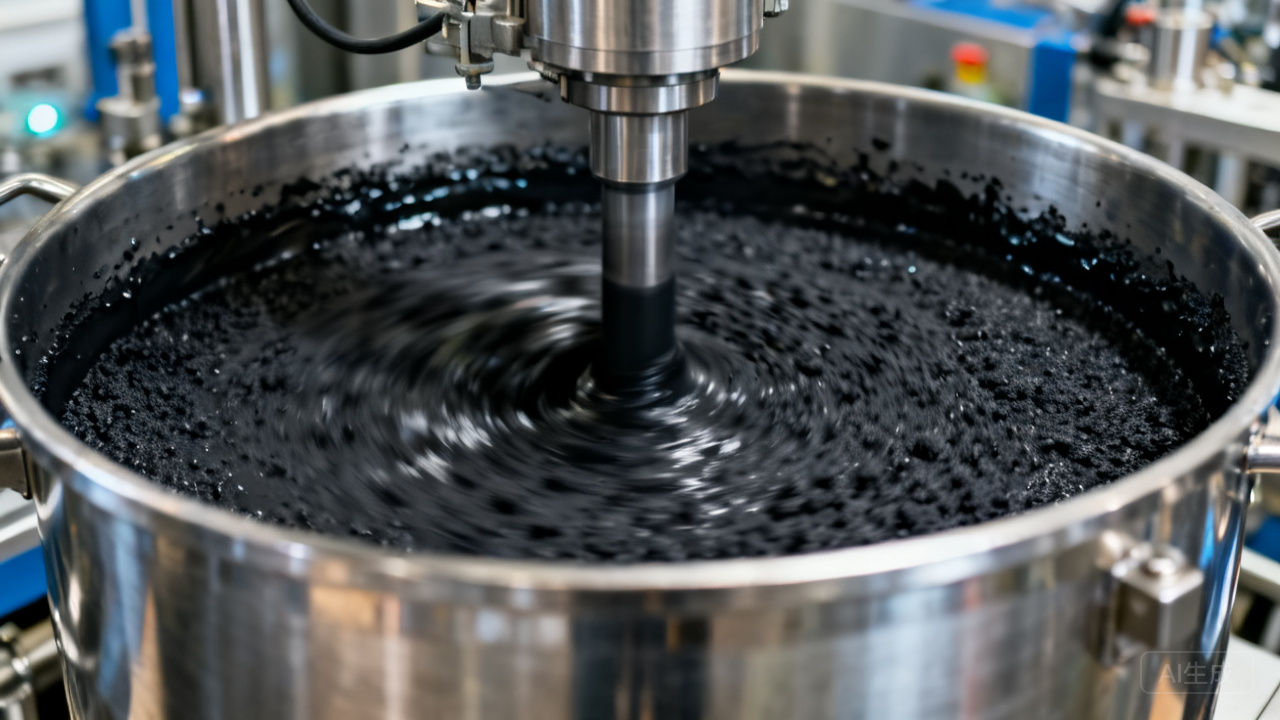
How to Select a Battery Slurry Dispersant? Dispersion Solutions for Cathode Conductive Materials
1. Why Is Cathode Slurry Difficult to Disperse?
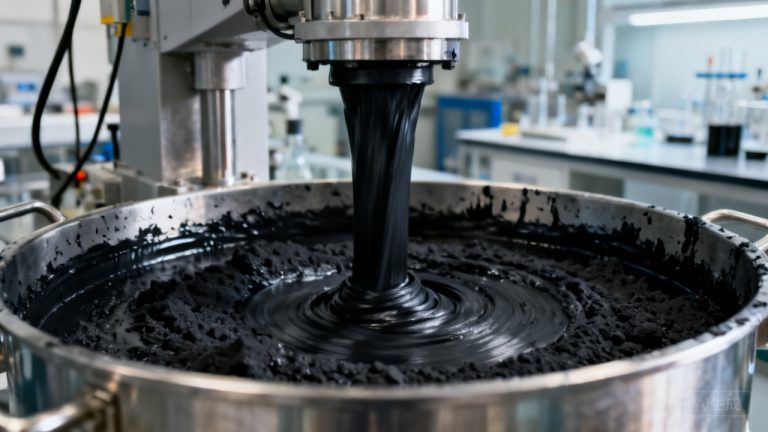
Lithium battery cathode slurries generally consist of active materials (e.g., NCM ternary, LFP lithium iron phosphate) + conductive agents (conductive carbon black, etc.) + binders (PVDF/NMP solvent-borne, or waterborne systems) + solvent. Before coating, the slurry must achieve uniform dispersion, stable viscosity, no agglomerates, and no settling. Where does the difficulty lie?
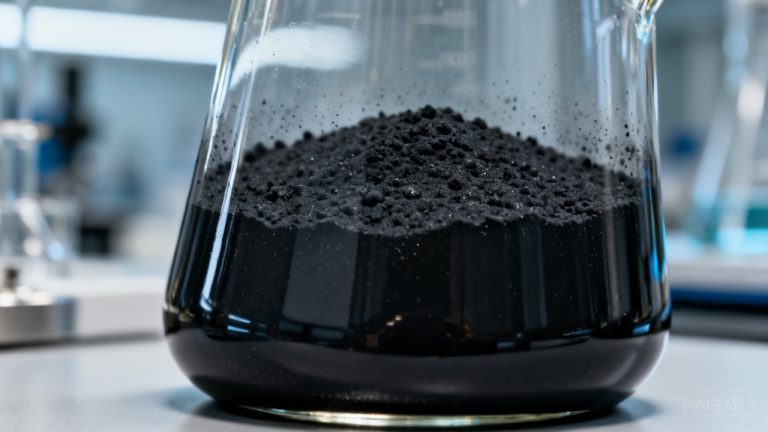
- Conductive carbon black is inherently prone to agglomeration: conductive carbon black has a large specific surface area (on the order of tens to thousands of m²/g), high structure, and extremely fine primary particles, making it easy to form strong agglomerates that ordinary agitation cannot break apart.
- Conductive network formation and dispersion are in tension: the slurry must both disperse the carbon black to form conductive pathways and avoid over-dispersion that destroys the network structure — agglomeration of the conductive agent is a dead end, but dispersing it so completely that network connections are lost is equally an impasse. A balance must be struck.
- Viscosity and processing window: adding carbon black significantly increases slurry viscosity; improper use of dispersants can cause viscosity drift, affecting coating consistency and electrode areal weight uniformity.
- Settling and storage stability: during storage, density differences between active materials and conductive agents can cause settling and layering, resulting in inconsistent electrode conductivity from top to bottom. In batch production, slurry stability directly affects yield.
In short: the dispersion quality of a cathode slurry = electrical conductivity × processability × stability, and the common key to all three is the dispersion state of the conductive carbon black.
2. How Dispersants Work: Wetting, Adsorption and Steric Stabilization
| Stage | What happens | Role of dispersant/additive |
|---|---|---|
| Wetting | Solvent penetrates into internal voids of powder agglomerates | Wetting agent lowers interfacial tension and accelerates penetration (optional aid) |
| Adsorption | Dispersant molecules anchor and adsorb onto particle surfaces | Polymer chain segments extend into the solvent and form an adsorbed layer |
| Stabilization | Adsorbed layers repel each other as particles approach | Steric hindrance prevents re-agglomeration and maintains the dispersed state |
| Rheology | Slurry viscosity changes after particles are dispersed | Dispersant dosage matched to the system keeps viscosity controllable |
Three basic points to remember:
- Dispersants are adsorption-type additives: they must have anchoring force on the carbon black/active material surface. Simply adding a surfactant is not necessarily effective — selection depends on “which surface it adsorbs on and in which system it dissolves.”
- Solvent-borne and waterborne systems follow two separate routes: for NMP/PVDF solvent-borne systems, choose solvent-borne polymeric dispersants; for waterborne systems (e.g., LFP waterborne slurry), choose water-soluble/anionic polymeric dispersants, while also considering compatibility with CMC/SBR binders.
- Dispersants do not replace process: the energy input of bead milling/high-shear dispersion, dispersion time, and the dispersant must work together to break up agglomerates. Merely adding additives without adjusting the process will not work.
In short: the value of a dispersant is to “stabilize” the particles separated by mechanical dispersion, so that fineness, viscosity, and the conductive network do not deteriorate during storage or coating.
3. Selection Path and Toynol® Solution Approach
3.1 Determine the direction by system
| Slurry system | Typical composition | Dispersant direction |
|---|---|---|
| Solvent-borne (NMP) | NCM/LFP + conductive carbon black + PVDF + NMP | Solvent-borne polymeric dispersant (evaluate corresponding DS/ADS series models) |
| Waterborne | LFP + conductive carbon black + CMC/SBR + water | Waterborne polymeric dispersant (DS series direction), with attention to binder compatibility |
| Conductive slurry / conductive adhesive | Carbon black/graphite + resin | Polymeric dispersant in combination with suspension stabilizer (see graphite slurry solutions) |
3.2 Reference Toynol® solution approach
- Dispersants: Toynol® DS series, ADS-20 and other waterborne dispersants (product list on the official website, www.surfychem.com); mainly polymeric anchor types, selected according to system polarity.
- Conductive carbon black case: the official website has a public application case on “Conductive Carbon Black Dispersion” (www.surfychem.com/h-nd-244.html), which can serve as an analog reference for dispersing cathode conductive agents — but it cannot be directly copied: different carbon black grades (SP, Ketjenblack, etc.), solid contents, and binder systems show different adsorption behavior, so verification must be carried out in the actual formulation.
- Graphite conductive materials: for the dispersion of graphite in anode/conductive slurries, refer to the Toynol® graphite slurry solutions (DS series dispersant combined with AN series suspension stabilizer; see related articles in the Knowledge column).
3.3 Three indicators for verification
- Fineness: use a grind gauge/laser particle size analyzer to track D50/D90, confirming that agglomerates are broken up and do not revert during storage;
- Viscosity and rheology: measure initial viscosity and viscosity drift after standing, confirming that the dispersant dosage is appropriate and the coating window remains stable;
- Electrical performance: after coating into electrode sheets, measure resistance/conductivity to confirm that the conductive network has not been destroyed — this is the final arbiter in cathode slurry dispersion verification.
In short: the selection path = determine direction by system polarity → use case analogy as the starting point → verify with the fineness-viscosity-resistance three-indicator stepwise small-scale tests. The final formulation should be based on actual testing in the customer’s system.
4. Common Pitfalls and Points to Note
- Directly copying the carbon black case: different carbon black grades and binder systems behave differently in adsorption. The official website case can only serve as an analogy starting point; actual testing is required.
- Checking only fineness, ignoring electrical performance: fineness may pass specifications, but if the conductive network is destroyed, electrode resistance will still exceed limits — both must be tested.
- Excessive dispersant dosage: free dispersant remaining in the slurry may increase viscosity and affect binder and electrode performance. Run a dosage gradient starting from the TDS recommended use level.
- Ignoring slurry stability: settling and layering after storage lead to poor electrode consistency. Perform static storage stability validation before batch production.
- Process and additives are disconnected: if dispersion time and shear intensity do not match the dispersant, even good additives will not help. Also avoid over-shearing, which can destroy particle structure.
Frequently Asked Questions (FAQ)
Q1: What dispersant should be used in battery cathode slurry?
A: Select based on the system: for NMP/PVDF solvent-borne systems, choose solvent-borne polymeric dispersants; for waterborne systems (LFP), choose waterborne polymeric dispersants (Toynol® DS/ADS series direction), while confirming compatibility with CMC/SBR binders. The final model should be matched based on TDS and actual testing.
Q2: Conductive carbon black agglomerates and the slurry has a gritty feel. How can this be solved?
A: First confirm that the dispersion process (bead milling/high-shear time and intensity) is sufficient, then evaluate the dispersant dosage gradient. The dispersant must have adsorption affinity for the carbon black surface; wetting agents alone cannot solve agglomeration. Track progress with fineness measurements.
Q3: Can dispersants affect battery performance?
A: Yes. Incorrect dosage may increase viscosity, and free dispersant molecules can affect binding or ion transport. Therefore, the “fineness-viscosity-resistance” three-indicator verification is necessary; use the minimum effective dosage while ensuring the conductive network is maintained.
Q4: Can the Toynol® conductive carbon black dispersion case be used directly?
A: No. It cannot be directly copied. The official website case (www.surfychem.com/h-nd-244.html) can be used as an analogy starting point, but adsorption behavior differs when carbon black grade, solid content, or binder system changes. Small-scale validation under the real cathode formulation is required, and TDS data shall prevail.
Q5: What should be done if cathode slurry settles and layers after prolonged storage?
A: Check whether dispersion is sufficient (whether fineness/viscosity drifts), and evaluate the matching of dispersant and process. If necessary, use suspension stabilization/rheology control (for graphite systems, refer to the AN series suspension stabilizer direction). Static storage stability validation should be completed before batch production.
Core Conclusions
- The core challenge in cathode slurry dispersion is that conductive carbon black must be dispersed without destroying the conductive network; verification must include the “fineness-viscosity-resistance” three indicators.
- Dispersants are adsorption-type additives; selection follows two routes based on the system: NMP solvent-borne vs. waterborne (with attention to binder compatibility).
- The official conductive carbon black case (h-nd-244) can be used as an analogy starting point, but the final formulation should be verified by stepwise small-scale tests in the customer’s system.
- Process (shear/bead milling) and dispersant must work synergistically; dispersants are not a universal substitute for process optimization.
- For graphite conductive slurries, a Toynol® DS dispersant + AN suspension stabilizer combination can be referenced; data shall be based on TDS and actual formulation testing.