Diagnosis and Product Selection for Foaming, Pinholes, White Spots, and Bead Breakage in High-Speed Waterborne Adhesive Coating
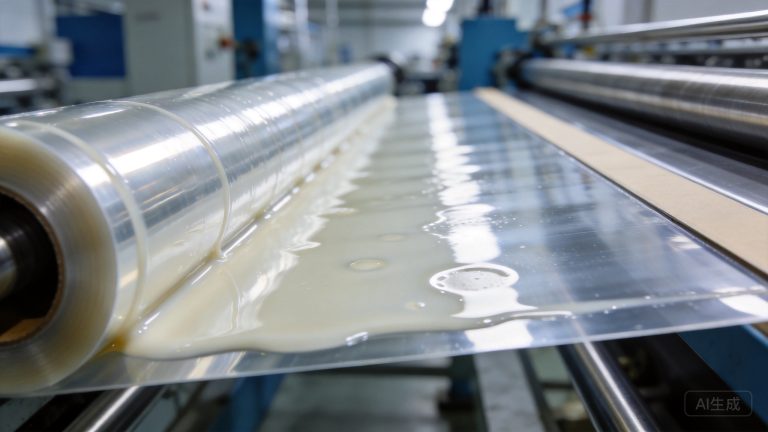
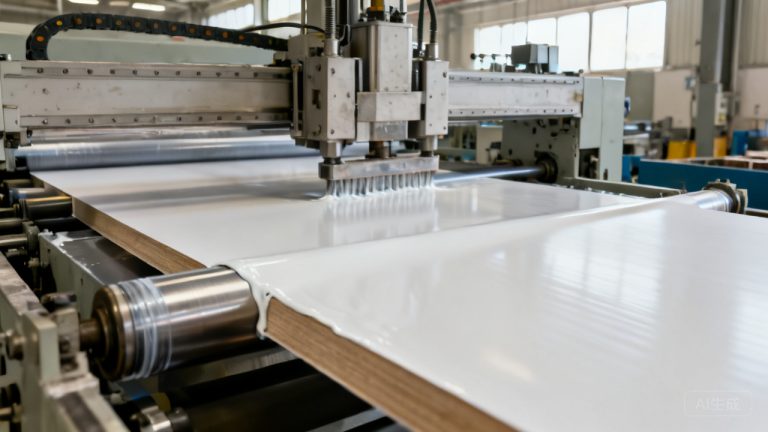
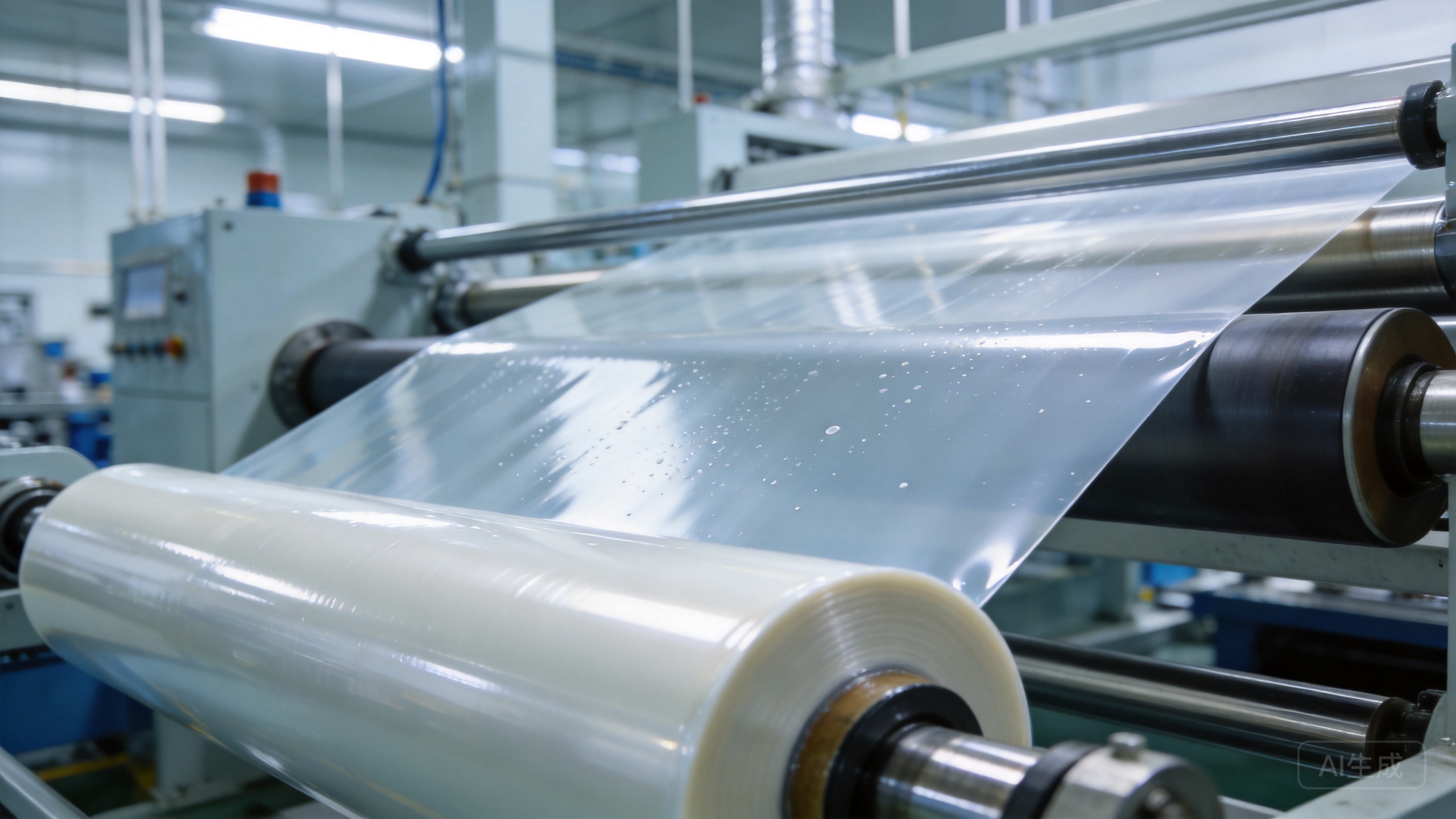
If what you see on your coating line is this: a stream of air bubbles being dragged into the adhesive layer the moment it exits the doctor blade or slot die; a field of pinhole-sized voids left on the adhesive surface after drying; or a neat row of white spots along the edge of the tape; and further down the line, the continuous web snapping on the transfer roll—then this is almost never a single additive failure. It is a chain that runs from “bubble generation” to “bubble retention” and then to “structural defects in the adhesive layer.” Where bubbles form, what stabilizes them, and whether they can be broken determine whether they ultimately disappear into the wet film or cure into the adhesive layer as a pinhole.
Many on-site troubleshooting sequences are backwards: add defoamer first; if it does not work, switch to a different grade of defoamer; if that still fails, add a little more. The cost of this approach is that the problem is masked rather than located—pinholes go from “occasional occurrence” to “appears on a certain shift”—while the additive loading in the formulation has already exceeded the recommended dose without the true root cause ever being identified.
What this guide aims to do is break the bubble problem in high-speed coating into three independently assessable sources, give the troubleshooting action for each source, the corresponding functional products, and a three-step method that can be directly validated on the production line. The content is based on publicly available product specifications and existing process experience; where specific formulations and on-site data are involved, the source and evidence level are explicitly noted.
1. First Distinguish Three Types of “Bubbles,” Then Talk About Product Selection
1.1 Entrained Air Bubbles: Air Mechanically Introduced
The generation point of this type of bubble is definite—they are wrapped into the adhesive during feeding, agitation, transfer, and pumping, and already exist by the time the adhesive reaches the coating die. The diagnostic basis is straightforward: the distribution of bubbles in the wet film is random and diffuse, with sizes ranging from tens of microns to visible to the naked eye, and it is highly correlated with agitation speed, pump flow rate, and coating speed—when line speed goes up, the bubble ratio follows.
This type cannot be cured by defoamer. If you pour defoamer into a drum of already foam-laden adhesive, only the surface layer is broken; re-agitation pulls it right back in. What actually needs to be done is three things: locate where air is being introduced (the most commonly overlooked spots are the few meters of suction hose and return line drawing adhesive from the supply drum), push solids content and viscosity up one notch to reduce air-carrying capacity, and clear the venting above the coating cavity. The role of the defoamer here is to “hold the already-made batch,” not to “keep air from getting in.”
1.2 Shear-Stabilized Bubbles: Foam Locked into the Adhesive by Shear
The difference between this type and the previous one: the bubbles are not entering in large slugs but are re-broken by high shear at the coating cavity, slot die, or doctor blade gap into fine, uniform microbubbles. The entire system sits in a metastable state that “looks like a gel but is actually foam.” The most typical characteristic of this system: when poured out, the surface appears smooth with almost no visible large bubbles, but pinholes appear immediately upon drawdown coating; and once shear is reduced or after standing for a few minutes, the microbubbles grow again.
Identification method: take a sample of the adhesive and let it stand for 10 minutes, then observe the surface. If bubbles that were previously invisible rise to the surface as a dense layer of fine foam, the system itself is in a foam-metastable state, requiring low-foam additives to suppress both the interfacial tension and the foaming tendency of the system—not after-the-fact bubble breaking.
1.3 Surface-Tension-Driven Defects: Adhesive “Cannot Stand” on Low-Energy Surfaces
The third type is strictly speaking not a bubble, but it appears simultaneously with the first two types and is easily misdiagnosed as a defoaming problem. When adhesive is applied to low-surface-energy substrates such as PET, PE, PP, or BOPP, if the surface tension of the adhesive is higher than the critical surface tension of the substrate, the adhesive retracts into spherical droplets at the moment of contact and fails to spread—this is fisheyes and cratering. After drying, an extremely thin transition ring forms at the edge of the fisheye, which looks like a white spot under strong light.
The key distinguishing point lies in location: entrained-air and shear-stabilized bubbles are irregular holes dispersed throughout the adhesive surface; craters and fisheyes, by contrast, are circular with well-defined boundaries, and the center is often not penetrate through—the adhesive simply barely spread there at all. Defoamers are ineffective for this type of problem; what is needed is a wetting agent—see Part 2 of this series, Wetting Agent Selection for Cratering, Fisheyes, and Insufficient Initial Tack on Low-Surface-Energy Substrates, for the specific selection logic.
Table 1-1 Rapid Distinction of Three Defect Types
| Defect Type | Appearance on Adhesive Surface | Relationship with Line Speed/Agitation | Effective Resolution Direction |
|---|---|---|---|
| Entrained-air bubbles (pinholes) | Diffuse, irregular, mixed sizes | Worse with higher line speed and faster agitation | Inspect feed and venting; defoamer to stabilize the system |
| Shear-stabilized bubbles (pinholes) | Dense fine bubbles; foam layer rises on standing | Strongly correlated with high-shear process segments | Low-foam additive + reduce interfacial tension + deaeration by holding |
| Craters/fisheyes (white spots) | Well-defined circular areas; droplet retraction | Related to substrate surface energy; weakly related to line speed | Reduce dynamic surface tension + improve substrate wetting |
Note: The table above is a process-phenomenon diagnostic framework for on-site direction finding; specific products and dosages must be validated on the customer’s actual formulation using the methods in later sections.
2. Defoaming vs. Low-Foam Foam Control: Two Different Needs
On purchase orders, “defoamer” and “acetylenic diol low-foam additives” are often listed in the same inquiry column—but they do not solve the same problem. Selecting the wrong direction most directly means spending more money without reducing defects while introducing new ones (e.g., craters).
2.1 Bubble-Breaking Defoamers: Handling “Bubbles That Already Exist”
The mechanism of bubble-breaking products is incompatibility between the defoaming phase and the foam phase: when a bubble contacts a defoamer droplet, the interfacial tension balance is disrupted and the bubble ruptures. Judging whether a defoamer is effective in your system typically comes down to three criteria: breaking speed, foam-suppression hold time, and whether it introduces new interfaces into the system (such as silicone-induced craters or mineral-oil-induced yellowing).
Four options are available in the Toynol® defoamer category, each with different carriers and active matter contents. Selection is not based on “which is stronger” but on “which interferes least with your system”:
Table 2-1 Comparison of Toynol® Bubble-Breaking Defoamers (Public Specifications)
| Product | Chemical Type | Non-Volatile Content | Key Features |
|---|---|---|---|
| Foamic 021 High-efficiency waterborne molecular defoamer |
Nonionic molecular type (CAS 68227-33-8, 68409-59-6) |
83.7% | Eliminates the majority of foam within 30 seconds at 0.2%–1% addition; foam suppression exceeds 30 minutes; silicone-free, mineral-oil-free, APEO-free |
| Foamic 024 | Nonionic | ≥50% (typical 58.8%) | Silicone-free and oil-free; cleaner for systems demanding high appearance quality |
| Foamic 028 | Polyoxyethylene ether oleate (CAS 9004-98-2) |
≥95% (typical 97%) | Foam-breaking rate above 95% within 30 s at 0.2%–1%; wide pH window of 2–12; hard-water resistant |
| Foamic 041 | Polydimethylsiloxane + polyoxyethylene sorbitan monooleate | ≥50% (typical 52.8%) | Hydrophobic-particle-containing silicone defoamer; more tolerant of high shear and prolonged foaming; cratering risk must be assessed |
Parameter source: Toynol® product documentation and publicly available information on the official website (Evidence level A/B). Foamic 041 contains silicone and must undergo a drawdown crater test in waterborne adhesive systems on low-energy substrates before use.
2.2 Acetylenic Diol Gemini-Type Low-Foam Additives: Making the System “Not Foam”
If bubble-breakers handle bubbles after they have formed, then acetylenic diol gemini-type nonionic additives address an earlier link in the chain: they rapidly lower the system’s dynamic and static surface tension, making it difficult for foam that would otherwise be stable under coating-cavity shear to form in the first place. These products are positioned as “foam control” rather than “foam breaking”—they raise the threshold for foaming and thus reduce the total amount of foam that needs to be eliminated downstream.
This is especially critical in high-speed coating. The shear intensity in the coating cavity is positively correlated with line speed: the higher the line speed, the stronger the driving force for foaming. If the system itself is in an easy-to-foam state, simply adding more defoamer will trap you in a cycle of “add and it foams again, it foams so add again.” Once a low-foam additive suppresses the foaming tendency, the bubble-breaker can manage the system at a much smaller dose.
Table 2-2 Comparison of Toynol® Acetylenic Diol Gemini-Type Nonionic Foam-Control Additives (Public Specifications)
| Product | Chemical Name | CAS | Non-Volatile Content | Carrier | Recommended Dosage Range |
|---|---|---|---|---|---|
| DF-110B | 2,5,8,11-Tetramethyl-6-dodecyn-5,8-diol | 68227-33-8 | 48–52% (typical 51.6%) |
Ethylene glycol monobutyl ether 48–52% | Industrial coatings 0.1%–0.3%; electrodeposition coatings, printing inks, and overprint varnishes and others 0.1%–0.8% |
| DF-80PG | Same as above | 68227-33-8 | 48–52% (typical 50.5%) |
Propylene glycol 48–52% | Industrial coatings 0.1%–0.3%; electrodeposition coatings/printing inks and overprint varnishes 0.1%–0.8%; others 0.3%–0.8%; also available at 0.1%–0.8% tier |
| DF-80D | Same as above | 68227-33-8 | 32–36% (typical 33.2%) |
Dipropylene glycol 64–68% | Industrial coatings 0.1%–0.3%; electrodeposition coatings/printing inks and overprint varnishes 0.1%–0.8%; others 0.3%–0.8%; also available at 0.1%–0.8% tier |
Parameter source: Toynol® product documentation and publicly available information on the official website (Evidence level A/B). DF-110B public documentation states: add after other surfactants and polymers, before pigments and fillers; good compatibility and no cratering risk. Packaging: 25 kg drums and 180 kg drums; shelf life: 2 years.
The active matter in all three products is the same chemical structure; the differences lie in the carrier and active content. This difference is not trivial: if your adhesive contains substrates sensitive to residual solvents (PET film, flexible packaging laminates) or situations with odor requirements, the choice of carrier can become a more binding constraint than the active matter itself. DF-80D, with its lower active content, is often more readily accepted in cost-sensitive bulk formulations.
2.3 Foam-Control Wetting Agents: A Middle Path Combining Spreading and Low Foam
There is also a category of products that simultaneously performs wetting and foam-control tasks—suitable for formulations that need improved substrate spreading without introducing additional foam.
Table 2-3 Comparison of Foam-Control Wetting Agents (Public Specifications)
| Product | Type | Static Surface Tension (0.1% aqueous solution, 25°C) |
Dynamic Surface Tension (0.1% aqueous solution, 25°C) |
Cloud Point | Recommended Dosage |
|---|---|---|---|---|---|
| Toynol® T-87 High-efficiency foam-control wetting agent |
Acetylenic diol type | 35.1 dyn/cm | 39.6 dyn/cm | 43–48°C (typical 46°C) |
Waterborne industrial coatings 0.3%–0.5%; fountain solutions/waterborne printing inks and overprint varnishes 0.3%–2%; others 0.3%–1% |
| Toynol® D-502 Foam-control wetting agent for waterborne systems |
Nonionic foam-control type | 35.2 dyn/cm | 39.3 dyn/cm | 43–48°C (typical 45°C) |
Concentration 0.3%–2% |
Parameter source: Toynol® product documentation and publicly available information on the official website (Evidence level A/B). Typical APHA color value for T-87 is 150; after addition, stir thoroughly for 15–30 minutes; gentle heating is acceptable if viscosity increases.
The cloud points of both products fall into the 43–48°C range, meaning they perform well in room-temperature water, but when the formulation requires high-temperature storage or application (e.g., above 50°C), the performance variation near the cloud point must be tested empirically. This is a commonly hidden variable in waterborne adhesive formulations: the surface tension data measured at workshop temperature is not the same as the adhesive sitting in a 55°C storage tank in summer.
3. Timing of Addition: This Step Determines Half the Effectiveness
Defoamers and low-foam additives are far more sensitive to addition timing than most customers expect. The same formulation and the same dose added at different process positions can produce completely different results.
3.1 General Principles
- Toynol® DF-110B public documentation states clearly: add after other surfactants and polymers but before pigments and fillers. The significance of this position is that the system has not yet entered the air-consuming peak of high-shear pigment dispersion, giving the additive sufficient time to spread uniformly into the liquid phase.
- Toynol® Foamic 021 public documentation states clearly: no dilution needed; add directly to the system and stir for 15–30 minutes until uniformly dispersed. Bubble-breaking defoamers must first be fully emulsified and dispersed into the system; otherwise it will remain as a single large droplet in the adhesive, making it look like “adding it did nothing” when in fact it never participated in bubble breaking.
- Toynol® T-87 public documentation states clearly: stir thoroughly for 15–30 minutes after addition to ensure uniform dispersion; gentle heating is acceptable if viscosity increases. This principle applies to most acetylenic diol products.
3.2 Recommended Addition Points by Process Stage
Table 3-1 Additive Dosing Points by Process Stage
| Process Stage | Recommended Additive | Rationale |
|---|---|---|
| Batching/dispersion stage | Low-foam foam-control additives (DF-110B / DF-80PG / DF-80D / T-87 / D-502) | The system has not yet foamed; the marginal benefit of reducing foaming tendency is highest here |
| Pigment/filler dispersion stage | Bubble-breaking defoamers (Foamic 021 / 024 / 028) | Dispersion shear is the main foam-generation segment; a defoamer reserve capable of withstanding shear is needed |
| Viscosity adjustment/holding stage | Top-up defoamer as needed, in small multiple additions | Holding allows residual microbubbles to grow and rise; this is the last low-risk intervention point |
| After filtration / before machine | No further large-dose defoamer recommended | Rework cost is highest at this stage; excess defoamer may cause new problems such as craters and white spots |
4. Symptom–Root Cause–Countermeasure Cross-Reference Table
This table compresses the logic of the preceding three sections into a form that can be referenced directly on site. It is recommended that you print it and post it in the mixing room—when a problem occurs, first locate the row, then run the gradient test against the column.
Table 4-1 Quick Reference for High-Speed Waterborne Adhesive Coating Defects
| On-Site Symptom | Most Likely Root Cause | Priority Action | Candidate Products and Reference Dosage |
|---|---|---|---|
| Diffuse pinholes on adhesive surface, worse with higher line speed | Air entrainment at feed/pump/return lines | Inspect piping and venting first, then consider additives | Foamic 021 0.2%–1%; Foamic 028 0.2%–1% |
| Dense fine pinholes; fine foam layer floats up after standing | Shear-locked microbubbles; foam-metastable system | Switch to low-foam additives to suppress foaming tendency | DF-110B 0.1%–0.8%; DF-80PG 0.1%–0.8%; T-87 0.3%–1% |
| Well-defined white spots/circular spots on adhesive surface, center not penetrated | Craters and fisheyes on low-surface-energy substrates | Reduce dynamic surface tension; adjust substrate and wetting | T-87 0.3%–0.5%; D-502 0.3%–2% (see Part 2 of this series for details) |
| Pinholes accompanied by turbulent liquid surface at coating cavity | Poor venting at coating cavity + air entrained in feed | Clear die venting; recheck doctor blade/die gap | DF-110B 0.1%–0.3% (added before other surfactants) |
| Frequent bead breakage at transfer roll; uneven adhesive layer thickness | Local voids and thickness discontinuities caused by foam | Resolve bubbles first, then recheck coat weight and oven settings | Foamic 024 0.2%–1.0% (silicone-free and oil-free system) |
| Pinholes persist at 1% defoamer dosage with new spots on adhesive surface | Overdosed defoamer causing craters/compatibility conflicts | Step back the dosage; switch to silicone-free oil-free type and run compatibility test | Foamic 024; Foamic 028 (wide pH 2–12 window) |
All dosages are recommended ranges from publicly available product documentation and are valid only within the application scenarios stated in the original documentation. Applying them to waterborne adhesive systems is a cross-scenario reference and must be confirmed through gradient testing on the customer’s actual formulation.
5. Three-Step On-Site Verification Method
Whichever route you choose, the verification sequence should be kept fixed. Skipping any step will turn a 2-hour lab test into a full production adjustment cycle.
Step 1: Static Confirmation (30 minutes, no machine run)
- Take three 200 g samples of the current production adhesive: one without additive as a blank control, one with half the target dose, and one with the full target dose.
- Stir each for 1 minute to simulate coating shear, then let stand for 30 minutes.
- Observe three points: whether a fine foam layer floats to the surface; whether the adhesive pours out as a dense “gel-like” mass; and whether drawdown coating onto PET or the actual substrate shows pinholes or fisheyes.
- Judgment: if all three samples show no difference, the problem is not in the adhesive itself but in the feed system or coating cavity—proceed directly to Step 3 for equipment troubleshooting.
Step 2: Gradient Confirmation (1 working day)
- Run a gradient around the dose that showed improvement in static confirmation. Prepare four independent samples at 0.3%, 0.5%, 0.8%, and 1.0%.
- Do three things with each sample: retest for pinholes after 24 h of standing; machine-trial coat a section and count pinhole density; measure cured peel strength to confirm the additive has not weakened the adhesive layer.
- Judgment: select the point with “fewest pinholes AND no significant decrease in peel strength”—not simply the point with the fewest pinholes.
Step 3: Equipment-Side Troubleshooting (in parallel with production)
- Check the feed hose, return line, and pump suction inlet for air leaks or siphon breakage—this is the most common source of entrained-air bubbles.
- Check whether the venting channel above the coating cavity/die is unobstructed, and whether the die gap is worn or at the edge of being blocked by dried adhesive residue.
- Install a temporary deaeration segment at the inlet (if equipment allows) and observe whether pinholes decrease accordingly. If the problem improves after an equipment-side action, the additive dosage can be stepped back down.
6. Notes for Formulation Engineers
- Please file “defoamers” and “low-foam additives” as two separate categories. Classify the former by breaking speed, foam-suppression time, and whether silicone/mineral oil is present; classify the latter by dynamic/static surface tension and cloud point. Comparing them side by side on a single inquiry sheet is the most common waste in product selection.
- Confirm whether all candidate additives are APEO-free. Foamic 021 and the DF series are publicly documented as APEO-free; if your system is subject to regulatory constraints, this should be verified up front.
- The cloud points of T-87 and D-502 are in the 43–48°C range—include the actual workshop and storage tank temperatures in your evaluation rather than relying only on 25°C laboratory data.
- Foamic 041 is a silicone-containing type. The cratering risk of silicone-based defoamers on low-surface-energy substrates must be assessed separately; for flexible substrate systems in waterborne adhesives, it is recommended to start with silicone-free grades.
7. Consultation and Samples
If you need an additive gradient plan for your specific adhesive formulation, or wish to request samples and TDS for the above grades, please contact us through the following channels. Our technical service team typically performs an initial laboratory trial on your formulation before delivering an on-site verification plan.
- Company: Tianjin Hi-Perferal Advanced Materials Co., Ltd.
- Address: No. 2-1, Zhenghua Road, Caozili, Wuqing District, Tianjin
- Technical Service Hotline: 022-82910362
- Official Website: www.surfychem.com
Services: free samples, lab-scale formulation design, laboratory drawdown coating testing, and on-site process guidance.