Waterborne Pressure-Sensitive Adhesives (PSA) and Laminating Adhesives: Coating Uniformity, Open Time, and Edge Curling
The coating quality of waterborne pressure-sensitive adhesives (PSA) and laminating adhesives is ultimately determined by three independent process facts: whether the wet film can spread uniformly on the substrate and remain so until drying is complete; whether the adhesive layer can form sufficient bond strength within the open-time window; and whether the adhesive behavior at the coating edge leads to edge lifting or residual adhesive. These three aspects belong to three different levels — wetting kinetics, viscoelastic behavior, and edge rheology — and no single additive can rewrite all three conclusions at the same time. Using these three levels as a framework, this article reviews the common causes of defects in PSA and laminating adhesive coating, verifiable criteria, and the technical boundaries of additive selection. Parameter values for specific products are based on published data, and the technical terminology established in the first four articles of this series is maintained throughout.
1. Coating Uniformity: Three Interfaces, Three Sources of Defects
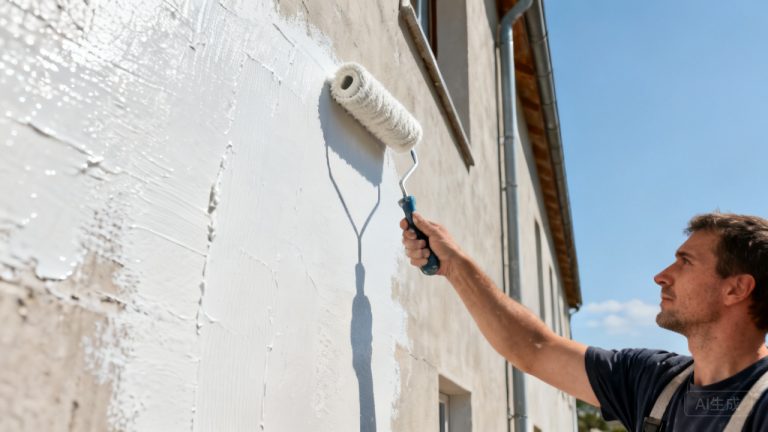
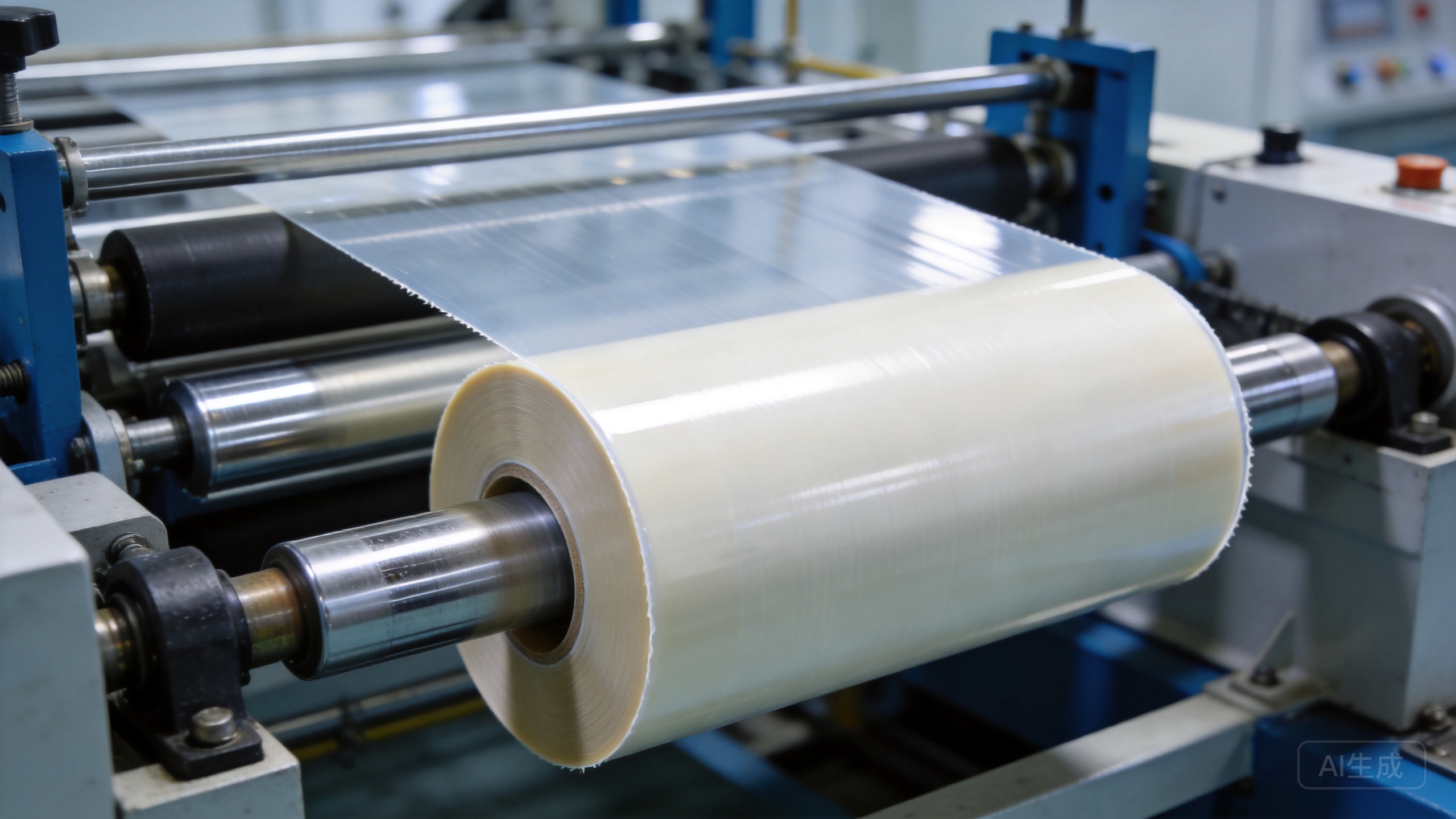
Coating uniformity defects in PSA and laminating adhesives can be classified into three interfaces. The first interface is between the substrate and the wet film: when the surface tension of the adhesive is higher than the critical surface tension of the substrate, the wet film retracts at the moment of contact, forming craters and fisheyes. These defects are most typical on low-surface-energy substrates such as PET, BOPP, and PE. Their diagnosis and product-selection logic have been fully covered in Article 2 of this series and will not be repeated here. The second interface is within the wet film: air entrained during high-speed coating and mixing fails to escape before drying and solidifies into pinholes, white spots, or voids after drying. The defoaming and foam-control logic for such defects is presented in Article 1 of this series. The third interface is the surface of the dried film: thickness non-uniformity caused by coating-weight fluctuation appears optically as local haze or rainbow patterns, mostly due to feed-pressure fluctuation, coating-roll gap deviation, or premature film formation in the oven; this usually requires joint troubleshooting of both equipment and formulation.
Among the three interfaces, defects inside the wet film are the most easily confused with surface defects and the most often misdiagnosed as wetting problems. The identification method was given in Table 1-1 of Article 1 of this series: entrained-type and instability-type bubbles are dispersed irregular holes, while craters and fisheyes are circular retraction marks with clear boundaries. For PSA, the cost of bubble defects is higher than for ordinary coatings — voids in the adhesive layer not only affect appearance but also become stress-concentration points that crack preferentially during peeling, directly lowering the measured peel strength. Therefore, the low-foam requirement in a PSA formulation should be regarded as a functional indicator rather than an appearance indicator.
2. Open Time and Initial Tack: Balance within the Time Window
Open time refers to the time window during which the adhesive layer, after coating, can still effectively wet and bond to the adherend; initial tack is the resistance provided by the adhesive layer after instantaneous contact. There is a trade-off relationship between the two, governed by wetting kinetics: the longer the open time, the more complete the interfacial wetting and the higher the initial tack and final bond strength. However, open time is constrained by the water-retention capacity and solids content of the adhesive; extending it indefinitely sacrifices drying speed and line tact. The PSA industry generally adopts a two-stage structure — a low-viscosity rapid wetting stage that establishes contact, followed by the viscoelastic network of the adhesive layer bearing the peel load after drying and cooling.
From the additive perspective, products that can act on both levels at the same time are scarce. At the interfacial wetting level, products with both low dynamic and low static surface tension are required to ensure continuous spreading both at the instant of high-speed coating and during the open-time window. The key criterion here is dynamic surface tension — the closer the value measured at a bubbling frequency of 6 b/s is to the static value, the faster the additive migrates to the newly created interface, and the more direct the improvement in short-duration contact. At the viscoelastic network level, performance is essentially determined by the base polymer and the tackifying resin; the additive’s contribution is “not to hold things back” — it should neither introduce hydrophilic residues that weaken water-resistant peel strength nor leave excessive low-molecular-weight species that affect cohesive strength. Evaluating these two levels separately is the basic method of PSA formulation tuning.
It should be noted that the measurement method for initial tack significantly affects the evaluation result. Values obtained from loop tack, the rolling-ball method, and the initial peel value each correspond to different time scales; figures from different methods should not be mixed in horizontal comparisons during product selection. Only gradient comparisons under the same method and the same temperature and humidity conditions have formulation decision value.
3. Edge Lifting and Residual Adhesive: Wetting and Leveling at the Coating Edge
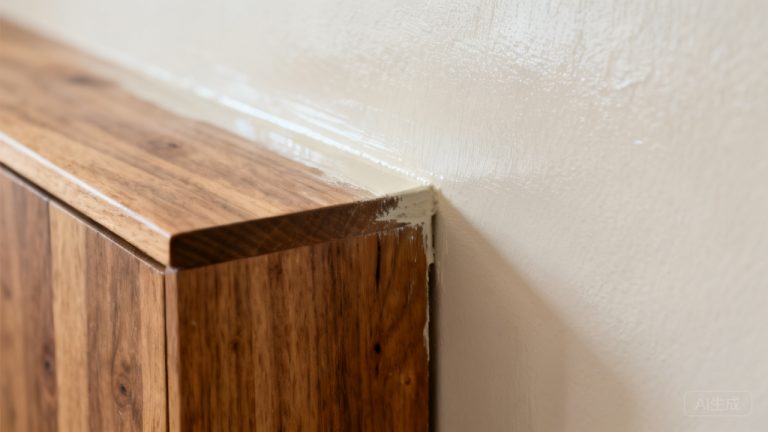
Edge lifting/curling and residual adhesive are another group of high-frequency defects in laminating adhesive coating. The direct cause of edge lifting is that the drying-shrinkage stress of the adhesive at the coating edge exceeds the interfacial anchoring force between the adhesive layer and the substrate — the adhesive layer at the edge is thinner and dries faster, concentrating the shrinkage stress; if interfacial wetting is insufficient, anchoring is inadequate, and the two together produce edge lifting. Residual adhesive, by contrast, results from adhesive that is not completely transferred at the coating-head exit or on the guide rolls and accumulates and cures; this is more common when the surface tension of the adhesive is so low that it over-wets the roll surface and transfer becomes incomplete.
These two defect types place opposite demands on additives: edge lifting requires stronger interfacial wetting and more uniform coating weight at the edge, while residual adhesive requires avoiding the transfer problems caused by excessive spreading. In practice, addressing edge lifting should start by improving interfacial anchoring — improving substrate wetting, rechecking the edge coating weight, and adjusting the temperature gradient in the front section of the oven if necessary; addressing residual adhesive should prioritize checking the coating gap, doctor-blade condition, and adhesive rheology rather than continuing to reduce surface tension. This pair of contradictions again shows that the troubleshooting order for coating defects should proceed from equipment and process to additives — additives are the last link, not the first.
4. Quantifiable Verification Criteria
The field criteria for PSA and laminating adhesive coating are compiled into the table below for easy comparison in lab trials and production-line documentation. The following criteria are common industry reference points; final acceptance shall follow the customer’s factory standard and end-use test standard:
Table 4-1 Verification criteria for PSA and laminating adhesive coating (common industry reference)
| Test item | Common criterion | Corresponding defect layer | Notes |
|---|---|---|---|
| Dynamic surface tension | 0.1% aqueous solution, 25°C, as close as possible to the static value at a bubbling rate of 6 b/s | Interfacial wetting | Primary kinetic parameter for high-speed coating product selection |
| Open time | Duration for which the wet film retains effective wetting (measured by adhesive type) | Time window | Linked to solids content and water retention; calibrate to factory standard |
| Coating uniformity | Transverse/longitudinal wet-film thickness deviation (thickness gauge) | Dried film surface | Verified together with feed and roll-gap conditions |
| Peel strength (dry) | 180° peel, per substrate factory standard | Viscoelastic network | Additives should not significantly weaken it |
| Peel strength (after water soak / high humidity) | Peel after water soak compared with dry state | Water-sensitive weak points | Direct method for detecting hydrophilic residue problems |
| Edge lifting / residual adhesive | Visual inspection + initial peel value | Edge behavior | Check equipment and process first, then adjust additives |
The criteria are compiled from process experience; specific thresholds shall follow the customer’s factory standard. The concentration and temperature used in dynamic surface tension measurement must be consistent with the product datasheet to avoid cross-condition comparisons.
5. Technical Boundaries of Additive Selection
In PSA and laminating adhesive applications, wetting agents and foam-control wetting agents are the two main additive routes. The following boundaries are recommended in selection: first, give priority to non-ionic acetylenic diol products with both low dynamic and low static surface tension and foam-control capability, so as to avoid introducing new foam or hydrophilic residue problems in pursuit of a single indicator; second, the wetting agent should be added after other surfactants and the polymer but before pigments and fillers, with thorough stirring for 15–30 minutes; third, silicone-based leveling agents can significantly lower surface tension, but their impact on re-adhesion and recoatability of the PSA needs separate evaluation and they should not be used as the default option.
Among published parameters, products described as suitable for waterborne PSA and laminating adhesives, improving coating uniformity, preventing bubble formation, and adapting to high-speed coating can be represented by Superwet-320 (0.1% aqueous solution, 25°C: static 26.2 / dynamic 28.2 dyn/cm, dynamic value at 6 b/s being 28.2 dyn/cm); for the foam-control direction, models such as FS-6502 can be evaluated (static 33.1 / dynamic 35.5 dyn/cm). The above parameters are all published Toynol® data and require dosage-gradient verification before use in your specific formulation. This paragraph is the only product reference in this article; for selection details, refer to the comparison tables in Articles 1 and 2 of this series.
6. Division of Scope with the First Four Articles of This Series
As the fifth article in this technical series, this article does not repeat the parameter tables and troubleshooting procedures already established in the first four articles, but only provides connection and selection guidance: for foam-control selection involving foaming, pinholes, white spots, and adhesive skipping, see Article 1; for wetting selection involving craters, fisheyes, and tack on low-surface-energy substrates, see Article 2; for additive packages in battery binder systems, see Article 3; for the selection red lines regarding compatibility, demulsification/flocculation, and water-resistant peel strength, see Article 4. If foaming and wetting problems occur simultaneously in PSA and laminating adhesive applications, first identify the defect type according to Table 1-1 in Article 1, then select according to the corresponding article; if emulsion compatibility is a concern, go through the decision tree in Article 4 before entering the dosage gradient.
7. Trends and Outlook
The PSA industry is evolving toward low-VOC, waterborne, and high-line-speed directions, and increased coating speed will continue to raise the requirements for the dynamic wetting capability of additives. At the same time, environmental regulations restricting solvent carriers and APEO will push low-carrier, APEO-free products to become mainstream. These two trends together point to one judgment: the focus of additive selection for PSA and laminating adhesives is shifting from meeting static indicators to an integrated evaluation of dynamic-window matching, system compatibility, and minimization of functional residue. Specific quantitative boundaries need to be accumulated through formulation systems and production-line testing; the criteria described in this article can serve as a starting framework but do not constitute a commitment to specific performance.
If you need a wetting and foam-control dosage-gradient scheme for your PSA or laminating adhesive formulation, or would like to request samples and TDS, please contact our technical service team: Tianjin Hi-Perferal Advanced Materials Co., Ltd., No. 2-1 Zhenghua Road, Caozili, Wuqing District, Tianjin, technical service hotline 022-82910362, official website www.surfychem.com. Services include free sample supply, lab-scale formulation design, laboratory coating tests, and on-site process guidance.