Waterborne Adhesive Additive Selection Red Lines: Compatibility, Demulsification/Flocculation, and Water-Resistant Peel Strength
Whether an additive can be used is often determined not by how well it performs on a single metric, but by whether it can “survive” when incorporated into your emulsion system. Most waterborne adhesives are based on acrylate or VAE emulsions stabilized by anionic emulsifiers, with tackifying resins, pigments/fillers, and pH adjusters also present in the formulation. If the additive creates a charge conflict with the emulsifier, or if its carrier is incompatible with the system, the consequences can range from invalid surface tension data and persistent defects, to full-batch demulsification, flocculation, or phase separation—such field failures are not uncommon during additive selection.
This guide breaks down the three red lines in additive selection: the mechanisms and triggers of compatibility issues and demulsification/flocculation, how water-resistant peel strength can be silently degraded by additives, and a decision tree you can print and post in the mixing room. Conclusions from the company’s internal experiments are limited to the systems and conditions described in the respective reports; see the notes in each section.
1. Red Line Checklist: Four Gates Before Selection
Before comparing any performance data, screen candidate additives through the following four gates. If any gate is not passed, the additive should be excluded regardless of how impressive its performance data may be:
- Charge compatibility: Does the additive’s ionic type conflict with the charge of the system’s emulsifier (anionic/cationic mutual attraction being the most common source of demulsification)?
- Carrier compatibility: Could the solvents inherent to the additive (ethylene glycol monobutyl ether, propylene glycol, dipropylene glycol, etc.) destabilize the system or introduce odor/regulatory issues?
- Electrolyte and pH window: Do the system’s salt concentration and pH fall within the additive’s stable window (e.g., certain defoamers are usable across pH 2–12)?
- Side effects on performance: Does the additive leave hydrophilic group residues that weaken the final adhesive layer’s water resistance or peel strength?
Of the four gates, the last one is the most easily overlooked and deserves special attention—it directly determines whether the adhesive layer “won’t peel off easily” or “fails when exposed to water.” See Section 4.
2. Demulsification and Flocculation: Mechanisms and Triggers
2.1 Charge Conflict Is the Most Common Trigger
The vast majority of waterborne adhesive emulsions are stabilized with anionic emulsifiers. If an additive carrying strong cationic groups is introduced, the neutralization of positive and negative charges destroys the protective layer of emulsifier on the droplet surface, causing rapid demulsification—manifested as sudden thickening, lumping, curd-like precipitates, or phase separation. Therefore, non-ionic additives should be the first choice for anionic emulsion systems; cationic systems require individual evaluation and cannot be assumed by analogy.
2.2 Carriers and Solvents: The Hidden Variable “Built Into” the Additive
Many additives are supplied in liquid form with a solvent as the carrier. The choice of carrier affects the additive’s migration and compatibility within the system: for example, with the same active structure (acetylenic diol gemini type), DF-110B uses ethylene glycol monobutyl ether as the carrier, DF-80PG uses propylene glycol, and DF-80D uses dipropylene glycol (see Table 2-2 in Part 1 of this series for details, not repeated here). In systems sensitive to residual solvents (food contact, odor, film swelling), the carrier itself can become a hard constraint on compatibility and must be evaluated together with the active ingredient.
2.3 Shear and Temperature: Failure Pathways That “Activate” the Additive
Some additives appear compatible with the system under static storage, but precipitate, turn hazy, or even flocculate under high-shear dispersion or at elevated temperatures (oven, heat aging). Do not limit testing temperature to laboratory data at 25°C—the cloud point of non-ionic wetting agents and the shear durability of defoamers must be re-validated against the actual process window (see Section 3.2 in Part 2 of this series for cloud point-related content).
2.4 Electrolytes and the pH Window
Thickened systems, hard-water systems, and salt-containing systems compress the electrical double layer and weaken charge repulsion, amplifying flocculation risk. Some products publish a broad pH window (e.g., Foamic 028 is specified as usable across pH 2–12 with hard-water tolerance); such information should be directly compared against the system’s actual pH during selection.
3. Ionic vs. Non-Ionic: Compatibility Comparison Table
Table 3-1 Compatibility between additive ionic type and emulsion systems (process experience)
| Additive ionic type | Anionic emulsion | Non-ionic emulsion | Cationic system | Common risks |
|---|---|---|---|---|
| Non-ionic (acetylenic diols, polyethers) | Usually compatible; first choice | Usually compatible | Requires individual evaluation | Precipitation near cloud point |
| Anionic (polyacrylate salt dispersants, etc.) | Usually compatible | Usually compatible | Requires individual evaluation | Conflict with cationic additives |
| Cationic | High risk; prone to demulsification | Requires individual evaluation | Usually compatible | Neutralization and demulsification with anionic emulsifiers |
| Silicone-based (silicone-containing additives) | Evaluate per system | Evaluate per system | Evaluate per system | Cratering, recoating and rebonding issues |
The table above is an industry-common process judgment framework for preliminary screening; final selection shall be based on small-scale compatibility testing on the customer’s actual emulsion (see Section 6).
Dispersants, a class of additives often used alongside wetting agents and defoamers, follow the same framework in terms of ionic type selection. It should be noted that a dispersant’s “water resistance” and its ionic type are two independent dimensions—the same dispersant can perform excellently in an alkaline pigment system yet fail to meet fineness requirements in a strongly acidic high-specific-surface-area system, a situation that has actually occurred in internal experiments (see Table 4-2 in Section 4). Selection must be based on the actual surface properties of the powder, not on brand reputation.
4. Water-Resistant Peel Strength: An Indicator Silently Dragged Down by Additives
4.1 Mechanism: Hydrophilic Group Residues = Water-Sensitive Weak Points in the Adhesive Layer
Many conventional dispersants (e.g., ordinary polyacrylate salts) rely on a large number of hydrophilic groups to anchor particles. After dispersion is complete, these hydrophilic groups remain in the coating/adhesive layer, creating water-sensitive weak points when exposed to moisture—macroscopically manifested as moisture uptake, whitening, and reduced water-resistant peel strength. This is precisely why “water-resistant dispersants” exist: they use anchor groups that bond firmly to particles and polymer structures whose chain segments are not overly hydrophilic, completing the dispersion mission without leaving water-sensitive residues.
Toynol® has two products with explicit public statements in this direction: HD-20 and HD-23, both high-performance water-resistant dispersants. HD-20 is a mixture of styrene-maleic anhydride copolymer and acetylenic diols, with the public description “rapidly reduces grinding viscosity, provides long-term dispersion stability, and significantly enhances coating water resistance.” HD-23 is a mixture of a modified styrene-acrylic copolymer and acetylenic diols, with the public description “introduces no water-soluble salts, anchor groups bond firmly, and does not become a water-sensitive weak point in the film after dispersion.” Both products’ public literature indicates their water-resistance mechanism, making them suitable for outdoor systems sensitive to water resistance such as exterior wall coatings; use in waterborne adhesive applications is a cross-scenario application and must be validated against the customer’s formulation.
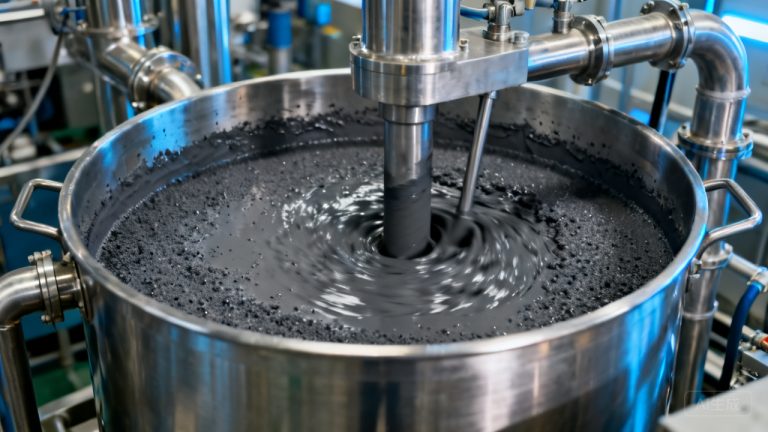
4.2 Insights from Three Carbon Black System Experiments (Condition-Limited Citation)
The following are internal experimental records (dispersant screening test report); conclusions are valid only for the systems and conditions described in the report:
Table 4-2 HD-20 / HD-23 performance in three carbon black systems (internal experiment, condition-limited)
| Test system | HD-20 result | HD-23 result | Insight |
|---|---|---|---|
| High-color acidic carbon black FW200 (high specific surface area, acidic surface) | Grinding fineness ≤45 μm, did not meet spec | — | Insufficient anchoring in high-specific-surface-area strongly acidic systems; fineness failed; HD-20 is not recommended for this system in this set of experiments |
| Medium-color acidic carbon black MA100 | Fineness ≤10 μm, initial viscosity 90.7 mPa·s, heat-aged viscosity 182 mPa·s at 11 days, later viscosity trended toward equilibrium; top recommendation | — | Medium-color acidic system matched well with HD-20; low viscosity and high stability |
| Medium-color slightly alkaline carbon black EB925 | Fineness ≤10 μm, initial 53.3, 15-day 81.3 mPa·s; top recommendation | Gelled immediately during grinding; no flowability | The two water-resistant dispersants performed very differently in the same system—HD-20 excelled in the alkaline system while HD-23 gelled; selection must be based on system-level small-scale testing |
Source: Internal test report (FW200 / MA100 / EB925 dispersant screening report, dispersant dosed per the report’s SOP). The subject of the experiments was carbon black dispersion in waterborne coating/ink systems, not waterborne adhesive systems; conclusions are limited to the systems and conditions described and must be re-validated for adhesive applications. Special note: dispersants exhibit acid-base matching with pigment surfaces; it is normal for one product to be optimal in an alkaline system yet fail in a strongly acidic system—this does not indicate a product defect.
4.3 Linked Check on Water Resistance and Peel Strength
For adhesives, water-resistant peel strength is the direct criterion for “whether the adhesive layer can maintain bonding in humid environments.” After completing the additive dosage screening, it is recommended to soak the test specimens in water or place them in a high-humidity environment before measuring peel strength again, and compare with the dry-state peel strength. Any additive that causes a significant drop in water-resistant peel strength, even if it solves surface defects, should be re-weighed—it may simply be trading one problem for another.
5. Additive–System Compatibility Decision Tree
The judgment logic from the preceding four sections is condensed into a decision tree; proceed in order:
Table 5-1 Compatibility selection decision tree (text version)
| Decision node | Yes → follow which branch | No → follow which branch |
|---|---|---|
| Step 1: Is the system emulsifier anionic? | → Exclude cationic additives; prioritize non-ionic types | → Cationic systems may use cationic additives, but non-ionic types still require individual validation |
| Step 2: Does the additive carrier contain solvent? | → Confirm solvent compatibility with film substrate, odor, and regulations; otherwise switch to solvent-free/waterborne grade | → Continue to next step |
| Step 3: Does the system pH / salt concentration fall within the additive’s published window? | → Continue to next step | → Switch to a broad-window product (e.g., Foamic 028, pH 2–12) or adjust addition sequence |
| Step 4: Is the system operating temperature below the additive’s cloud point? | → Continue to next step | → Switch to a higher-cloud-point product, or restrict high-temperature process stages |
| Step 5: Does the small-scale compatibility test (Section 6) pass? | → Proceed to dosage screening | → Replace the candidate; do not force-dose beyond recommended levels |
| Step 6: Is there no significant drop in water-resistant peel strength? | → Selection approved | → Weigh defect improvement vs. water-resistance loss; re-select or use a blend |
The decision tree is compiled from process experience for field use; the actual pass criteria for each step shall be based on measurements in the customer’s system.
6. Standard Actions for Compatibility Small-Scale Testing
Before any candidate additive goes online, it is recommended to complete the following three small-scale tests, each with clearly defined “failure signals”:
- Emulsion compatibility test: Add the target dosage of additive to 100 g of the base emulsion, stir for 5 minutes, then let stand for 30 minutes; observe for thickening, lumping, phase separation, or particle precipitation. Any of these conditions constitutes failure.
- Heat aging / thermal cycling test: Place the sample at 50°C for 24 h and return to room temperature; compare viscosity and appearance. For products with cloud point risk, perform additional high-temperature observation (per the cloud point constraints in Part 2 of this series).
- Water-resistant peel test: Compare dry-state and soaked (or high-humidity) peel strength and calculate the reduction magnitude; a significant decrease warrants re-evaluation.
Only after all three tests pass should you proceed to dosage screening and coating validation. Do not reverse the order—first confirm the additive “can survive,” then discuss “how well it performs.”
7. Notes for Formulation Engineers
- Please specify the system emulsifier ionic type, pH, and process temperature on the inquiry form—these three fields directly determine the size of the candidate additive pool.
- HD-20 and HD-23 belong to the water-resistant dispersant category; their difference from ordinary polyacrylate salt dispersants lies in water-sensitive residues—systems sensitive to water resistance should prioritize evaluation of this category (cross-scenario use in adhesives requires validation).
- Solvent carriers are a hidden variable: for food contact, odor-sensitive, or film-swelling-sensitive systems, include the carrier in the inquiry conditions rather than comparing only active matter content.
- The three carbon black experiments demonstrate the acid-base matching between dispersants and pigment surfaces—the same product can yield opposite conclusions in different systems. Selection conclusions always follow small-scale test results, not brand reputation.
8. Consultation and Samples
If you need compatibility small-scale testing or water-resistant peel evaluation for your emulsion system, or would like to request samples and TDS for HD-20 / HD-23 / Foamic 028 / DF series products, please contact us through the following channels. Technical service typically begins with a round of compatibility testing on your system before proceeding to dosage screening.
- Company: Tianjin Hi-Perferal Advanced Materials Co., Ltd.
- Address: No. 2-1, Zhenghua Road, Caozili, Wuqing District, Tianjin
- Technical Service Hotline: 022-82910362
- Official Website: www.surfychem.com
Services: free sample supply, compatibility small-scale testing, water-resistant peel evaluation, and on-site process guidance.