

How to Select a Dispersant for Graphite Slurry? Stable Dispersion and Sedimentation Control
How to select a dispersant for graphite slurry? Graphite is hydrophobic and prone to platelet stacking, causing rapid slurry settling. Selection follows a three-step combination: Toynol® DS/ADS polymeric dispersants for de-agglomeration, AN suspension stabilizers for sedimentation control, and FS-204/Superwet wetting…

How to Select Additives for Waterborne Printing Inks? A Complete Guide to Wetting, Dispersing, Defoaming and Leveling
Foaming during printing, poor wetting on plastic films, uneven pigment dispersion, and cratering/poor leveling are the four major challenges in waterborne printing inks. This article explains the selection approach for wetting, dispersing, defoaming and leveling additives, with Toynol® model references…
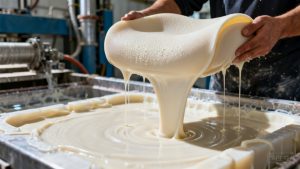
How to Select Latex Additives? Complete Solution for Wetting, Dispersing, and Foam Control in Emulsion Systems
This article covers the selection logic and compatibility testing for wetting agents, defoamers, and dispersants in latex/emulsion systems, with Toynol® product recommendations for combination packages.

How to Select Silicone Additives? Compatibility Solutions for Low Surface Energy Systems
This article clarifies additive compatibility evaluation methods for low surface energy systems, and discusses the application directions of Toynol® FS-204/Superwet wetting agents, DF/Foamic defoamers, and SI leveling agents, with data verified against TDS and actual test results.

How to Select Polishing Slurry Additives? Dispersion, Wetting and Corrosion Protection Solutions
This article explains the logic of combining dispersants, wetting agents, defoamers and corrosion inhibitors in polishing slurry/lapping fluid formulations, with product direction from Toynol® dispersants (DS/ADS series), wetting agents (FS-204/Superwet series) and Vanconol® corrosion inhibitors; specific data are subject to…
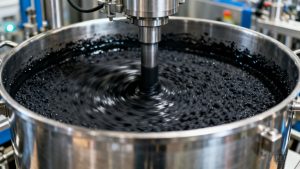
How to Select a Battery Slurry Dispersant? Dispersion Solutions for Cathode Conductive Materials
Since cathode slurry dispersion quality determines the conductive network, slurry viscosity, and electrode consistency, this article explains the dispersion challenges, dispersant mechanism, and selection route, using Toynol® DS/ADS series polymeric dispersants and the published conductive carbon black case as the…
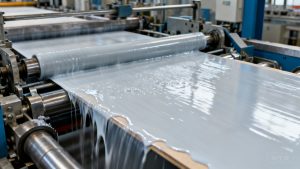
How to Select Low-Foam Wetting Agents? Balancing Surfactants and Foam Control
Excessive foam in cleaning agents and waterborne coatings is often caused by the foam-stabilizing behavior of the wetting agent itself. This article clarifies the differences between low-foam wetting agents and conventional surfactants and the low-foam mechanisms of acetylenic diols and…

Selecting Dispersants for Waterborne Color Pastes: A Stable Dispersion Approach for Pigment Concentrates
This article explains the wetting–dispersing–stabilizing mechanism of dispersants for pigment concentrates, outlines a selection path between polymeric and anionic types, and provides a practical Toynol® DS-series dispersant + FS-204 wetting agent approach matched by pigment type, validated by fineness, viscosity…

How to Select Inkjet Ink Additives? Key Points for Waterborne, Eco-Solvent, and Alcohol-Based Systems
Waterborne, eco-solvent, and alcohol-based inkjet inks have different requirements for wetting, dispersion, and foam control; this article covers the key selection points—acetylenic diol wetting agents for lowering dynamic surface tension, dispersants for stabilizing pigment dispersion, and defoamers for controlling circulation…

How to Select Additives for Diamond Wire Cutting Fluid? Foam Control and Rapid Wetting Solutions
High-speed circulating diamond wire cutting fluid tends to foam, and insufficient wetting between the diamond wire and silicon wafer affects swarf removal and cooling—this article reviews the wetting, foam-control, and spreading requirements and presents a solution combining acetylenic diol wetting/foam-control…

How to Solve Rust Prevention in Waterborne Cutting Fluids? Coordination of Corrosion Inhibitors and Rust Preventives
What to do about rusting workpieces, corroded guideways, and darkening/graying aluminum parts in waterborne cutting fluids? This article clarifies the difference and coordination between rust prevention and corrosion inhibition: rust preventives for ferrous metals, corrosion inhibitors for non-ferrous metals (Al,…
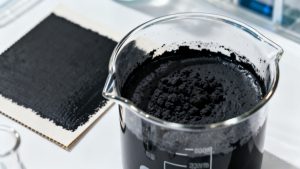
Key to High Retention of Papermaking Color Pastes: Selection and Optimization of Carbon Black Dispersants
This article discusses how to achieve high retention of carbon black in papermaking color pastes through proper selection of high-performance polymeric dispersants, with a focus on Toynol® DS series products from Tianjin Hi-Perferal Advanced Materials Co., Ltd.
Need targeted solution data?
Tell us your system and pain points, and we will provide targeted technical solutions, experimental data and sample testing.