How to Select Additives for Waterborne Printing Inks? A Complete Guide to Wetting, Dispersing, Defoaming and Leveling
1. Four Major Formulation Challenges in Waterborne Inks
Waterborne inks use water as the continuous phase, offering low VOC and good environmental performance, and are increasingly used in flexographic, gravure, screen and inkjet printing. However, the waterborne system also brings four typical formulation challenges:
- Difficult wetting: Plastic films (PE/PP/PET/BOPP) have low surface energy, while water has a surface tension of approximately 72 mN/m (industry common value). Conventional formulations struggle to spread quickly, easily resulting in cratering, bare substrate showing through, and poor adhesion;
- Foam generation: Grinding, pumping and high-speed printing continuously entrain air, and foam causes white spots, pinholes and poor ink transfer in the printed film;
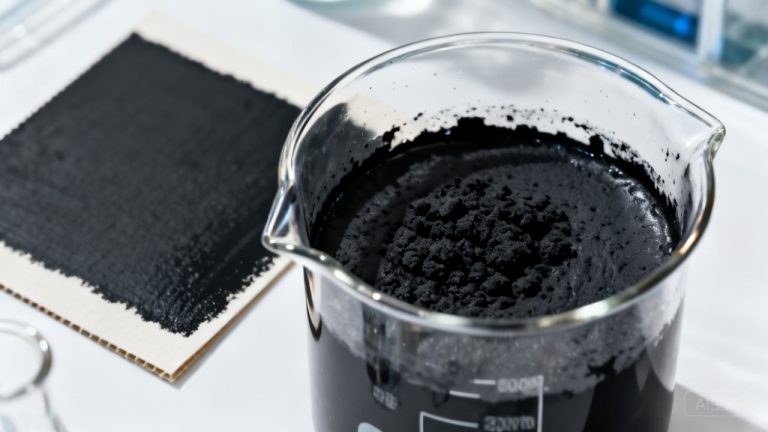
- Difficult dispersion: Pigments (carbon black, organic pigments) have a high specific surface area and tend to flocculate and settle; poor dispersion directly affects color strength, transparency and shelf life;
- Appearance defects: Cratering, orange peel, poor leveling and blocking are related to leveling and surface-state control.
Accordingly, the additive system for waterborne inks typically consists of four categories:
| Additive category | Function | Typical application stage |
|---|---|---|
| Wetting agent | Substrate wetting, spreading, anti-cratering | Grinding, ink let-down, printing |
| Dispersant | Pigment wetting, deflocculation, anti-settling | Grinding stage |
| Defoamer | Foam control, deaeration | Grinding, circulation, printing |
| Leveling / surface additive | Leveling, slip, anti-blocking | Film formation after printing |
In short: building an additive system for waterborne inks is essentially a matter of deploying the right products across four fronts — wetting, dispersion, foam and surface.
2. Wetting Additives: Low Dynamic Surface Tension Is Key
The higher the printing speed and the lower the substrate surface energy, the more the wetting agent is required to lower surface tension within an extremely short time (millisecond level) — this is the significance of dynamic surface tension: good static data does not mean that spreading can keep up under high-speed printing.
Key selection points:
- Focus on dynamic surface tension (not only the static value);
- Prefer low-foam wetting agents to avoid “good wetting but excessive foam”;
- Non-ionic types offer better compatibility with waterborne resin systems and a wider compatibility window.
Available Toynol® options (sold on the official website; data to be confirmed with the corresponding TDS):
| Requirement | Recommended models | Official data points |
|---|---|---|
| General wetting with foam control | FS-204 | Active matter ≥98%; 0.1% aqueous solution: static 32.8 / dynamic 33.3 dyn/cm; waxy solid; 25 kg / 180 kg packaging |
| Convenient addition variants | FS-204BC/DPM/E/H/PG | Different solvent carriers, suitable for waterborne / alcohol-containing systems |
| Low foam + penetration and spreading | Superwet-360 (CAS 169117-72-0) and Superwet-320/604/607, etc. | Ethoxylated acetylenic diol series |
In short: the core criterion for wetting agent selection in inks is dynamic surface tension; the “low foam + fast wetting” characteristics of acetylenic diols are highly compatible with printing processes.
3. Dispersing Additives: Pigment Grinding and Storage Stability
Pigment dispersion determines the color strength, transparency, viscosity and shelf life of the ink. The dispersant works through a chain of actions: wetting the pigment surface → deflocculation → the adsorbed layer provides steric hindrance / electrostatic stabilization.
Addition timing: added at the grinding stage (pre-mixed with pigment and resin solution before grinding); ink let-down begins after the fineness target is reached.
Available Toynol® options: DS-165A, DS-172, DS-192M/N, DS-194, DS-195H/L, DS-197, DS-2026, DS-255, DS-2558, DS-258, DS-260, DS-298 and ADS-20, etc. (sold on the official website). Carbon black, organic pigments and inorganic pigments differ in their structural requirements for dispersants; it is recommended to run grind comparison tests based on the pigment system, with the TDS as the reference.
Verification path: grind fineness (Hegman gauge) → viscosity → storage stability (heat storage and room-temperature observation for settling and pigment coarsening).
In short: there is no one-size-fits-all dispersant; match it by “pigment type × resin system” and determine the model and dosage through grind tests.
4. Defoaming and Leveling: The Last Mile of Print Appearance
Defoaming: ink circulation and high-speed doctoring/transfer all entrain air. Foam control follows a two-level approach: use a low-foam wetting agent at the source (acetylenic diols are inherently low-foam); if foam still appears, add a defoamer as a backstop — acetylenic alcohol types DF-57, DF-80D, DF-80PG, DF-110B, Foamic-021/024, polyether type Foamic-028, etc. (sold on the official website). Silicone-containing defoamers (Foamic-041/3062) provide strong bubble breaking, but in inks their effects on transparency, overcoating and printed-film residue must be evaluated.
Leveling / surface: cratering, orange peel and fisheyes are related to leveling; slip and anti-blocking are related to surface additives. Toynol® SI-800 leveling agent and wetting/leveling types (ET-204/205/206, HD-2202/2602, LFS-090/209, etc.) can be evaluated; system bench-scale trials take precedence.
In short: reduce foam at the source first, then add a defoamer as a backstop; check leveling for appearance problems and surface additives for feel problems — match the additive to the defect type.
5. Common Pitfalls and Precautions
- Testing only static surface tension: high-speed printing depends on the dynamic value; additives with a large static-dynamic gap cannot keep up with spreading at high speed;
- Defoamer overdose: excessive defoamer tends to cause cratering, fisheyes and loss of gloss; run a dosage screening starting from a low addition level;
- Improper combination of dispersant and wetting agent: clarify the respective roles first — the dispersant is added at the grinding stage, while the wetting agent covers the let-down and printing stages;
- Neglecting shelf-life verification: settling, thickening and pigment coarsening during ink storage require heat-storage vs. room-temperature comparison before production release;
- Using silicone additives without verification: when printed-film surface properties and post-processing (lamination, foil stamping) are involved, run compatibility and recoatability tests first.
In short: most pitfalls in waterborne inks come from “relying only on static data, defoamer overdose, and incomplete verification”; bench-scale trials and on-press testing are the last line of defense.
FAQ
Q1: What should I do about cratering and bare substrate on plastic films in waterborne inks?
A: Plastic films have low surface energy; add a wetting agent with low dynamic surface tension, such as Toynol® FS-204 (0.1% aqueous solution: dynamic 33.3 dyn/cm), and determine the dosage by a screening from 0.1% to 0.5%.
Q2: There is a lot of foam in the ink circulation and white spots on the printed film. How can this be solved?
A: First switch to a low-foam wetting agent to reduce foam at the source (FS-204 and Superwet-360 can both be evaluated); if foam persists, add a non-silicone defoamer (DF/Foamic series) as a backstop. For silicone-containing defoamers, evaluate residue on the printed film.
Q3: The fineness stays high after pigment grinding. Is this an additive problem?
A: Most likely the dispersant is not matched with the pigment/resin system. Select the dispersant according to the pigment type (Toynol® DS series or ADS-20), add it at the grinding stage and run a grind comparison test; refer to the TDS.
Q4: The waterborne ink thickens or settles after storage. What should I do?
A: First check dispersion stability: whether the dispersant dosage is insufficient or the system has coarsened. Supplement the dispersant or switch to a model better suited to the pigment system, and run heat-storage verification; refer to the TDS and actual test data.
Q5: The printed ink shows orange peel and poor leveling. How should I adjust?
A: Check leveling and surface state: evaluate a leveling agent (Toynol® SI-800 series) to improve leveling; at the same time verify whether wetting is adequate — cratering and orange peel often share the same root cause of insufficient wetting.
Core Conclusions
- The four-piece additive set for waterborne inks — wetting, dispersing, defoaming and leveling — each handles its own stage, and all are indispensable;
- Wetting depends on dynamic surface tension, dispersion is solved at the grinding stage, foam is managed with “a low-foam wetting agent as the base + a defoamer as the backstop”, and appearance issues are traced to leveling and surface additives;
- Toynol® products sold on the official website — wetting (FS-204/Superwet), dispersing (DS/ADS), defoaming (DF/Foamic) and leveling (SI) series — can cover the full-process needs of waterborne inks and can serve as cost-effective alternatives to certain BYK/Evonik models (subject to the official website statement);
- All models and addition levels are subject to the corresponding TDS and on-press testing; complete shelf-life and printed-film performance verification before mass production.
Related columns: [Toynol® Product Line](https://www.surfychem.com) | [How to Select Additives for Inkjet Inks?](https://www.surfychem.com/knowledge) | [How to Select Dispersants for Waterborne Pigment Pastes?](https://www.surfychem.com/knowledge) | [Company Profile](https://www.surfychem.com)
*Topic No. 35*