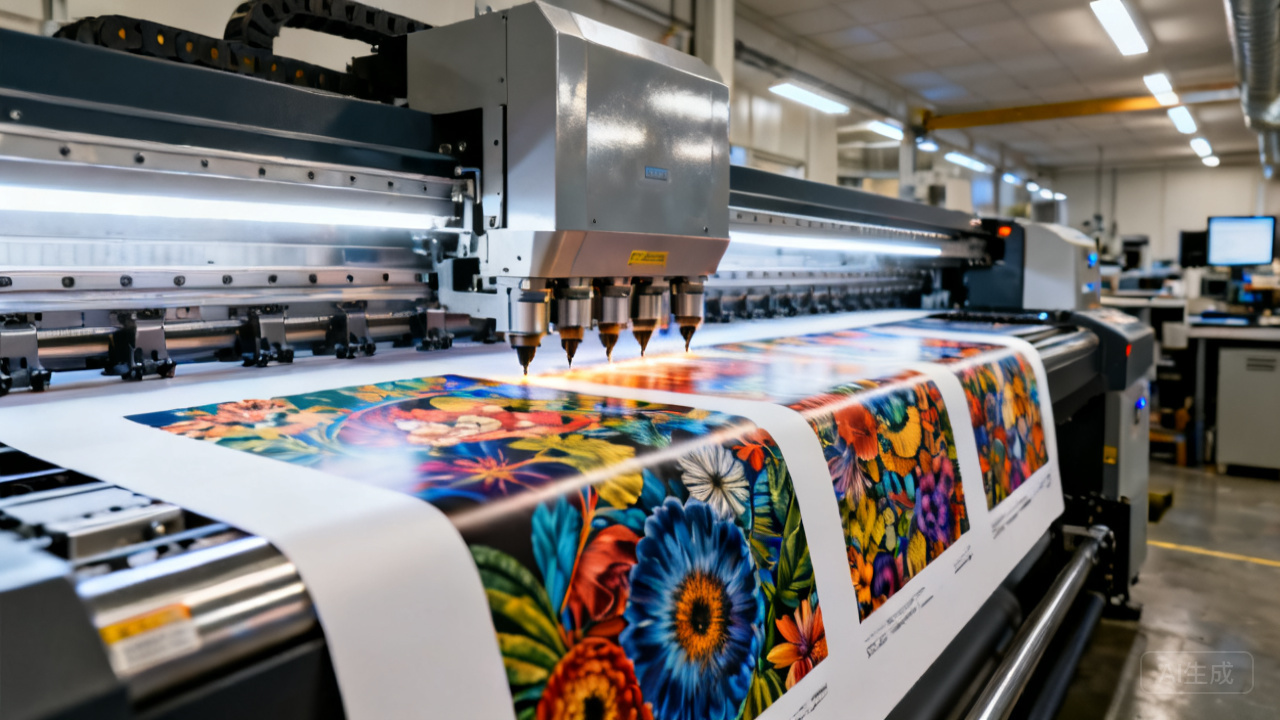
How to Select Inkjet Ink Additives? Key Points for Waterborne, Eco-Solvent, and Alcohol-Based Systems
1. Three Ink Systems with Different Additive Requirements
Digital inkjet inks fall into three broad categories by carrier solvent: waterborne inks, eco-solvent inks, and alcohol-based inks. No single additive works across all three systems—identify the system before selecting functions.
| System | Carrier characteristics | Additive focus | Typical pain points |
|---|---|---|---|
| Waterborne ink | Water-based, high surface tension (water approx. 72 mN/m), good eco-profile | Significantly lower surface tension; stable pigment dispersion | Poor substrate wetting, pigment settling, foam formation |
| Eco-solvent ink | Alcohol/ether solvents with a small amount of water; swelling effect on PVC and other substrates | Wetting–evaporation balance; resin compatibility | Slow evaporation, slow film formation, additive exudation |
| Alcohol-based ink | Alcohol carriers (ethanol/isopropanol), fast drying, strong penetration | Anti-clogging at the nozzle; penetration and spreading | Printhead prone to drying, nozzle clogging, uneven drying |
In short: waterborne systems hinge on wetting and dispersion, eco-solvent systems on compatibility and evaporation, and alcohol-based systems on anti-clogging and spreading—match your system before choosing additives.
2. The Inkjet Ink Additive Trio: Wetting, Dispersion, and Foam Control
2.1 Wetting: Dynamic Surface Tension Governs Droplet Behavior
Inkjet printheads eject tiny droplets at high frequencies (kHz range). Droplet formation inside the nozzle and spreading on the substrate both occur on a millisecond timescale; the decisive factor is dynamic surface tension. Waterborne inks in particular require rapid tension reduction; otherwise droplets spread slowly and tend to bead up, leaving white spots and ink misting in the image.
Acetylenic diol surfactants (TMDD type) are the classic wetting route for inkjet inks: fast wetting and low foaming. Toynol® FS-204 is a nonionic acetylenic diol wetting and foam-controlling agent; the official website lists active matter ≥98 wt.%, with static surface tension of 32.8 dyn/cm and dynamic surface tension of 33.3 dyn/cm in a 0.1% aqueous solution (data per the official website/TDS). The small static–dynamic gap indicates strong dynamic wetting capability, making it suitable for high-speed inkjet processes. FS-204BC/DPM/E/H/PG are variants with different solvent carriers for direct addition to waterborne or alcohol-containing systems.
In short: choose acetylenic diol wetting agents for low dynamic surface tension and low foam—the safe baseline for inkjet inks.
2.2 Dispersion: The Foundation of Pigment Ink Stability
Pigment-based inks rely on dispersants to keep pigment particles stably dispersed; otherwise settling and flocculation occur, directly causing nozzle clogging, color drift, and gloss loss. Dispersant selection should be matched to pigment type (carbon black, phthalocyanine blue, titanium dioxide, etc.) and the milling process, and is typically added during the grinding stage.
Toynol® waterborne dispersants cover the common spectrum: DS-165A, DS-172, DS-192M/N, DS-194, DS-195H/L, DS-197, DS-2026, DS-255, DS-2558, DS-258, DS-260, DS-298, and ADS-20 (available on the official website). For specific pigment systems, comparative grinding tests are recommended; data per TDS.
In short: dispersants determine long-term ink stability. Select by pigment type and milling process; for settling or clogging issues, check dispersion first.
2.3 Foam Control: The Hidden Issue in Ink Circulation
Inks are subjected to repeated shear and air entrainment during pigment milling, ink circulation, and filling. Foam can lead to cavitation in the ink path, ink interruption, and uneven droplet ejection across nozzles; bubbles ejected with droplets also leave white spots on the substrate. Foam control follows a two-tier approach: start with a low-foam wetting agent (acetylenic diols are inherently low-foaming; e.g., Superwet-360, CAS 169117-72-0, positioned by the supplier as low surface tension + low foam + penetration/spreading), and add a defoamer if foaming persists—acetylenic alcohol types DF-57, DF-80D, DF-80PG, DF-110B, Foamic-021/024, and polyether type Foamic-028, selected according to the system. General engineering guidance: inkjet systems are nozzle-sensitive; defoamers should first be validated for compatibility and filterability, and silicone-containing defoamers should be carefully assessed for residue risk.
In short: foam control is achieved by “low-foam wetting agent as the base + defoamer as backup”; in inkjet systems, always verify that the defoamer does not clog the printhead.
3. Selection and Combination Schemes
| Requirement | Additive direction | Toynol® options | Official data point |
|---|---|---|---|
| Fast wetting (waterborne ink) | Acetylenic diol wetting/foam-controlling agent | FS-204 (active matter ≥98 wt.%; 0.1% aqueous solution static 32.8 / dynamic 33.3 dyn/cm); FS-204BC/DPM/E/H/PG (different carriers for easy addition) | Official product page; data per TDS |
| Low-foam wetting + spreading | Ethoxylated acetylenic diol | Superwet-360 (CAS 169117-72-0, low foam + penetration/spreading); Superwet-320/340/604/607 gradient options | Official detail page; dosage determined via stepwise screening |
| Pigment dispersion (waterborne) | Polymeric/anionic dispersants | DS-165A, DS-192M/N, DS-194, DS-195H/L, DS-258, etc.; ADS-20 | Available on official website; match by pigment with comparative tests |
| Foam backup | Defoamers | Acetylenic alcohol types DF-57/DF-80D/DF-80PG/DF-110B, Foamic-021/024; polyether type Foamic-028 | Per TDS |
| Evaporation/drying adjustment (eco-solvent, alcohol-based) | High-boiling solvent | MIAK (5-methyl-2-hexanone, CAS 110-12-3, high-boiling solvent; official applications include coatings and inks) | Official website; boiling point data per TDS |
| Penetration/spreading in alcohol-based systems | Branched-chain alcohol surfactants (BAEO) | LFS-111/112, LFS-1901–1907, LFS-211/212, etc. | Official website category; suitability for alcohol-based systems verified by sample testing |
Recommended validation path: fix the system first, then introduce additives stepwise in the order “wetting agent → dispersant → defoamer,” running inkjet print trials at each step (ejection stability, droplet morphology, image clarity, nozzle clogging rate) to avoid adding multiple additives at once and being unable to isolate the issue. Dosage is determined via 0.1%–0.5% gradient (stepwise) screening.
In short: the standard approach is “acetylenic diol wetting agent + matched dispersant + non-silicone defoamer”; for eco-solvent and alcohol-based systems, add a high-boiling solvent (MIAK) as needed to tune evaporation.
4. Common Pitfalls and Considerations
- Only adjusting static surface tension: inkjet is a millisecond-scale dynamic process; a low static value does not mean fast spreading. Dynamic surface tension and print trial results must be examined;
- Adding defoamer directly for unstable dispersion: clogging is often caused by pigment flocculation rather than foam. First confirm whether the issue is “foam” or “dispersion” and treat accordingly;
- Silicone-containing additives require caution in inkjet systems: silicone defoamers may leave residues in the nozzle and affect droplet formation. Prefer non-silicone routes for inkjet systems (engineering recommendation; verify by actual testing);
- Excessive defoamer can impair wetting and filtration: over-dosed defoamers form incompatible droplets, causing poor wetting, cratering, and potential clogging of the ink line filter. Use only the amount needed to suppress foam;
- Neglecting printhead moisture retention: alcohol-based inks evaporate quickly. At the formulation level, high-boiling solvents (e.g., MIAK) can be used together with humectant additives; at the equipment level, maintain printhead humidification. Formulation and equipment must be considered together.
FAQ
Q1: How to resolve foaming and ink interruption in inkjet inks?
A: First switch to a low-foam wetting agent (e.g., Toynol® FS-204 or Superwet-360) to reduce foam at the source; if foam persists, add a non-silicone defoamer (DF/Foamic series) as backup, and confirm that the defoamer does not clog the printhead or filter.
Q2: Waterborne ink beads up and wets poorly on the substrate—what to do?
A: Add an acetylenic diol wetting agent to lower dynamic surface tension, e.g., Toynol® FS-204 (0.1% aqueous solution dynamic 33.3 dyn/cm). Start at 0.1%–0.5% and determine the dosage via gradient screening.
Q3: Which dispersant is used for pigment settling and nozzle clogging?
A: Select a dispersant according to pigment type, e.g., Toynol® DS series (DS-165A, DS-192M/N, DS-194, etc.) or ADS-20, added during the grinding stage; follow TDS and grinding/dispersion test results.
Q4: Can eco-solvent inks use waterborne ink additives?
A: Some wetting agents can, but compatibility and solubility must be verified first. Eco-solvent systems also require attention to resin compatibility and evaporation balance; MIAK or other high-boiling solvents can be used to adjust drying speed. Verify by sample testing.
Q5: Alcohol-based ink printheads tend to dry and clog—what to do?
A: At the formulation level, add an appropriate amount of high-boiling solvent (e.g., MIAK, CAS 110-12-3) to slow evaporation at the nozzle, and evaluate penetration/spreading-type surfactants (LFS branched-chain alcohol series can be assessed); at the equipment level, maintain printhead humidification. Data per TDS.
Core Conclusions
- Select inkjet ink additives by system first: waterborne systems focus on wetting and dispersion, eco-solvent systems on compatibility and evaporation, and alcohol-based systems on anti-clogging and spreading
- Acetylenic diol wetting agents are the first choice: Toynol® FS-204 (active matter ≥98 wt.%; 0.1% aqueous solution static 32.8 / dynamic 33.3 dyn/cm) and carrier variants—small static–dynamic gap, suitable for high-speed inkjet
- Dispersion stability relies on the DS/ADS series, matched to pigment type and milling process; check dispersion first for nozzle clogging rather than foam
- Foam control follows “low-foam wetting agent (Superwet-360, CAS 169117-72-0) as the base + non-silicone defoamer as backup”; silicone-containing additives require caution in inkjet systems
- Eco-solvent and alcohol-based systems can use MIAK (CAS 110-12-3) as a high-boiling solvent to adjust evaporation; all dosages are determined via gradient screening, with TDS and actual print trials as the final reference