Application Guide for Toynol Additives in Inkjet Inks
Toynol® Additives: A Comprehensive Application Guide for Inkjet Ink Systems
A practical guide to additive selection and formulation strategies across three major inkjet ink systems: waterborne, eco-solvent, and alcohol-soluble
[Introduction] The performance bottleneck of inkjet inks often lies not in the pigment or resin, but in the additives. In piezoelectric drop-on-demand (DOD) inkjet systems, three dimensions—surface tension control, foam control, and pigment dispersion stability—directly determine printing smoothness, ink-film appearance, and storage durability. This article systematically reviews the application logic of the Toynol® additive brand of Tianjin Hi-Perferal Advanced Materials Co., Ltd. across the three mainstream inkjet ink systems—waterborne, eco-solvent, and alcohol-soluble—providing ink formulators with a directly actionable additive-selection reference.
1. Core Challenges of Additives in Inkjet Inks
Inkjet inks place far more stringent demands on additives than ordinary coatings:
| Dimension | Challenge | Consequence |
| Surface tension | Ink drop formation requires a precise dynamic tension balance | Too high → poor wetting and cratering; too low → satellite droplets and misting |
| Foam control | High-speed agitation, pigment milling, and recirculation pumping all introduce air bubbles | Foam → ink starvation, pinholes, and bubble marks |
| Pigment dispersion | Pigment particle size must remain stable at D50<150nm over the long term | Agglomeration → nozzle clogging and reduced color density |
| Printhead compatibility | Additives must be free of metal ions and must not corrode printhead components | Printhead damage and shortened service life |
The Toynol® additive portfolio is engineered around these four challenges, providing complete solutions that span the three ink systems.
2. Waterborne Pigment Inkjet Inks: Toynol®‘s Home Turf
2.1 System Characteristics and Additive Requirements
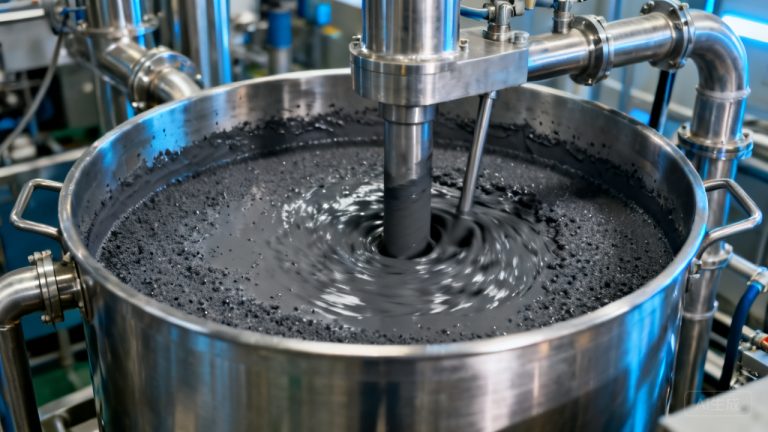
Waterborne inks use deionized water as the primary solvent (typically 55%~65%), combined with humectants such as glycerol/diethylene glycol. Their core additive requirements are:
· Pigment dispersant: stabilizes nano-scale pigment particles and prevents particle growth and settling during storage
· Wetting and foam-control agent: regulates the ink’s dynamic surface tension to ensure stable drop formation and good substrate wetting
· Defoamer: eliminates micro-foam introduced during milling and ink adjustment without causing cratering
2.2Toynol® Three-Additive Combination
| Product | Type | Dosage (wt%) | Core function |
| Toynol® DS-260 | CPT-technology polymeric dispersant | 1.2 (40%~50% on pigment) | Pigment dispersion and long-term storage stability |
| Toynol® FS-204E | TMDD/glycol solution (50% active) | 0.8 | Dual wetting + foam-control function |
| Toynol® Foamic 024 | Silicone-free, oil-free polymeric defoamer | 0.2 | High-efficiency defoaming + micro-foam removal |
2.3 DS-260: The Preferred Choice for Organic Pigment Dispersion
DS-260 is synthesized via controlled polymerization technology (CPT). Multiple anchoring groups in its molecular structure adsorb firmly onto the pigment surface while providing sufficient steric hindrance, delivering long-term dispersion stability.
Validated by in-house experimental data (a full-spectrum comparison of 7 pigments × 11 dispersants):
| Pigment type | Recommended dispersant | Key data | Rating |
| Phthalocyanine blue (PB15:3) | DS-260 | Excellent across all dimensions, gloss ◆◆◆◆ | First choice |
| Carbon black | DS-260 | Lowest dosage (46.7% on pigment), no thixotropy | First choice |
| Phthalocyanine green | DS-260 | The only dispersant rated excellent across all dimensions | First choice |
| Diketopyrrolopyrrole red (PR254) | DS-298 first, DS-260 second | DS-260 also rates ◆◆◆◆, with negligible difference | Can be standardized |
Unified CMYK four-color solution: To simplify production and inventory management, all four colors can be standardized on DS-260. DS-260 is the first choice for phthalocyanine blue, carbon black, and phthalocyanine green, and also performs excellently in PR254 (◆◆◆◆), with a negligible gap versus DS-298.
2.4 FS-204E: Dual Wetting and Foam Control in One
The active ingredient of FS-204E is TMDD (2,4,7,9-Tetramethyl-5-decyne-4,7-diol), dissolved in a glycol carrier (50% active). Its core value lies in solving both wetting and foam problems with a single additive:
| Parameter | Value | Description |
| Static surface tension | 37.7 mN/m (0.1% aqueous solution) | Regulates the overall surface tension of the ink |
| Dynamic surface tension | 38.5 mN/m | Migrates rapidly to fresh interfaces to ensure stable drop formation |
| Recommended dosage | 0.3%~1.0% | This formulation uses 0.8% (i.e., 0.4% active TMDD) |
Supporting evidence: US Patent 11,421,122 (Seiko Epson, 2022) explicitly lists acetylenic diol surfactants as an essential component of waterborne inkjet inks. The TDS on the Toynol® official website likewise notes the application scenario of “waterborne inks and overprint varnishes: suitable for high-speed printing”.
2.5 Foamic 024: A Reliable Cratering-Free Defoaming Choice
Defoamer selection for inkjet inks follows one iron rule: any cratering risk is unacceptable. With ink drop diameters measured in picoliters, any interfacial defect caused by defoamer particles is directly reflected in print quality.
| Property | Description |
| Silicone-free and oil-free | Eliminates the risk of cratering and fisheyes at the source |
| Polymeric type | Non-oily system that does not affect pigment wetting |
| Triple function | Rapid deaeration + long-lasting foam suppression + micro-foam removal |
| Dosage window | 0.1%~0.4%; this formulation uses 0.2% |
2.6 Typical Waterborne Ink Formulation (Cyan PB15:3 as an Example)
| Component | Grade | Dosage (wt%) | Function |
| Deionized water | ≥18 MΩ·cm | 56.8 | Main medium |
| Pigment PB15:3 | Phthalocyanine blue, inkjet grade | 3.0 | Colorant |
| Toynol® DS-260 | CPT polymeric dispersant | 1.2 | Pigment dispersion stability |
| Glycerol | Industrial grade ≥99% | 8.0 | Primary humectant |
| 1,5-Pentanediol | Industrial grade | 5.0 | Humectant + penetration |
| Diethylene glycol | Industrial grade | 5.0 | Humectant + co-solvent |
| 2-Pyrrolidone | Industrial grade | 3.0 | Humectant + solubilizer |
| Toynol® FS-204E | TMDD/EG solution | 0.8 | Wetting + foam control |
| Toynol® Foamic 024 | Silicone-free, oil-free polymer | 0.2 | Defoaming |
| Acrylic resin dispersion | Joncryl® 537 | 3.0 | Adhesion + water resistance |
| Triethanolamine | Industrial grade | 0.3 | pH adjustment |
| Proxel GXL | 1,2-Benzisothiazolin-3-one | 0.1 | Preservation / anti-mold |
3. Eco-Solvent Inkjet Inks: The Carrier Advantage of Toynol® FS-204DPM
3.1 The Unique Positioning of Eco-Solvent Systems
Eco-solvent inks sit between purely waterborne and purely solvent-borne types and are the mainstream choice for outdoor signage printing today. Their primary solvent is a mixed medium of glycol ethers + lactate esters + a small amount of water, balancing environmental friendliness (low VOC, low odor) with strong adhesion to non-absorbent substrates (PVC backlit film, vehicle wraps, vinyl banners).
| Item | Waterborne ink | Eco-solvent ink | Solvent ink |
| Primary solvent | Water | Glycol ethers + lactate esters + water | Ketones / hydrocarbons |
| VOC | Very low | Moderate (far lower than solvent inks) | High |
| Substrate compatibility | Absorbent substrates | PVC/vinyl preferred | Broad |
| Outdoor durability | Poor | Excellent | Excellent |
3.2Toynol® Additive Combination
| Product | Dosage (wt%) | Core function |
| Toynol® FS-204DPM | 1.0 | Dual wetting + foam-control function |
| Toynol® DF-80D | 0.3 | Defoaming / foam suppression |
Why FS-204DPM rather than FS-204E? The key lies in the carrier. DPM (dipropylene glycol methyl ether) is itself a core co-solvent of eco-solvent inks, typically accounting for 15%~20% of the formulation. The DPM carrier of FS-204DPM forms a concentration continuum with the DPM already in the formulation, giving zero compatibility risk. By contrast, the glycol carrier of FS-204E is less compatible with the organic phase than a DPM carrier in eco-solvent systems with a high proportion of organic solvent.
3.3 DF-80D: The Defoaming Solution for Eco-Solvent Systems
The active ingredient of DF-80D is a dodecyne diol polyoxyethylene ether (32% active), dissolved in a dipropylene glycol (DPG) carrier. Its synergistic logic with FS-204DPM:
| FS-204DPM (wetting and foam control) | DF-80D (defoaming and foam suppression) |
| Lowers surface tension → suppresses foam generation | Rapid bubble breaking → eliminates existing bubbles |
| Improves PVC/PE wetting → prevents cratering | Long-lasting foam suppression → stabilizes the recirculation system |
| Aids pigment wetting → promotes dispersion | Micro-foam removal → improves ink-film appearance |
| → foam prevention at the source | → in-process defoaming |
3.4Typical Eco-Solvent Ink Formulation
| Component | Grade | Dosage (wt%) | Function |
| Diethylene glycol diethyl ether (DEDG) | Flash point ≥82°C | 25.0 | Primary eco-solvent, low toxicity and low odor |
| Dipropylene glycol methyl ether (DPM) | Dowanol DPM | 18.0 | Co-solvent, dissolves resin |
| Butyl lactate | Industrial grade | 10.0 | Eco-friendly ester solvent, fast drying |
| Propylene carbonate (PC) | Industrial grade | 5.0 | High-boiling co-solvent, extends decap |
| Deionized water | ≥18 MΩ·cm | 10.8 | Viscosity adjustment |
| Vinyl chloride-vinyl acetate copolymer | VAGH | 5.0 | Primary binder, PVC adhesion |
| Acrylic resin | BR-87 | 3.0 | Secondary binder |
| Pigment dispersion concentrate | PB15:3 30% | 10.0 | Colorant (3% active pigment) |
| Solsperse 39000 | Solvent-borne hyperdispersant | 1.5 | Pigment dispersion stability |
| Toynol® FS-204DPM | TMDD/DPM solution | 1.0 | Wetting + foam control |
| Toynol® DF-80D | Dodecyne diol polyether/DPG | 0.3 | Defoaming and foam suppression |
| 1,5-Pentanediol | Industrial grade | 4.0 | Humectant |
| Propylene glycol | Industrial grade | 3.0 | Humectant + co-solvent |
| Diethylene glycol | Industrial grade | 3.0 | Humectant + co-solvent |
4. Alcohol-Soluble Inkjet Inks: Toynol® Additives Adapted to High-Alcohol Systems
4.1 Characteristics of Alcohol-Soluble Systems
Alcohol-soluble inks use ethanol as the primary solvent (55%~65% or more), supplemented by medium- and slow-evaporating solvents such as DPGME and ethylene glycol butyl ether. Their characteristics are:
· Ultra-fast drying: with ethanol above 55%, drying time <8 seconds, suitable for high-speed industrial marking
· Primary substrates: non-absorbent substrates such as PE/PP/PET films and metals
· VOC: higher than waterborne and eco-solvent inks, but far lower than conventional ketone-based solvent inks
· Additive challenge: high alcohol content places stringent demands on additive solubility, and most waterborne-specific additives fail in this system
4.2Toynol® Additive Combination
| Product | Dosage (wt%) | Core function |
| Toynol® FS-204DPM | 1.2 | Dual wetting + foam-control function |
| Toynol® DF-80D | 0.3 | Defoaming / foam suppression |
Alcohol-solubility compatibility of FS-204DPM: Although the Toynol® official website categorizes the FS-204 series mainly under “waterborne coatings and inks”, TMDD itself is more soluble in organic polar solvents than in water (“slightly soluble in water; soluble in polar solvents such as ethylene glycol, propylene glycol, and dipropylene glycol methyl ether”). More importantly, US Patent 9,284,463 (Markem-Imaje, 2016) explicitly lists TMDD as a suitable surfactant for solvent-based inkjet systems in Claim 8.
4.3Typical Alcohol-Soluble Ink Formulation
| Component | Grade | Dosage (wt%) | Function |
| Ethanol (anhydrous) | Industrial grade ≥99.5% | 55.0 | Fast-drying primary solvent |
| Dipropylene glycol methyl ether (DPGME) | Dowanol DPM | 12.0 | Medium-evaporating solvent, resin co-solvent |
| Ethylene glycol butyl ether (BC) | Industrial grade | 6.0 | Medium-evaporating solvent, improves resin dissolution |
| Tripropylene glycol methyl ether (TPM) | Dowanol TPM | 4.0 | Slow-evaporating solvent, extends decap>30min |
| Rosin-modified phenolic resin | Super Beckacite 1001 | 4.0 | Binder, adhesion + gloss |
| Pigment dispersion concentrate | Alcohol-soluble pigment paste 30% | 10.0 | Colorant (3% active pigment) |
| DISPERBYK-163 | Solvent-borne polymeric dispersant | 1.5 | Pigment dispersion and stabilization |
| Toynol® FS-204DPM | TMDD/DPGME solution | 1.2 | Wetting + foam control (0.6% active TMDD) |
| Toynol® DF-80D | Dodecyne diol polyether/DPG | 0.3 | Defoaming and foam suppression |
| 1,5-Pentanediol | Industrial grade | 4.0 | Humectant, prevents printhead dry-out |
| PEG-400 | Industrial grade | 2.0 | Humectant / viscosity adjustment |
5. Master Selection Comparison Table for Toynol® Additives Across the Three Systems
| Comparison dimension | Waterborne ink | Eco-solvent ink | Alcohol-soluble ink |
| Wetting/foam-control agent | FS-204E (glycol carrier) | FS-204DPM (DPM carrier) | FS-204DPM |
| Defoamer | Foamic 024 (silicone-free, oil-free) | DF-80D | DF-80D |
| Dispersant | DS-260 (native Toynol®) | Solsperse 39000 (third-party) | DISPERBYK-163 (third-party) |
| Toynol® suitability | ★★★★★ native home turf | ★★★★★ carrier compatibility | ★★★★★ carrier compatibility |
| Core challenge | None | Water/organic phase balance; third-party dispersant | Third-party dispersant; high-alcohol defoaming validation |
| Decap time target | >15 min | >30 min | >30 min |
| Recommended validation items | Storage stability, continuous printing | PVC adhesion, alcohol resistance, whitening test | Decap time, storage stability |
6. Core Technical Advantages of Toynol® Additives
6.1 The Acetylenic Diol Technology Platform
The Toynol® FS-204 series and DF-80D are all built on the acetylenic diol technology platform. The core advantages of acetylenic diol surfactants:
| Advantage | Description |
| Fast dynamic response | Molecules migrate rapidly to fresh interfaces, meeting the millisecond-scale response required for inkjet drop formation |
| Silicone-free and oil-free | Eliminates the risk of interfacial defects such as cratering and fisheyes |
| Broad compatibility | Suitable products from purely waterborne systems to high-alcohol systems |
| FDA compliance | Some grades meet food-contact material requirements |
6.2 CPT Dispersion Technology
DS-260 uses controlled polymerization technology (CPT) to achieve precise control of dispersant molecular weight, combining:
· Multi-anchor adsorption: anchors firmly to the pigment surface, preventing desorption
· Precise steric hindrance: precise molecular-weight control so the steric layer thickness exactly spans the inter-particle distance between pigment particles
· Long-term stability: no significant particle-size growth after more than 12 months of storage at room temperature
7. Laboratory Trial Recommendations and Validation Checklist
7.1Essential Tests for the Three Systems
| Validation item | Waterborne | Eco-solvent | Alcohol-soluble | Acceptance criterion |
| Particle size D50/D99 | ✓ | ✓ | ✓ | D50<150nm, D99<250nm |
| Viscosity (25°C) | ✓ | ✓ | ✓ | 2.5~12 cP (system-dependent) |
| Surface tension (dynamic/static) | ✓ | ✓ | ✓ | 25~38 mN/m |
| Decap time | ✓ | ✓ | ✓ | >15~30min |
| Storage stability | ✓ | ✓ | ✓ | 50°C/14d particle-size growth<20% |
| Substrate adhesion | Paper/PET | PVC preferred | PE/PP/PET | Cross-cut test ≥4B |
| Alcohol resistance | — | ✓ critical | — | No removal after 50 ethanol wipes |
| Whitening test | — | ✓ critical | — | No ink-film whitening |
| Defoaming performance | ✓ | ✓ | ✓ | Foam height <5mm within 5 min |
7.2Dosage Screening Recommendations
Waterborne system: DS-260 at D/P ratios of 30%, 40%, and 50%; FS-204E at 0.5%, 0.8%, and 1.0%; Foamic 024 at 0.1%, 0.2%, and 0.3%
Eco-solvent system: FS-204DPM at 0.5%, 0.8%, 1.0%, and 1.5%; DF-80D at 0.1%, 0.2%, 0.3%, and 0.5%; water-content gradient at 5%, 10%, and 15% (excess water → resin precipitation)
Alcohol-soluble system: FS-204DPM at 0.8%, 1.0%, 1.2%, and 1.5%; DF-80D at 0.1%, 0.2%, 0.3%, and 0.5%
8. Conclusion
The Toynol® additive portfolio covers the three most critical pain points that inkjet ink formulators face in daily development—pigment dispersion, surface tension, and foam control. In waterborne systems, Toynol® DS-260 + FS-204E + Foamic 024 form a complete native solution; in eco-solvent systems, FS-204DPM is the preferred wetting and foam-control agent thanks to the natural compatibility of its DPM carrier; in alcohol-soluble systems, the combination of FS-204DPM and DF-80D is well-documented in high-alcohol environments and merits laboratory validation.